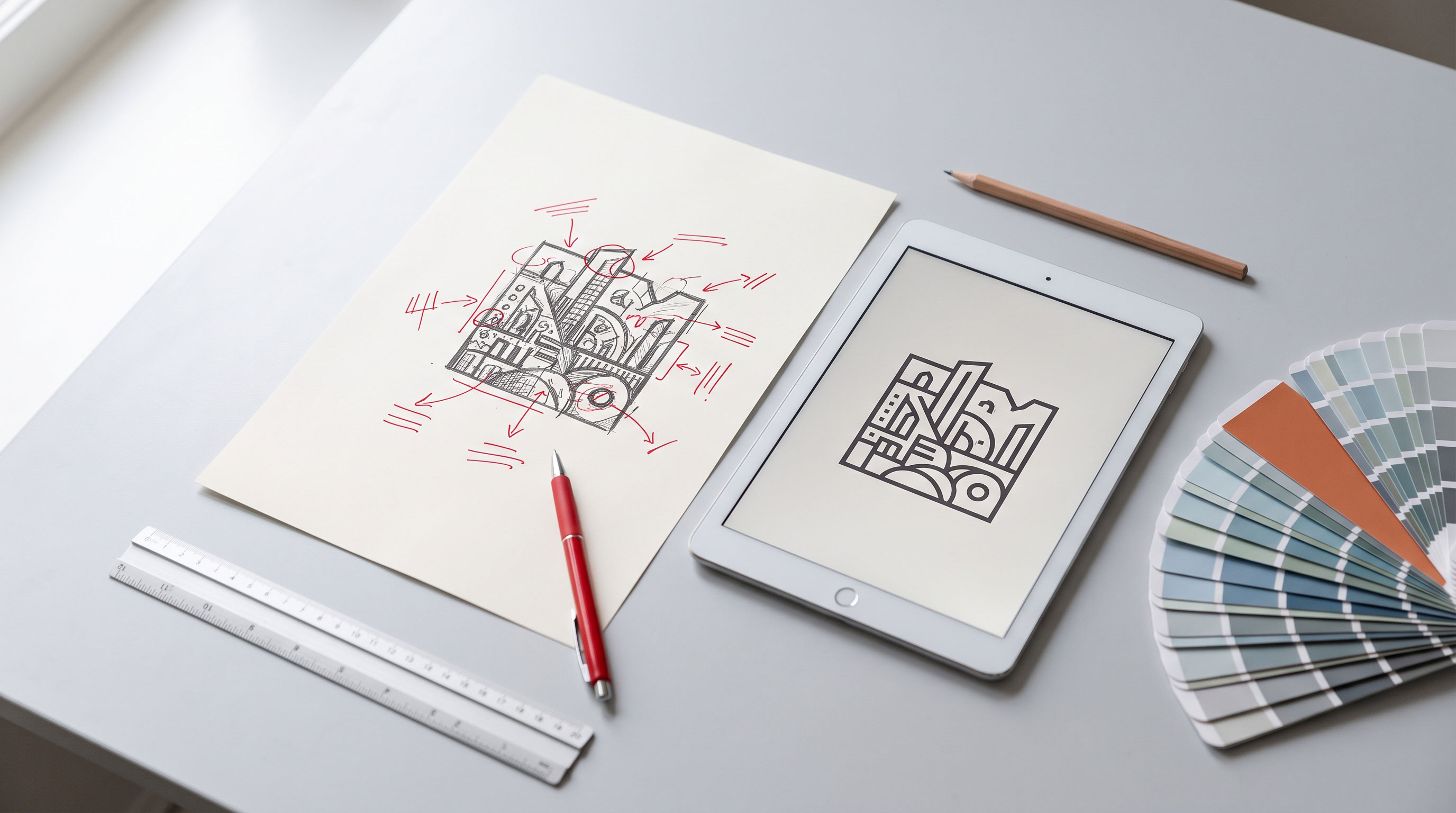

A coffee shop owner spends weeks choosing a name, a logo, a
color palette, and the way staff greet customers. Then she posts a discount
offer on social media and runs a flyer campaign in the neighborhood. Both efforts
matter, but they are not the same job.
The first group of decisions is branding. The second
is marketing. People use the words interchangeably, and that confusion
leads to wasted budgets, mixed messages, and campaigns that never quite land.
This article explains what each one means, how they differ, and how to make
them work together.
The Short Answer
Key Point: Branding defines who you are and what you
stand for. Marketing is how you communicate and promote what you offer.
Branding creates the identity; marketing puts it in front of people.
In about 50 words: branding is the long-term process
of shaping how a business is perceived, including its values, personality,
voice, and visual identity. Marketing is the set of activities used to
reach audiences, generate interest, and drive sales. Branding answers “who are
we?” Marketing answers “how do we get people to notice us?”
What Is Branding?
Branding is the overall impression people have of a
business, product, or person. It is built from many small signals: the name,
the logo, the tone of customer emails, the quality of the product, the way
complaints are handled.
A common misunderstanding is that a brand is the logo. The
logo is only a visual shortcut to a brand. The brand itself lives in
people’s minds and memories.
Core Elements of a Brand
- Purpose
and values: Why the business exists and what it believes in.
- Positioning:
The space it occupies compared with competitors.
- Personality
and voice: Whether it sounds formal, playful, technical, or warm.
- Visual
identity: Logo, colors, typography, and imagery.
- Customer
experience: How people are treated before, during, and after a
purchase.
Why Branding Matters
A clear brand makes a business recognizable and memorable.
It also makes decisions easier. If a company knows it stands for simplicity, it
can say no to features, designs, or partnerships that add clutter. Strong
brands also tend to earn trust, which can shorten the time customers need to
decide.
What Is Marketing?
Marketing covers the activities that connect a business with
potential customers. It includes researching what people need, deciding what to
offer and at what price, and choosing how to promote it.
Marketing is usually planned in campaigns with specific
goals: launching a product, attracting email subscribers, filling a workshop,
or increasing store visits.

Common Marketing Channels
- Search
engine optimization (SEO) and paid search ads
- Social
media content and advertising
- Email
newsletters
- Content
marketing, such as blogs, videos, and podcasts
- Events,
partnerships, and public relations
- Print,
radio, and outdoor advertising
Why Marketing Matters
Even an excellent product needs to be discovered. Marketing
creates that visibility and demand. It also produces data, such as
clicks, sign-ups, and sales, that shows what is working and what is not.
Branding vs Marketing: Side-by-Side Comparison
|
Aspect |
Branding |
Marketing |
|
Main question |
Who are we and why do we matter? |
How do we reach and persuade people? |
|
Goal |
Recognition, trust, loyalty |
Awareness, leads, sales |
|
Time horizon |
Long-term |
Short- to medium-term, campaign-based |
|
Output |
Identity, voice, positioning, reputation |
Campaigns, content, ads, promotions |
|
Measured by |
Brand awareness, perception, loyalty |
Traffic, conversions, cost per lead, revenue |
|
Changes |
Slowly and deliberately |
Frequently, based on results |
|
Focus |
Emotion and meaning |
Action and response |
How Branding and Marketing Work Together
The two are not rivals. Think of branding as the foundation
and marketing as the megaphone. Without a foundation, the message has
nothing consistent to say. Without the megaphone, the foundation stays unseen.
A Practical Example
Imagine a company that makes reusable water bottles.
- Branding
decision: It positions itself as a practical, no-nonsense choice for
people who want to cut down on single-use plastic. Its voice is friendly
and plain-spoken, and its design is simple and earthy.
- Marketing
activity: It runs a spring campaign with short videos showing how the
bottles hold up during hikes, offers a discount code to newsletter
subscribers, and partners with a local outdoor club.
Every marketing piece reflects the brand’s tone and promise.
If the same company suddenly used loud, hype-heavy ads promising a “life-changing”
bottle, the campaign might get clicks but would clash with the identity it
built.
What Happens When One Is Missing
Marketing without branding often produces scattered
messages. A business may chase every trend, change its tone constantly, and
compete mainly on price. Customers buy once but have little reason to remember
the name.
Branding without marketing can leave a well-designed
business invisible. The identity is polished, but few people know it exists.
Common Misconceptions
“Branding Is Just Design”
Design is one visible part of branding. Values, service
standards, and consistency matter just as much. A beautiful logo cannot repair
a poor customer experience.
“Marketing Is Just Advertising”
Advertising is one tactic. Marketing also includes market
research, pricing, product positioning, distribution, and customer
communication.
“Only Big Companies Need Branding”
Every business has a brand, whether or not it plans one. A
freelancer, a local bakery, and a global manufacturer all leave impressions.
The only question is whether those impressions are intentional.
“You Can Measure Both the Same Way”
Marketing results are often easy to track in the short term,
such as clicks or sales from a campaign. Branding effects build slowly and are
harder to isolate. Surveys, direct traffic, repeat purchases, and word-of-mouth
can offer clues, but no single number captures a brand.
Which Should Come First?

For a new business, the usual advice is to define the
brand basics first, then build marketing on top. You do not need a large
agency or a big budget. A simple starting point includes:
- Clarify
your audience. Who are you trying to help, and what do they need?
- State
your purpose and values. Write them in a few plain sentences.
- Define
your positioning. What makes you different from alternatives?
- Choose
a voice. Decide how you will sound in emails, posts, and packaging.
- Create
a basic visual identity. Keep it consistent and easy to apply.
- Then
plan marketing. Pick one or two channels, set a clear goal, and test.
Branding is never fully “finished.” Brands evolve as
businesses and audiences change, but they should evolve deliberately rather
than by accident.
Signs Your Branding and Marketing Are Out of Sync
- Your
social media sounds different from your website or packaging.
- Campaigns
focus only on discounts with no sense of identity.
- Customers
describe your business in ways you did not intend.
- Different
team members explain what you do in different ways.
- You
attract plenty of attention but few loyal customers.
If several of these sound familiar, revisit your brand
foundations before launching another campaign.
Bringing It Together
Branding and marketing solve different problems. Branding
decides what people should think and feel when they encounter your business.
Marketing decides how and where they encounter it. The strongest results come
when the identity is clear, the messaging is consistent, and the promotion is
tested and refined.
If you remember one distinction, make it this: branding
is the reason people remember you; marketing is the reason they find you.
Invest in both, in that order, and each effort will strengthen the other.