
Anyone who has tried to get a website noticed on Google
eventually runs into the same two terms: on-page SEO and off-page SEO. They
sound like they belong to the same family, and in a sense they do, but they
work in very different ways. One happens directly on your website. The other
happens almost everywhere else on the internet.
Understanding how these two approaches differ — and how they
support each other — is one of the fastest ways to make sense of search engine
optimization as a whole. This article breaks down what each type of SEO
actually involves, how they affect rankings, and how to balance both when
building a search strategy.
What Is On-Page SEO?
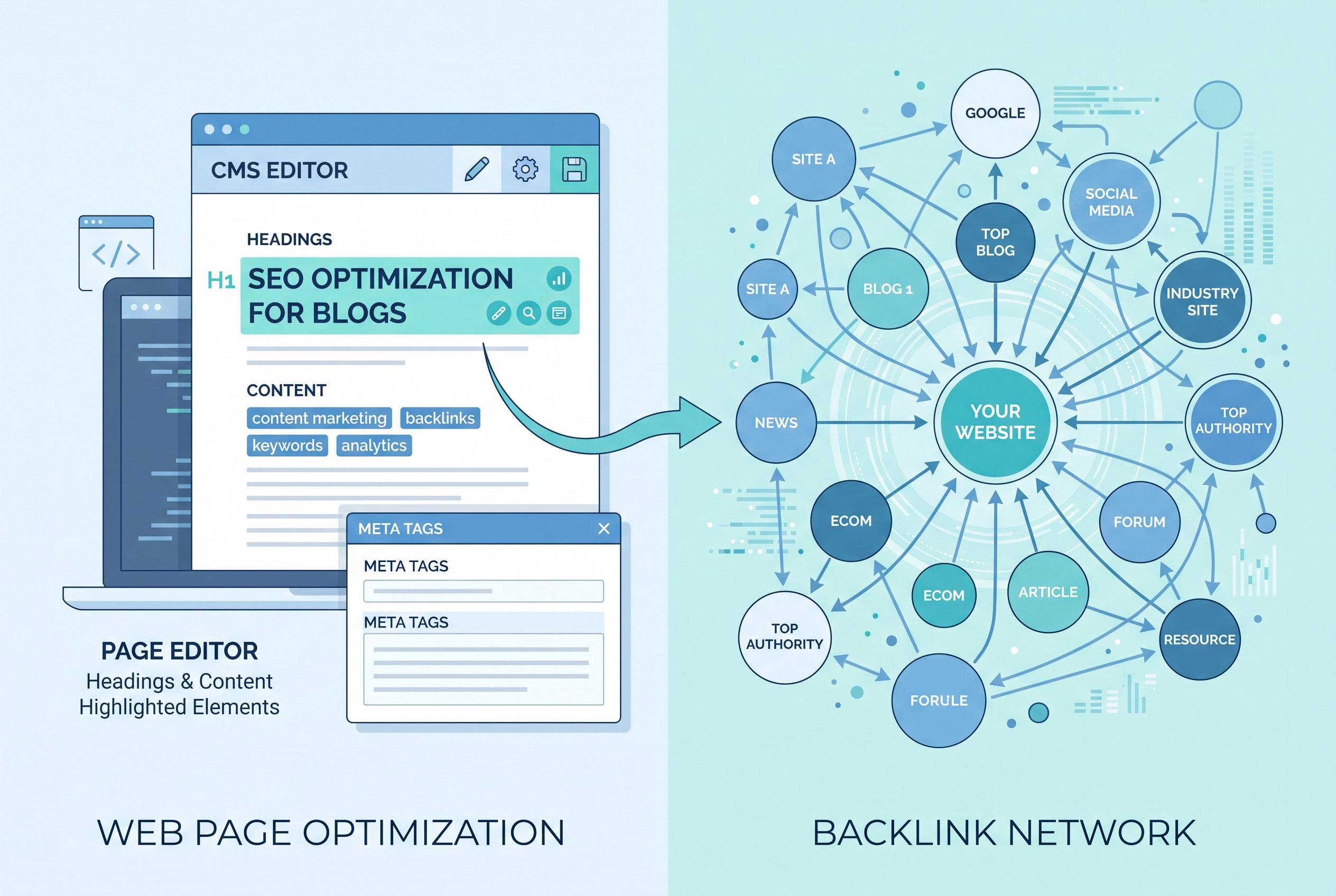
On-page SEO refers to all the optimization work done
directly on your website to help search engines understand and rank your
content. It covers everything from the words on the page to the code behind it.
This includes elements such as:
- Page
titles and meta descriptions
- Header
tags (H1, H2, H3)
- Keyword
usage and placement
- Content
quality and depth
- Internal
linking
- Image
alt text
- URL
structure
- Page
loading speed
- Mobile-friendliness
Key Point: On-page SEO is about making a single page
as clear, relevant, and useful as possible — for both readers and search
engines.
Because you control every part of your own website, on-page
SEO is the area where changes are the most direct. If a page is missing a
proper title tag or loads slowly, you can fix it immediately.
How On-Page SEO Works
Search engines send out crawlers — automated programs
that scan web pages to understand their content. On-page SEO helps these
crawlers correctly interpret what a page is about.
For example, a well-structured page with a clear H1 heading,
relevant subheadings, and naturally placed keywords gives search engines strong
contextual signals. A disorganized page with no headings and unclear structure
makes that job much harder, even if the content itself is useful.
What Is Off-Page SEO?
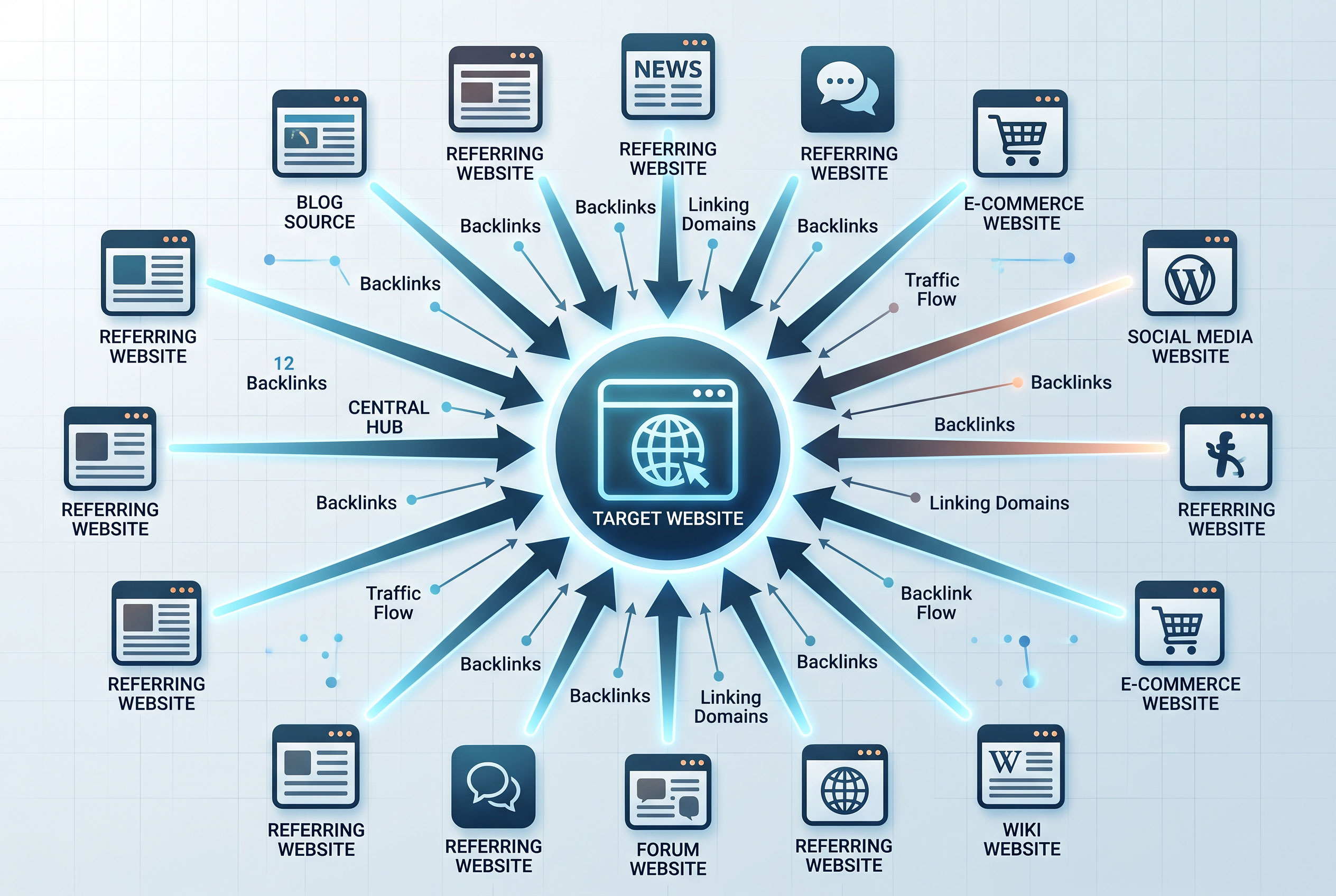
Off-page SEO refers to actions taken outside your own
website that influence how search engines and users perceive its authority,
relevance, and trustworthiness.
The most well-known form of off-page SEO is backlinks
— links from other websites pointing to yours. But off-page SEO covers more
than just links. It also includes:
- Brand
mentions (with or without a link)
- Social
media engagement
- Guest
posting on other sites
- Influencer
or industry collaborations
- Online
reviews and reputation
- Forum
or community participation
- Digital
PR and press coverage
How Off-Page SEO Works
Search engines treat external signals as a form of
validation. If multiple reputable websites link to your content, that's
interpreted as a sign that the content is valuable enough to be referenced
elsewhere.
This concept is often compared to academic citations: a
research paper referenced by many other credible papers is generally seen as
more influential than one nobody cites. Search engines apply a similar logic to
web pages, though the exact algorithms are far more complex and not fully
public.
On-Page SEO vs Off-Page SEO: Key Differences
|
Aspect |
On-Page SEO |
Off-Page SEO |
|
Location of activity |
Directly on your website |
Outside your website |
|
Level of control |
Fully controlled by you |
Partially controlled (depends on others) |
|
Main goal |
Improve relevance and usability |
Build authority and trust |
|
Common tactics |
Keywords, headings, page speed, content |
Backlinks, mentions, PR, social signals |
|
Speed of results |
Often faster to implement and see effects |
Usually slower, builds over time |
|
Example action |
Rewriting a title tag |
Earning a backlink from an industry blog |
Key takeaway: On-page SEO shapes how well a page
communicates its content, while off-page SEO shapes how much the wider internet
trusts and vouches for that content.
Why Both Matter Together
A website with excellent on-page SEO but no off-page
presence may struggle to rank for competitive terms, because search engines
have little external evidence that the content is trustworthy or widely valued.
On the other hand, a website with many backlinks but poor
on-page structure may struggle to convert that authority into rankings, because
search engines can't clearly determine what the page is actually about — or
users may leave quickly due to a poor experience.
Key Point: Off-page SEO can bring authority to a
website, but on-page SEO determines whether that authority actually translates
into relevant rankings.
This is why most effective SEO strategies address both areas
rather than favoring one over the other.
Technical SEO: The Often-Overlooked Third Piece
While this article focuses on on-page versus off-page SEO,
it's worth briefly mentioning technical SEO, since it's sometimes
confused with on-page SEO.
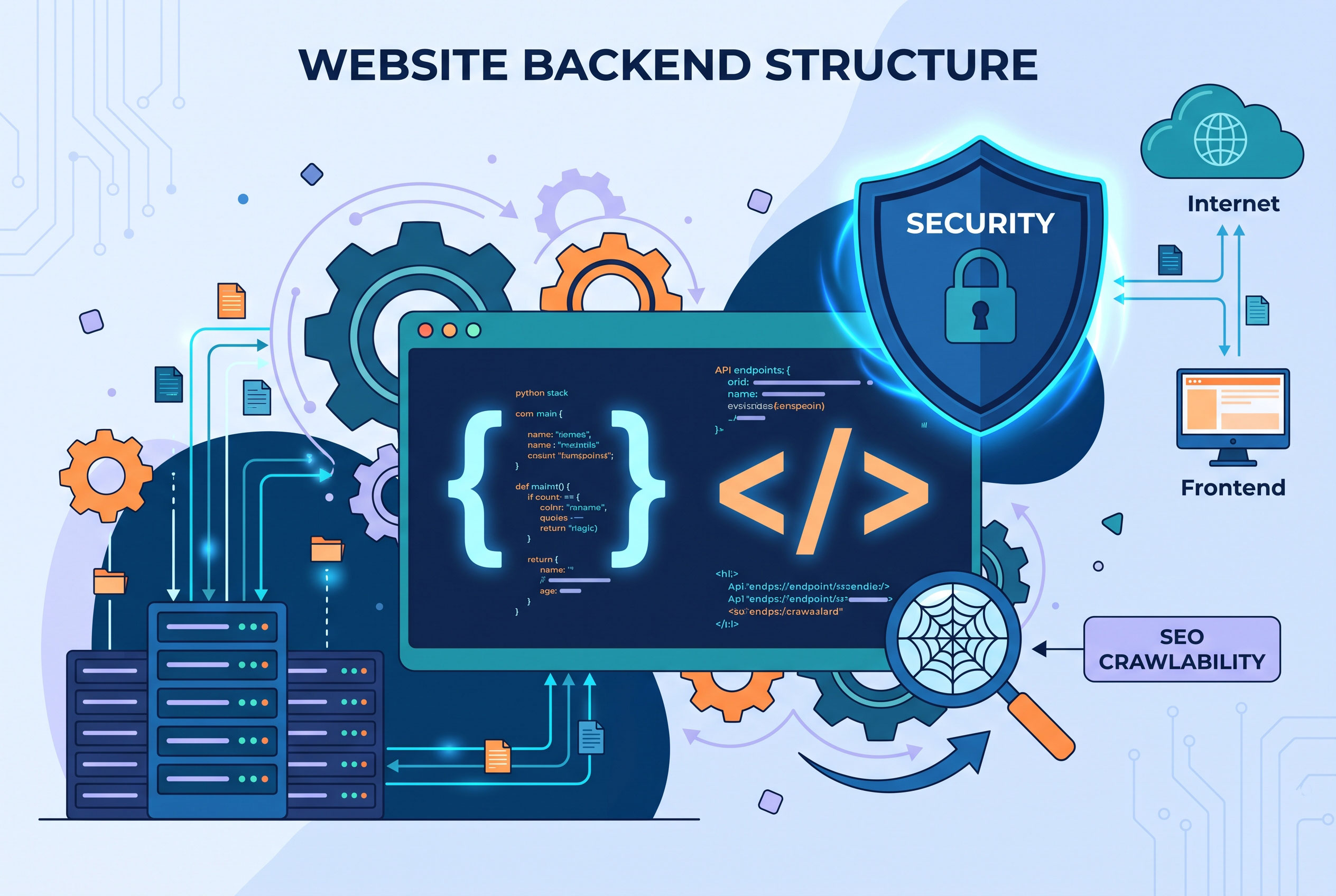
Technical SEO deals with the backend infrastructure of a
site — things like crawlability, indexing, site architecture, structured data,
and security (HTTPS). Some experts classify technical SEO as part of on-page
SEO, while others treat it as a separate category entirely. Either way, it
supports both on-page and off-page efforts by making sure search engines can
properly access and understand a website in the first place.
Practical Examples
On-page SEO example:
A blog post about "home coffee brewing methods" is optimized by using
a clear H1 title, organizing content under descriptive subheadings like
"French Press Method" and "Pour-Over Method," including
relevant internal links to related recipes, and writing a concise meta
description that accurately summarizes the article.
Off-page SEO example:
That same blog post gets referenced by a well-known coffee equipment review
site, which links back to it as a helpful resource. Over time, a few more niche
blogs mention the article, and it gets shared across social platforms,
gradually building the page's perceived authority.
Common Misunderstandings
A few misconceptions come up often when people first learn
about SEO:
- "Off-page
SEO is only about backlinks." Backlinks are central, but brand
reputation, mentions, and engagement also play a role.
- "More
links always means better rankings." Link quality and relevance
matter far more than sheer quantity. Links from low-quality or unrelated
sites can even be counterproductive.
- "On-page
SEO is just about keywords." Modern on-page SEO is about overall
content quality, structure, and user experience — not keyword frequency.
- "You
can ignore one and focus only on the other." Both work together;
neglecting either one limits the effectiveness of the whole strategy.
How to Prioritize Between the Two
For website owners or content creators unsure where to
start, the general approach usually looks like this:
- Start
with on-page SEO — it's fully within your control and often delivers
quicker improvements.
- Ensure
technical SEO basics are solid — a site search engines can't crawl
properly won't benefit from either on-page or off-page work.
- Build
off-page authority gradually — through genuine outreach, quality
content that naturally attracts links, and consistent brand presence.
- Monitor
and adjust — SEO is not a one-time task; both on-page and off-page
efforts need ongoing attention as search engines and competitors evolve.