A well-designed website with great products or services can
still sit invisible to the people who need it most. Every day, potential
customers type questions and needs into search engines, and if a business
doesn't show up in those results, it loses the chance to be found at exactly
the moment someone is ready to buy, book, or learn. That gap between having a
good business and being a visible business is where search engine
optimization (SEO) does its work.
This article breaks down what SEO actually does for a
business, why it matters more than many owners realize, and how it compares to
other growth channels — without vague promises or inflated claims.
What Is SEO?
SEO (search engine optimization) is the practice of
improving a website so it appears more prominently in unpaid, organic search
results on platforms like Google or Bing. It involves technical adjustments,
content creation, and reputation-building signals that help search engines
understand what a page is about and why it deserves to rank.
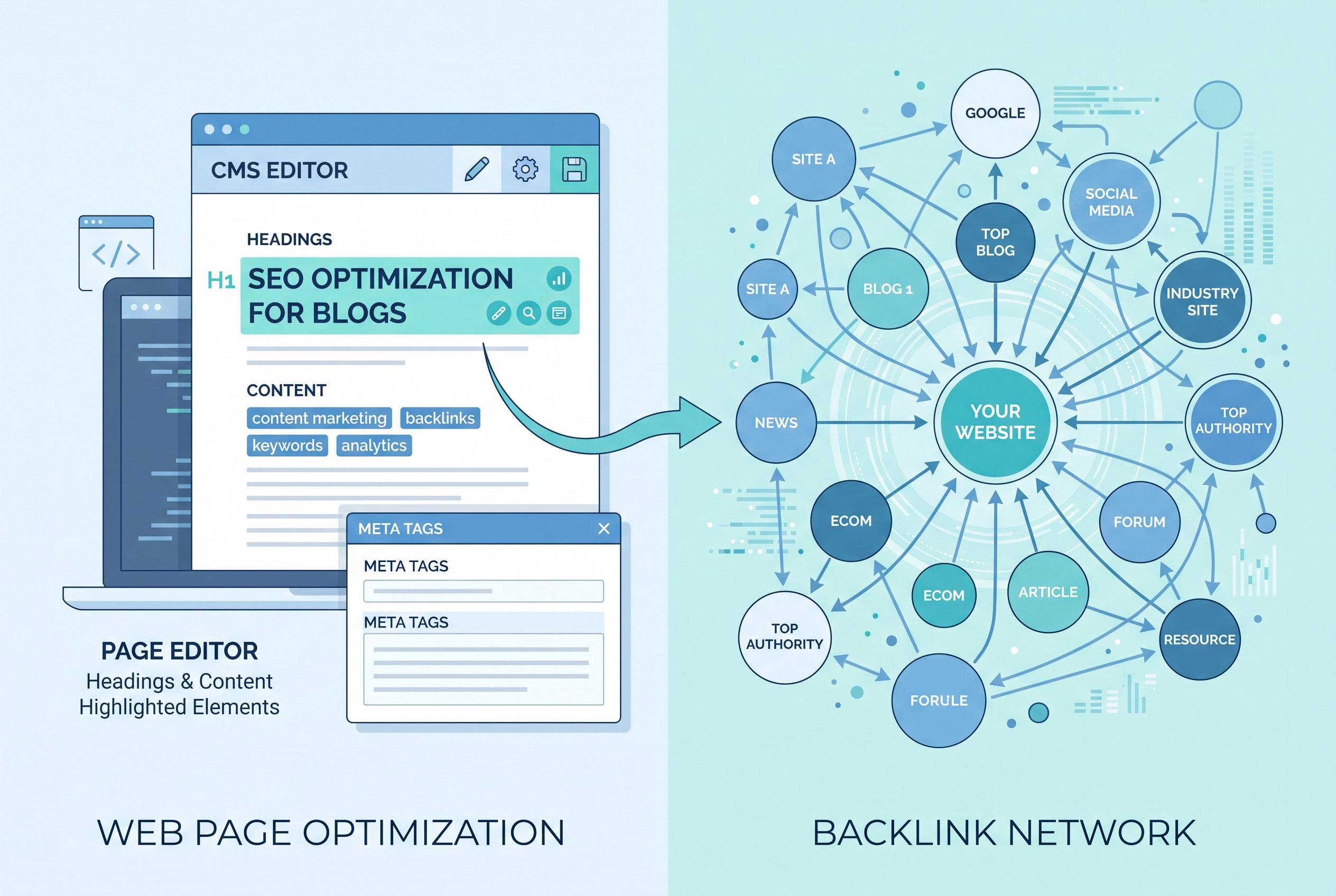
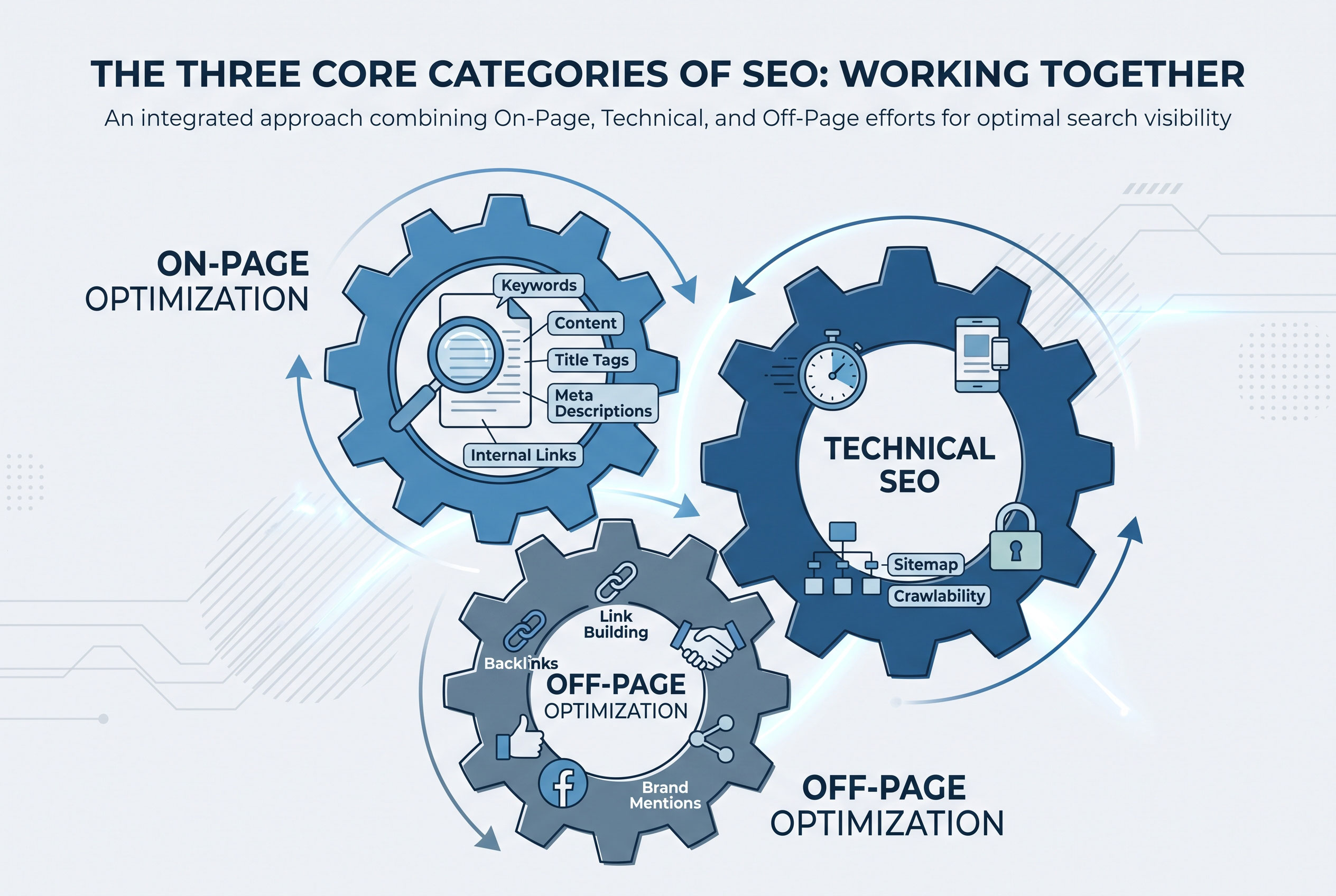
SEO is not a single action but a combination of ongoing
practices, generally grouped into three categories:
|
Category |
What It Covers |
Example Activities |
|
On-page SEO |
Content and structure of individual pages |
Keyword usage, headings, meta descriptions, internal links |
|
Technical SEO |
The site's backend health |
Site speed, mobile-friendliness, secure connections,
crawlability |
|
Off-page SEO |
Signals from outside the website |
Backlinks, brand mentions, online reviews |
Key Point: SEO is not about tricking search engines —
it's about making a website genuinely easier to find, understand, and trust.
How Does SEO Support Business Growth?
Search engines are essentially answer machines. When a
business ranks for the terms its customers are already searching, it places
itself directly in the path of demand that already exists, rather than trying
to create demand from scratch.

It Captures Existing Intent
Someone searching "affordable accounting software for
freelancers" has already identified a need. A business ranking for that
phrase reaches a person who is far closer to making a decision than someone
seeing a random ad. This is one of the core reasons organic search often
produces higher-intent traffic compared to interruption-based marketing.
It Builds Long-Term Visibility
Unlike paid ads, which stop generating traffic the moment a
budget runs out, a well-optimized page can continue attracting visitors for
months or years with only periodic updates. This doesn't mean SEO is free
or instant — it requires sustained effort — but the visibility it builds tends
to compound rather than disappear overnight.
It Reinforces Credibility
Many users treat top search rankings as an informal signal
of trustworthiness. A business that consistently appears for relevant searches,
backed by clear content and positive reviews, benefits from an association with
authority — even if no one states that connection outright.
Key Benefits of SEO for Businesses
- Increased
organic visibility in search results without paying per click
- Higher-quality
traffic, since visitors are actively searching for related solutions
- Improved
user experience, as many SEO practices also make sites faster and
easier to navigate
- Better
local discovery, especially for businesses relying on nearby customers
- Supports
other marketing channels, since well-optimized content can be
repurposed for email, social, and advertising
- Measurable
progress, using tools that track rankings, traffic, and conversions
over time
Key Point: SEO benefits rarely appear in isolation —
improvements to site speed or content clarity often help conversions and
customer satisfaction as much as rankings.
SEO vs. Paid Advertising: A Practical Comparison
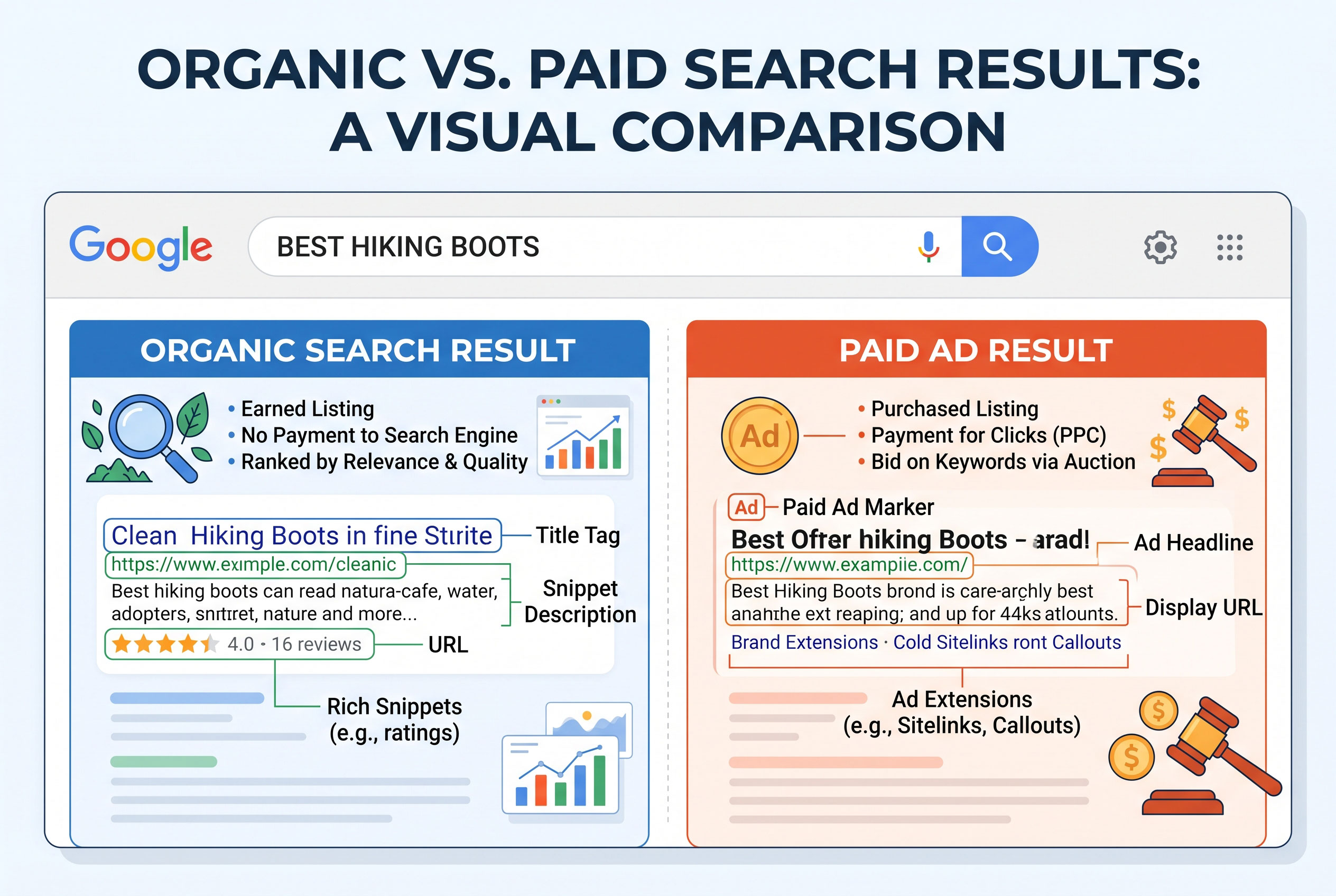
Business owners often ask whether SEO or paid advertising
deserves more of their budget. The honest answer is that they usually serve
different purposes.
|
Factor |
SEO (Organic) |
Paid Advertising |
|
Speed of results |
Slower, often weeks to months |
Immediate once campaigns launch |
|
Cost over time |
Ongoing effort, no per-click fees |
Continuous spend required |
|
Longevity |
Can persist after initial work |
Stops when budget stops |
|
Trust perception |
Often seen as more credible by users |
Clearly marked as an ad |
|
Best used for |
Sustainable, long-term visibility |
Short-term promotions, launches |
Many businesses use both strategies together: paid ads for
immediate visibility while SEO builds toward long-term, lower-cost traffic.
Common Challenges Businesses Face With SEO
SEO is not without difficulties, and being aware of them
helps set realistic expectations.
- Results
take time. Meaningful ranking improvements typically develop over
several months, not days.
- Search
algorithms change. Search engines regularly update how they evaluate
and rank content, which can shift results.
- Competition
varies by industry. Some niches are more saturated, requiring more
sustained effort to stand out.
- Technical
issues can undermine content quality. A slow or poorly structured site
can limit the impact of even excellent content.
Recognizing these challenges early helps businesses commit
to SEO as a long-term investment rather than expecting instant results.
How to Start Improving SEO for a Business
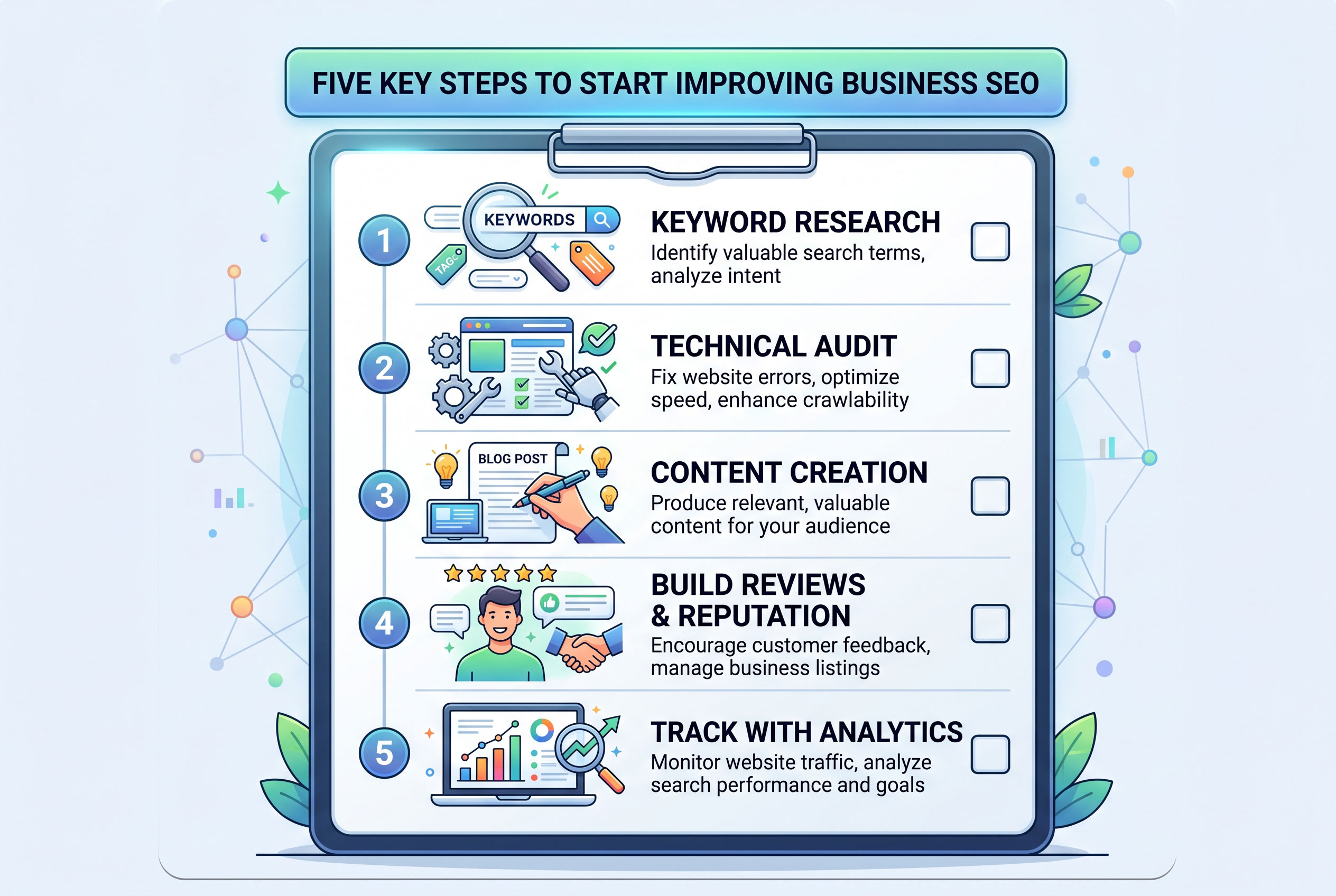
For businesses just beginning, a focused approach works
better than trying to do everything at once.
- Identify
what customers actually search for. Understanding real customer
language matters more than guessing at keywords.
- Audit
the website's technical health. Check page loading speed, mobile
compatibility, and whether pages are indexed correctly.
- Create
genuinely useful content. Pages that clearly answer a specific
question tend to perform better than vague, generic pages.
- Build
a presence beyond the website. Encourage reviews, seek relevant
mentions, and maintain accurate business listings.
- Track
and adjust. Use analytics to see what's working and refine the
approach based on real data, not assumptions.
Frequently Asked Questions
What is SEO in simple terms? SEO is the process of
improving a website so search engines can better understand it and show it to
people searching for related information, products, or services.
How long does SEO take to show results? Most
businesses begin seeing measurable changes within three to six months,
though this varies based on competition, website history, and consistency of
effort.
Is SEO better than paid advertising? Neither is
universally better. SEO offers longer-lasting, often lower-cost visibility,
while paid advertising delivers faster, immediate results. Many businesses
combine both.
Does SEO cost money? SEO isn't free — it requires
time, content creation, and sometimes technical work or professional help — but
it doesn't involve direct per-click advertising fees.
Can small businesses compete with larger companies
through SEO? Yes, particularly through local SEO and by targeting
specific, less competitive search terms where larger competitors may not focus
their efforts.
Do social media signals affect SEO rankings? Social
media doesn't directly determine rankings, but it can indirectly support SEO by
increasing content visibility, driving traffic, and generating brand mentions.
What happens if a business stops doing SEO? Rankings
can gradually decline as competitors continue optimizing and as search engines
favor consistently updated, active websites.
Conclusion
SEO works because it aligns a business with something that
never goes away: people actively searching for solutions. Rather than
interrupting potential customers, it meets them at the exact moment they're
looking for what a business offers. That combination of relevance, credibility,
and long-term value is difficult to replicate through other marketing methods
alone.
Businesses that treat SEO as an ongoing practice — not a
one-time task — tend to build visibility that keeps working long after the
initial effort is made. The businesses that show up when it matters most are
usually the ones that invested in being found before they needed to be.