
A restaurant owner who spends every evening replying to
customer comments knows something that many larger companies still struggle
with: marketing today is a conversation, not a broadcast. Whether a
business sells handmade candles or enterprise software, the tools for reaching
customers have changed dramatically over the past decade, and the businesses that
adapt tend to grow faster than those that don't.
This article breaks down the core digital marketing
strategies that matter most right now, explains how they work, and offers
practical guidance on choosing the right mix for a given business. There is no
single formula that works for everyone, but understanding the available options
makes it much easier to build a plan that fits.
What Is Digital Marketing?
Digital marketing refers to any marketing effort that
uses the internet or electronic devices to reach current and potential
customers. This includes websites, search engines, social media, email, mobile
apps, and online advertising.
Unlike traditional marketing — think billboards, print ads,
or television commercials — digital marketing is generally more measurable.
Businesses can track how many people saw an ad, clicked on it, and eventually
made a purchase, which allows for continuous refinement based on real data
rather than guesswork.
Key Point: The biggest advantage of digital marketing
over traditional methods is measurability — nearly every action a
customer takes can be tracked and analyzed.
Core Digital Marketing Channels
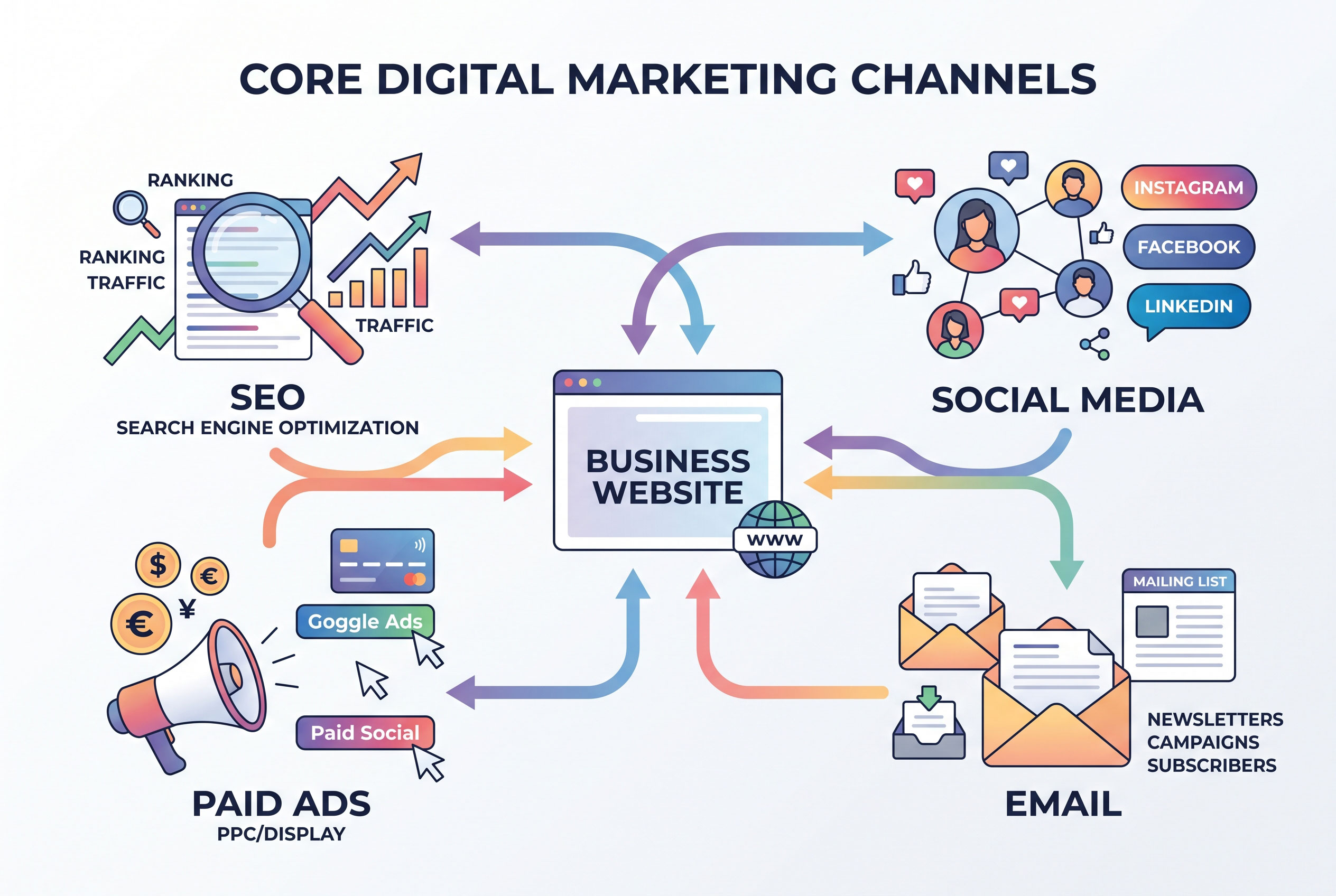
Most digital marketing activity falls into a handful of
broad categories. Understanding each one helps clarify where a business should
focus its time and budget.
Search Engine Optimization (SEO)
SEO is the practice of improving a website so it ranks
higher in search engine results for relevant terms. Because a large share of
buying journeys start with a search query, showing up on the first page of
results can bring in a steady stream of visitors without paying for each click.
SEO generally involves three areas:
- On-page
SEO — optimizing titles, headings, content, and internal links on the
website itself.
- Technical
SEO — improving site speed, mobile-friendliness, and crawlability so
search engines can index pages properly.
- Off-page
SEO — earning backlinks and mentions from other reputable websites.
SEO tends to be a longer-term investment. Results often take
months to build, but the traffic gained is typically more sustainable than
traffic from paid ads alone.
Content Marketing
Content marketing means creating useful, relevant
material — blog posts, videos, guides, infographics — that attracts and engages
an audience without directly selling to them. The goal is to build trust and
demonstrate expertise so that when a reader is ready to buy, the business is
already top of mind.
A well-run blog, for example, can answer common customer
questions, rank in search results, and give a business something to share
across social media and email at the same time.
Social Media Marketing
Social platforms allow businesses to build a community,
share updates, and engage directly with customers. Each platform tends to suit
different types of content and audiences:
|
Platform |
Best Suited For |
Content Style |
|
Instagram |
Visual products, lifestyle brands |
Photos, short video, Stories |
|
Facebook |
Local businesses, community building |
Mixed media, groups, events |
|
LinkedIn |
B2B services, professional audiences |
Articles, industry insights |
|
TikTok |
Younger audiences, entertainment-driven brands |
Short-form video |
|
Pinterest |
Home, fashion, food, DIY |
Visual guides, inspiration boards |
Choosing the right platform matters more than being present
everywhere. A business that tries to maintain five platforms poorly will
usually get less benefit than one that manages two platforms well.
Email Marketing
Despite being one of the older digital channels, email
marketing remains one of the most cost-effective ways to reach customers
directly, since the business owns its email list rather than renting attention
on a third-party platform.
Effective email marketing typically includes:
- A
welcome sequence for new subscribers.
- Regular
newsletters with useful content, not just promotions.
- Segmented
campaigns based on customer behavior or interests.
- Abandoned
cart or re-engagement emails for online stores.
Pay-Per-Click (PPC) and Paid Advertising
Paid advertising — including search ads, social media
ads, and display banners — allows businesses to reach a targeted audience
quickly, without waiting for organic growth. Unlike SEO, results appear almost
immediately, but they stop as soon as the budget runs out.
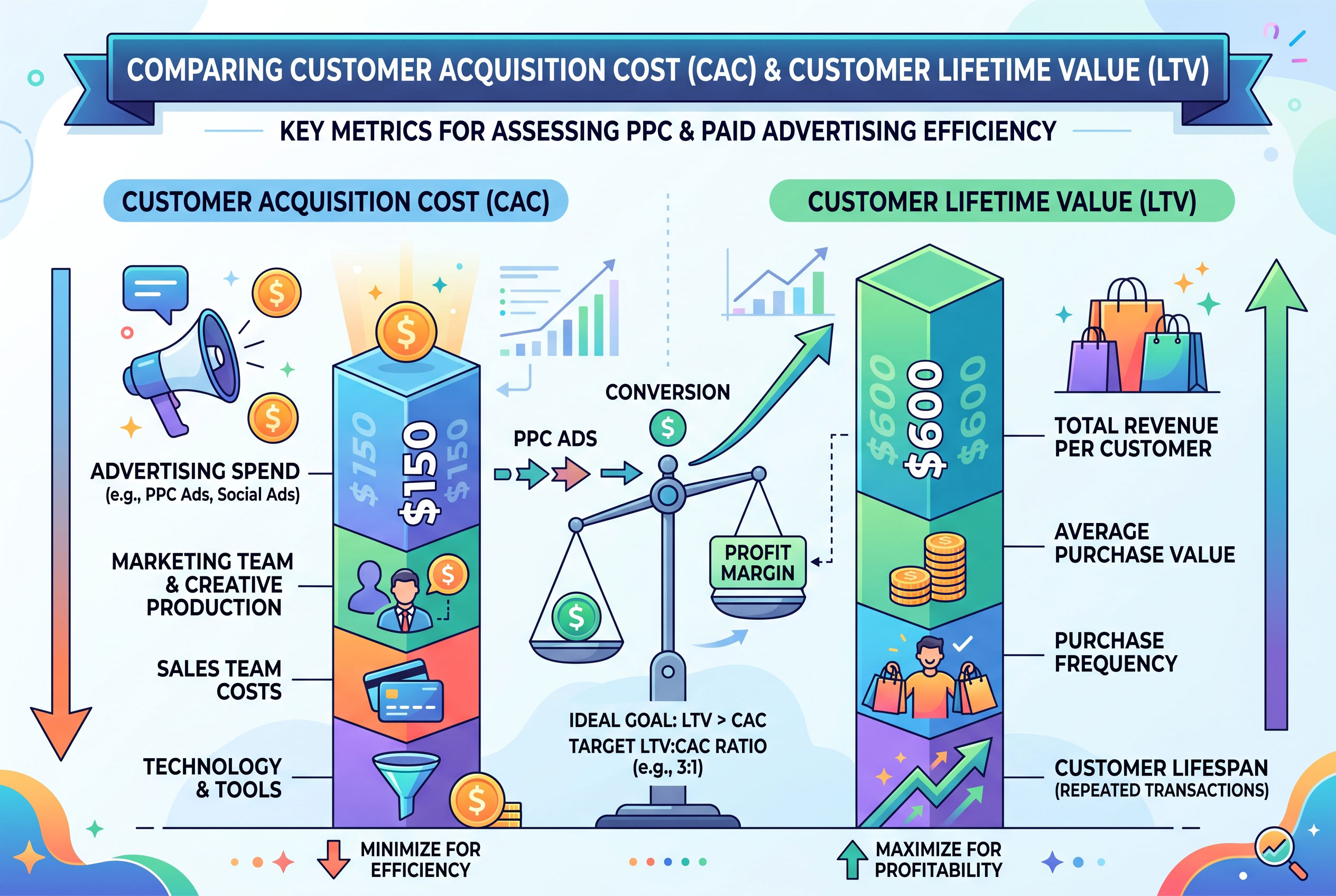
PPC works best when paired with a clear understanding of customer
acquisition cost (how much it costs to gain one customer) and lifetime
value (how much that customer is worth over time). If acquisition cost is
lower than lifetime value, paid advertising can be a sustainable growth
channel.
Benefits of a Strong Digital Marketing Strategy
A coordinated digital marketing approach offers several
practical advantages:
- Cost
efficiency — many digital channels cost less than traditional
advertising, especially for small businesses.
- Precise
targeting — ads and content can be shown to specific demographics,
interests, or behaviors.
- Real-time
measurement — performance can be tracked and adjusted quickly rather
than waiting for a campaign to end.
- Wider
reach — businesses can reach audiences beyond their local area,
including international customers.
- Stronger
customer relationships — direct engagement through comments, messages,
and email builds loyalty over time.
Common Challenges Businesses Face
Digital marketing is not without difficulties, and being
aware of these challenges helps set realistic expectations.
Content saturation is a real concern — audiences are
exposed to enormous amounts of content daily, making it harder to stand out.
Businesses that focus on genuine usefulness rather than volume tend to perform
better over time.
Changing algorithms on search engines and social
platforms mean that strategies which worked last year may need adjustment.
Staying informed about platform updates is part of maintaining an effective
strategy.
Limited budgets and time, especially for small
businesses, mean choices have to be made about where to focus effort. Trying to
do everything at once often leads to mediocre results across the board rather
than strong results in one or two areas.
How to Choose the Right Strategy Mix
There is no universal formula, but a few questions can help
guide the decision:
- Where
does the target audience spend time online? A B2B software company
will likely get more value from LinkedIn and search-based content than
from TikTok.
- What
is the sales cycle like? Products with long consideration periods
(like real estate or enterprise software) benefit more from content
marketing and email nurturing. Impulse-buy products may benefit more from
social media and paid ads.
- What
resources are available? A one-person business may need to prioritize
one or two channels rather than spreading effort thin.
- What
can be measured? Setting clear, trackable goals — such as website
visits, email sign-ups, or sales — makes it possible to know what is
actually working.
Key Point: The most effective digital marketing plans
usually combine at least one organic channel (SEO, content, or social
media) with one direct channel (email) to balance long-term growth with
ongoing customer engagement.
Building a Simple Digital Marketing Plan
A practical starting plan for a small or medium business
might look like this:
- Set up
or improve a website with clear, well-organized content and basic SEO
practices.
- Start
a simple content calendar — even one blog post and a few social posts per
week can build momentum.
- Build
an email list from day one, using a sign-up incentive such as a discount
or useful guide.
- Choose
one or two social platforms that match the target audience and post
consistently.
- Track
basic metrics monthly — website visitors, email open rates, and social
engagement — and adjust based on what is working.
Growth in digital marketing tends to come from consistency
rather than occasional bursts of activity. Small, steady efforts compound over
time in ways that sporadic campaigns usually cannot match.
Final Thoughts
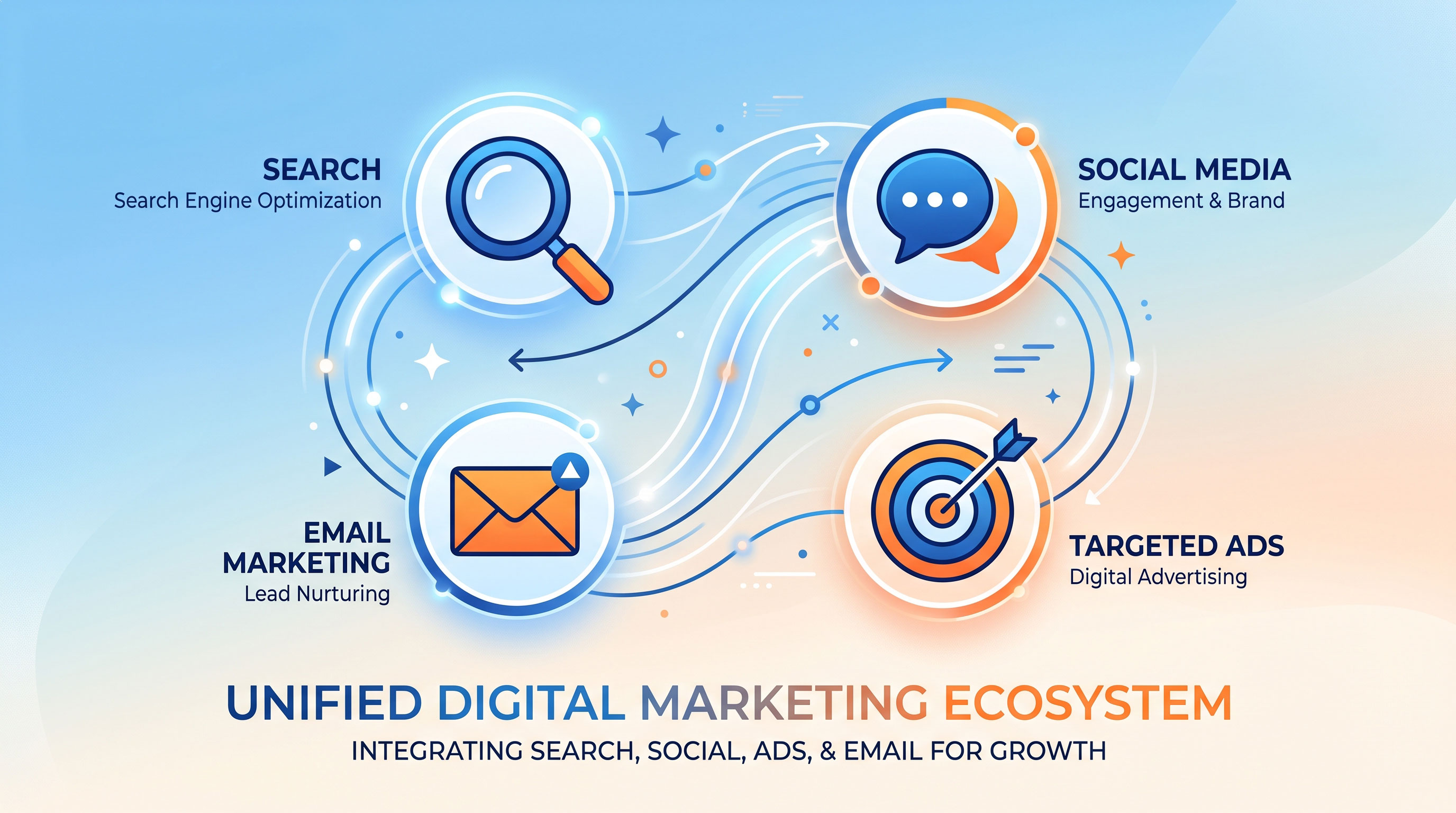
Digital marketing is not a single tactic but a set of
interconnected tools that work best when they support one another — a blog post
can be shared on social media, promoted through email, and optimized for
search, all from a single piece of content. Businesses that approach these
channels as parts of one coherent strategy, rather than isolated tasks, tend to
see the most consistent results.