
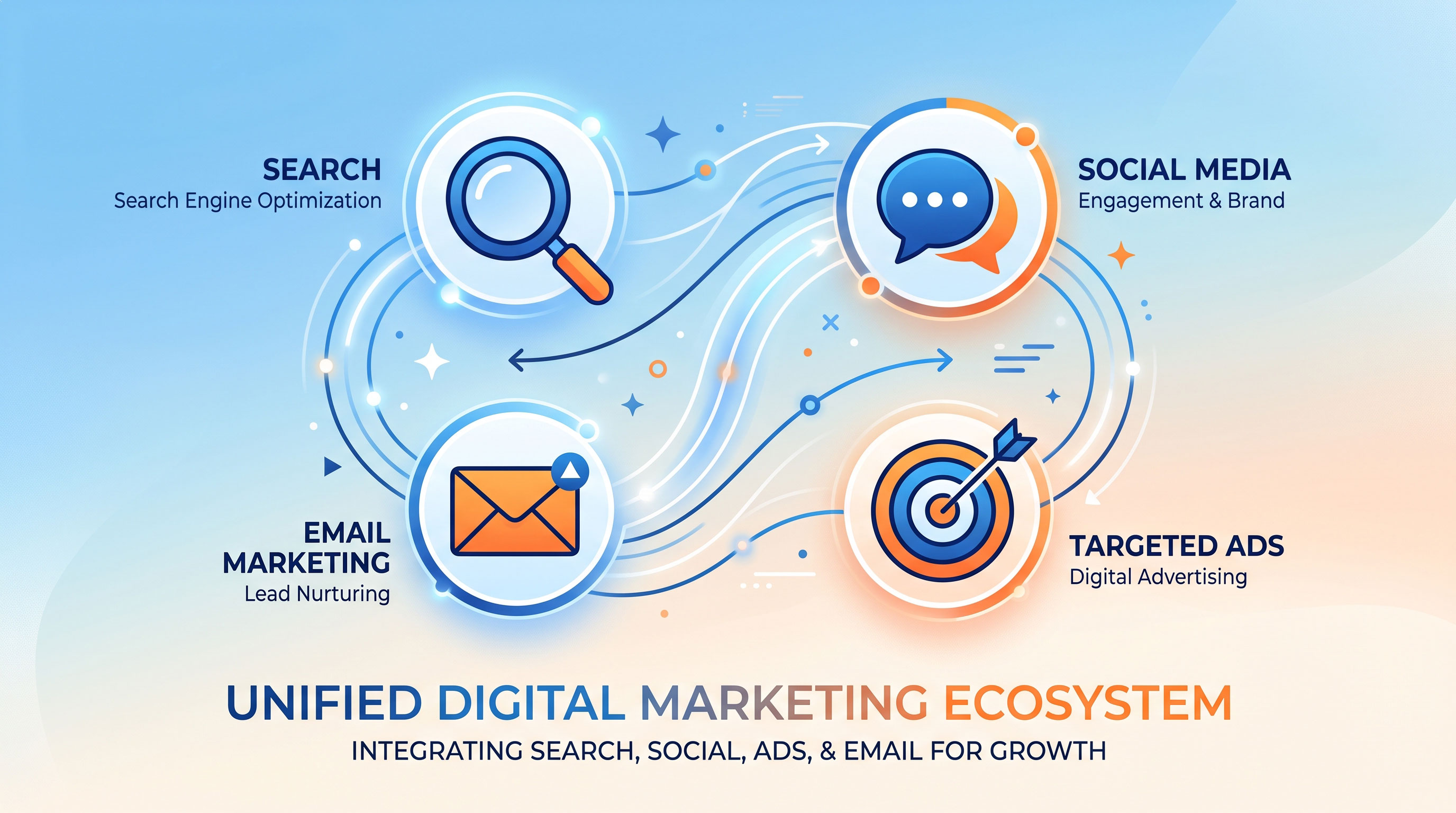
Most businesses treat SEO, social media, email marketing,
and PPC as separate tasks handled by separate people or tools. That approach
often leaves real opportunities on the table. Each channel has its own
strengths and weaknesses, and when they're planned together rather than in
isolation, they tend to reinforce one another in ways that produce better
results than any single channel could achieve alone.
This article breaks down what each channel does well, where
it falls short, and how combining them creates a marketing system that's more
resilient and effective than the sum of its parts.
What Each Channel Actually Does
Before looking at how these channels work together, it helps
to understand what each one is built for.
SEO (Search Engine Optimization) focuses on improving
a website's visibility in organic (unpaid) search results. It relies on keyword
research, quality content, technical site structure, and backlinks. Its main
strength is that it builds long-term, compounding value: a well-ranked page can
keep bringing in traffic for years without ongoing ad spend.
Social media marketing uses platforms like Instagram,
LinkedIn, TikTok, and Facebook to build audience relationships, share content,
and drive engagement. It's especially good at increasing brand visibility and
creating a two-way conversation with an audience.
Email marketing communicates directly with people who
have already opted in, whether they're leads, subscribers, or past customers.
Because the audience has already shown interest, email tends to have a high
return on investment relative to its cost.
PPC (Pay-Per-Click) advertising places paid ads on
search engines or social platforms, charging advertisers only when someone
clicks. Its biggest advantage is speed: unlike SEO, which can take months to
show results, PPC can generate visibility almost immediately.
|
Channel |
Primary Strength |
Typical Timeframe |
Cost Structure |
|
SEO |
Long-term organic visibility |
Months to build, lasting results |
Time/content investment, no per-click cost |
|
Social Media |
Audience engagement and brand awareness |
Ongoing, cumulative |
Time or ad spend |
|
Email Marketing |
Direct communication with warm leads |
Immediate once list exists |
Low cost per contact |
|
PPC |
Fast, targeted visibility |
Immediate |
Pay per click/impression |
How SEO and PPC Complement Each Other
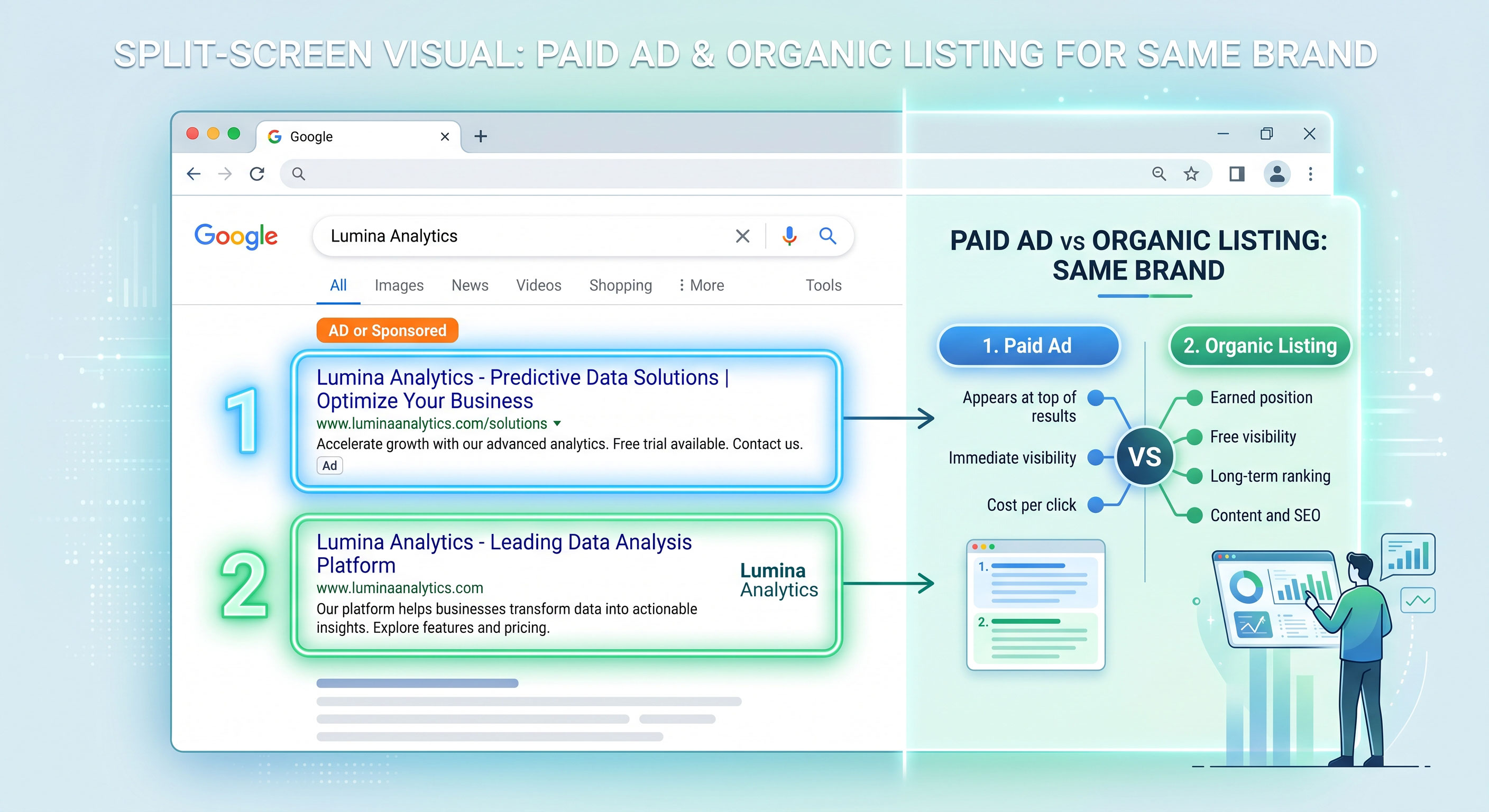
SEO and PPC are often framed as competitors, but they answer
different needs. PPC can validate which keywords convert before a
business invests months into ranking for them organically. If a paid ad for a
particular search term generates strong click-through and conversion rates,
that's a strong signal the same keyword is worth targeting with content and
SEO.
There's also a practical visibility argument: appearing in
both the paid ad slot and the organic listings for the same search term
increases the chances a searcher will click through to the site, since it
appears more established and trustworthy.
Key Point: Businesses that appear in both paid and
organic search results for the same query often see higher combined
click-through rates than either channel achieves alone.
How Social Media Supports SEO
Social media doesn't directly boost search rankings the way
backlinks do, but it plays a supporting role. Content that gets shared widely
on social platforms has a better chance of being seen by people who might link
to it from their own websites — and those links do influence SEO.
Social profiles also tend to rank in search results for a
business's own name, which means an active, well-maintained social presence
effectively takes up more space on the search results page and shapes what
people see when they search for the brand directly.
Email Marketing as the Connective Tissue
Email marketing often works best as the channel that ties
everything else together. Someone might first discover a business through an SEO-driven
blog post or a social media ad. If that person signs up for an email list, the
business now has a direct line to them — no algorithm or ad budget required to
reach them again.
This is particularly useful because:
- Email
lists are owned assets. Unlike social media followers, a business
isn't dependent on a platform's algorithm to reach its subscribers.
- Email
nurtures leads over time, moving people from initial interest toward a
purchase decision.
- Email
content can be repurposed from blog posts (SEO) or social posts,
saving time while reinforcing messaging across channels.
Building a Connected Strategy
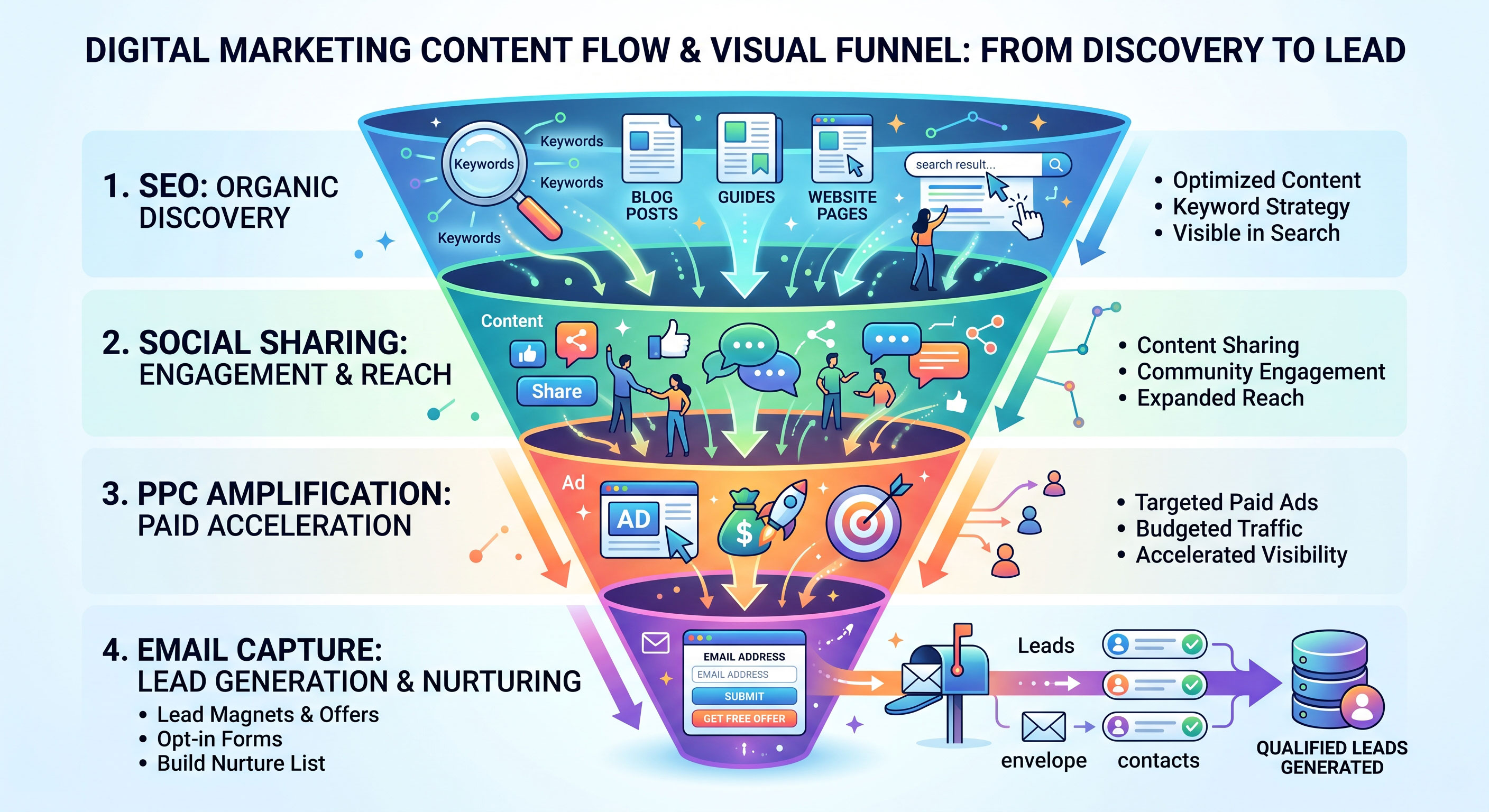
A genuinely integrated approach usually follows a pattern
like this:
- Content
is created with SEO in mind, targeting keywords that matter to the
target audience.
- That
content is promoted on social media, extending its reach beyond
organic search traffic alone.
- PPC
ads test and amplify the highest-performing content or keywords,
generating faster visibility.
- Email
captures visitors who arrive through any of these channels, turning
one-time visitors into a list a business can market to repeatedly.
- Email
and social data inform future SEO and content decisions, since they
reveal what topics and messages actually resonate with the audience.
Practical Example
A company publishes a detailed guide on its website (SEO).
It shares excerpts of the guide as short posts on LinkedIn and Instagram
(social media), driving some direct traffic. It also runs a small PPC campaign
targeting the same keyword to see how well it converts, while offering a
downloadable checklist in exchange for an email address on the guide's page.
Subscribers who download the checklist then receive a short email series
related to the topic, which keeps the brand in front of them long after the
original visit.
This single piece of content ends up supporting four
channels instead of just one.
Common Challenges When Combining Channels
Coordinating multiple channels isn't automatic, and a few
challenges come up regularly:
- Inconsistent
messaging — different teams or tools handling each channel
independently can lead to mixed branding or conflicting offers.
- Data
silos — if SEO, social, email, and PPC data live in separate systems,
it's harder to see the full picture of what's actually working.
- Resource
constraints — smaller teams may not have the bandwidth to manage all
four channels well simultaneously.
- Attribution
difficulty — when a customer interacts with several channels before
converting, it can be hard to know which channel deserves credit.
None of these challenges are reasons to avoid integration;
they're reasons to plan for it deliberately rather than treating each channel
as an afterthought.
How to Get Started with an Integrated Approach
Businesses new to this don't need to run all four channels
at full capacity immediately. A reasonable starting point is:
- Identify
one or two core topics or offers and build content around them.
- Use SEO
for the foundation, since it has the longest shelf life.
- Add email
capture early, even before a large audience exists, so growth
compounds over time.
- Use social
media to extend reach and test which messages resonate.
- Layer
in PPC selectively, especially to validate keywords or promote
high-value offers.