
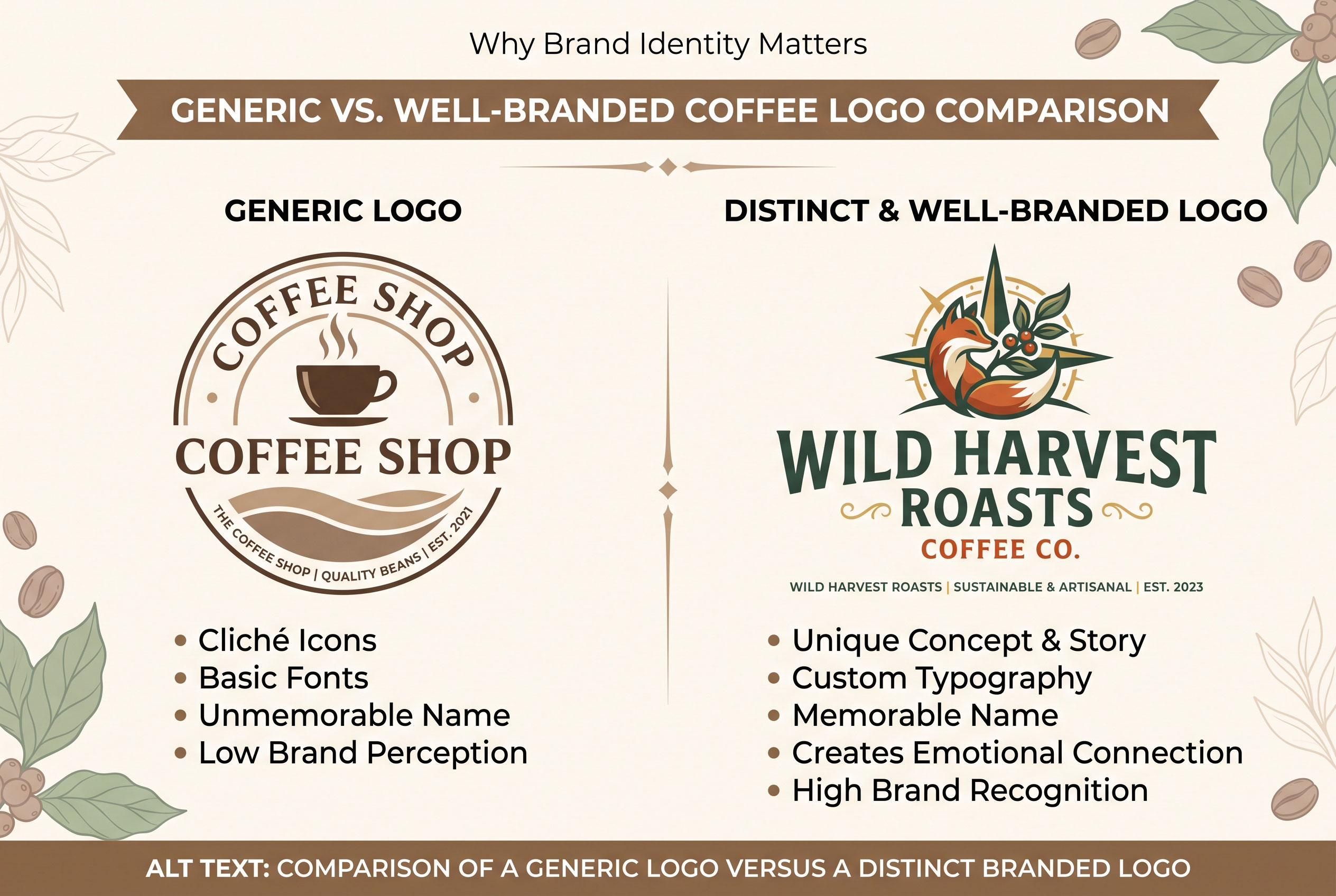
Two coffee shops can sell the exact same espresso, yet one
feels warm and memorable while the other feels forgettable. The difference
usually isn't the product — it's the brand identity behind it. A strong
identity shapes how people perceive a business before they ever try what it
sells, and it's often the deciding factor in whether a customer chooses one company
over a nearly identical competitor.
Building that kind of identity isn't about hiring a designer
to make a nice logo. It's a deliberate process that touches strategy, design,
and communication. This guide walks through what brand identity actually means,
why it matters, and how to build one step by step.
What Is Brand Identity?
Brand identity is the collection of visual, verbal,
and experiential elements that represent a business and distinguish it from
competitors. This includes the logo, color palette, typography, tone of voice,
messaging, and even how a company's customer service feels.
It's easy to confuse brand identity with related terms, so
here's a quick distinction:
|
Term |
What It Means |
|
Brand identity |
The tangible elements — visuals, voice, design — that
express the brand |
|
Brand image |
How customers actually perceive the brand (may differ from
identity) |
|
Brand strategy |
The long-term plan for positioning and growing the brand |
|
Branding |
The ongoing process of building and managing the identity |
Key Point: Brand identity is what a company puts
out into the world, while brand image is what customers take away from
it. A strong identity increases the chance that the two align.
Why Brand Identity Matters
A well-developed identity does more than look attractive. It
builds trust, creates recognition, and supports customer
loyalty over time.
Consider the practical benefits:
- Recognition:
Consistent colors, logos, and messaging help people identify a business
instantly, even without reading its name.
- Differentiation:
In crowded markets, identity is often the clearest way to stand apart from
competitors offering similar products.
- Perceived
value: A polished, cohesive identity can make a business feel more
established and trustworthy, which can influence pricing power.
- Employee
alignment: A clear identity gives internal teams a shared
understanding of what the company stands for, which shapes everything from
hiring to customer interactions.
Businesses that skip this step often end up with
inconsistent messaging — a formal website paired with a casual social media
voice, for example — which can quietly erode customer confidence.
Key Elements of a Strong Brand Identity
Before designing anything, it helps to understand the
building blocks that make up a complete identity system.
1. Brand Purpose and Values
This is the foundation everything else is built on: why
does the business exist beyond making money? Values should be specific
enough to guide real decisions, not generic statements like "we care about
quality" that could apply to any company.
2. Target Audience
A brand identity should be shaped around the people it's
meant to reach. A skincare brand for teenagers and one for retirees will need
very different tones, colors, and messaging, even if the products are similar.
3. Brand Personality
This is often described using human traits — is the brand
playful, authoritative, minimalist, or bold? Personality guides tone of voice
and visual choices consistently across every touchpoint.
4. Visual Identity
This includes the logo, color palette, typography,
and imagery style. These elements should work together as a system, not
as isolated design choices.
5. Verbal Identity
How a brand talks — its tone, vocabulary, and messaging
style — is just as important as how it looks. A brand's voice should stay recognizable
whether it's writing a tweet, an email, or a product description.
How to Build a Brand Identity: Step-by-Step
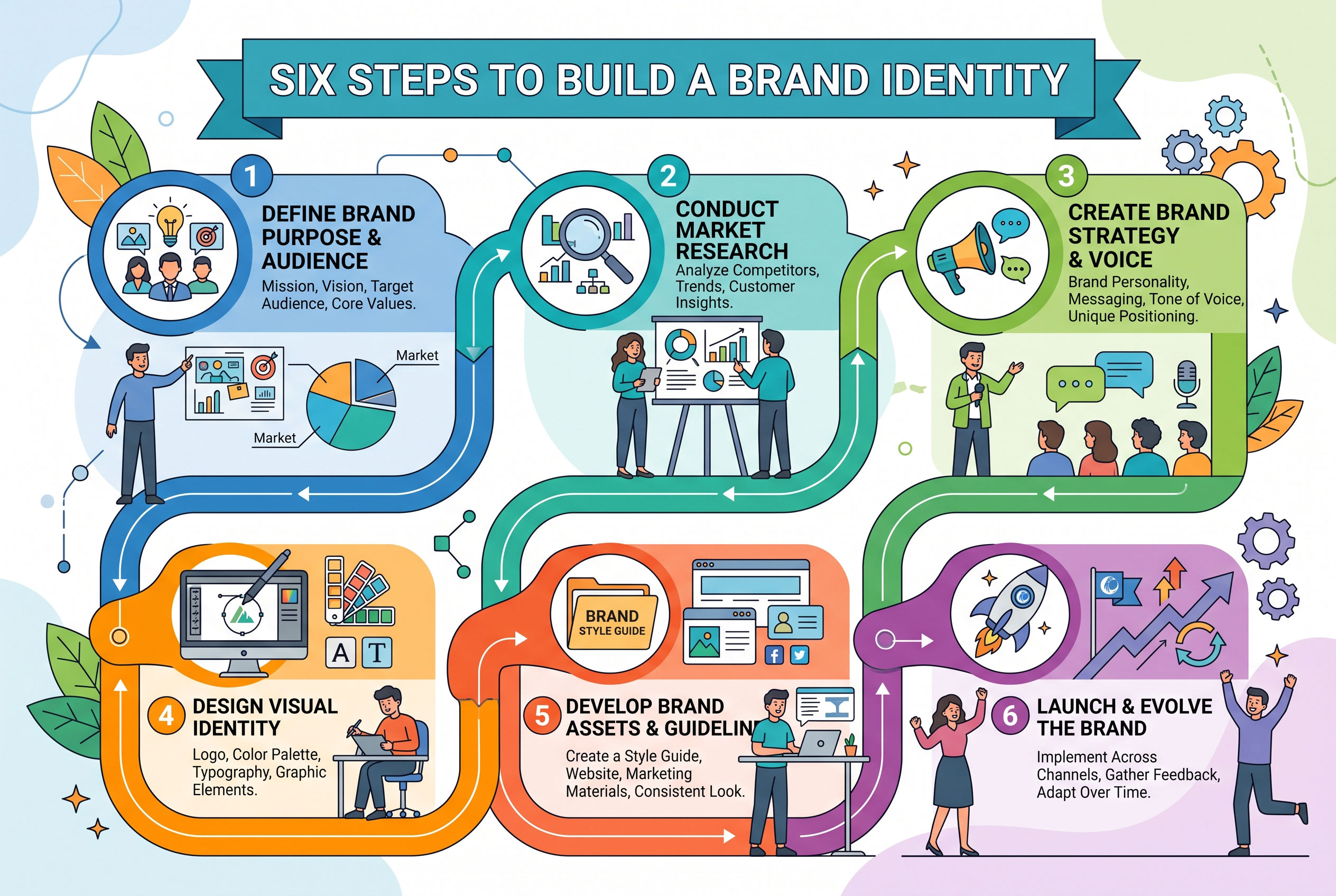
Step 1: Clarify Your Brand Strategy First
Skipping straight to logo design is one of the most common
mistakes. Strategy should come first: define the mission, target audience,
competitive positioning, and core values. Design decisions should flow from
these answers, not the other way around.
Step 2: Research Competitors
Look at how competitors present themselves visually and
verbally. This isn't about copying — it's about finding gaps. If every
competitor in a category uses blue and a serious tone, there may be an
opportunity to stand out with a different color story or a warmer voice.
Step 3: Define Visual Guidelines
Once the strategic foundation is set, translate it into a
visual system:
- Choose
a primary and secondary color palette that reflects the brand personality.
- Select
fonts for headlines and body text that are legible across digital and
print use.
- Design
a logo that works at multiple sizes, including as a small app icon or
favicon.
- Establish
a consistent photography or illustration style.
Step 4: Develop a Consistent Voice
Write out tone guidelines with examples. Should the brand
sound formal or conversational? Should it use humor? Documenting a few sample
sentences in the brand's voice makes it far easier for multiple team members or
freelancers to stay consistent.
Step 5: Create a Brand Style Guide
A style guide documents all of these decisions in one
place — logo usage rules, color codes, typography, voice examples, and dos and
don'ts. This becomes the reference point for anyone creating content, from
marketing to product packaging.
Step 6: Apply the Identity Consistently
An identity only works if it's applied everywhere: website, social
media, packaging, email signatures, invoices, and customer service scripts.
Inconsistency across these touchpoints is one of the fastest ways to weaken
brand recognition.
Common Mistakes to Avoid
- Designing
before strategizing — jumping to visuals without clarity on
positioning or audience.
- Copying
competitors too closely — this makes differentiation nearly
impossible.
- Changing
the identity too frequently — recognition takes time to build, and
constant changes can confuse customers.
- Ignoring
consistency across platforms — a mismatched voice or visual style
across channels weakens trust.
- Treating
branding as a one-time task — identities should evolve gradually as
the business grows, not sit untouched indefinitely.
How to Choose the Right Approach for Your Business
Not every business needs the same level of investment. A
solo consultant might need a simple, clean logo and a consistent voice across a
website and LinkedIn profile. A growing company entering new markets may
benefit from a full brand strategy engagement with a design agency.
Key Point: The right scope depends on business size,
growth stage, and budget — but even small businesses benefit from documenting
basic guidelines early, since retrofitting consistency later is harder than
building it in from the start.
Bringing It All Together
A strong brand identity isn't built in a single afternoon,
and it isn't just a logo file sitting in a folder. It's the sum of consistent
decisions — about values, visuals, and voice — repeated across every place a
customer encounters the business. When those decisions are aligned, the brand
starts to feel familiar and trustworthy, which is often what turns a first-time
buyer into a repeat customer.
The businesses that get this right treat identity as an
ongoing practice rather than a checklist item, revisiting and refining it as
the company grows while keeping the core recognizable. That combination of
consistency and thoughtful evolution is what separates a memorable brand from
one that blends into the background.