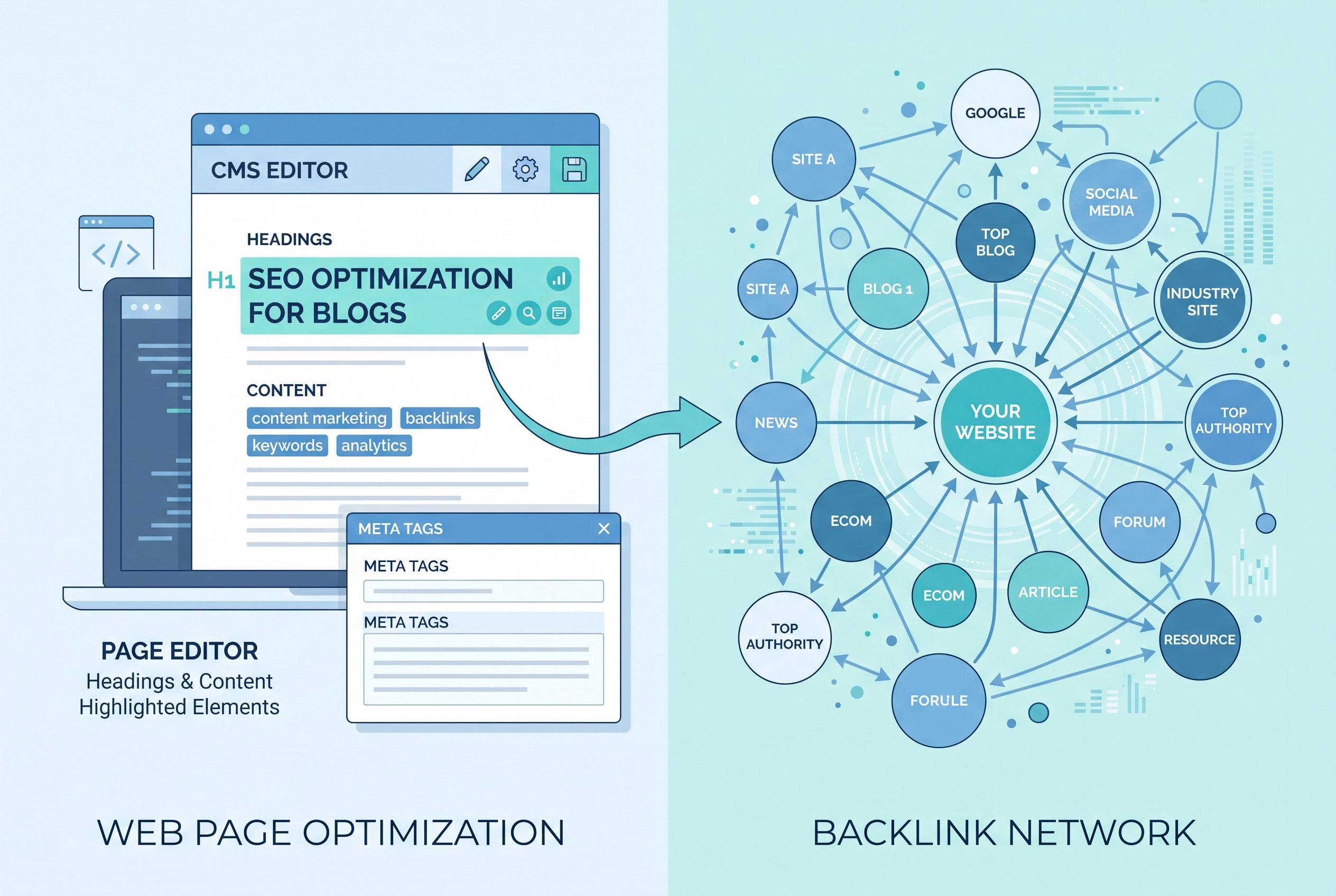

Most weak web content fails for the same reason: it was
written for an algorithm and forgot the human. The reverse also happens. A
beautifully written article can sit unread because nobody structured it so a
search engine could understand it.
SEO content writing sits between those two failures.
It means creating articles that answer a real question clearly, and presenting
them so search engines can find, interpret, and rank them. This guide explains
how to do both without turning your writing into a keyword exercise.
What SEO Content Writing Actually Means
SEO stands for search engine optimization. In writing terms,
it is the practice of shaping a page so it matches what people search for and
so search engines can tell what the page is about.
It is not the same as stuffing a phrase into every
paragraph. Search engines have spent years getting better at understanding
meaning, and Google’s public guidance consistently tells creators to focus on
helpful, people-first content. A page that repeats a keyword twenty times reads
badly and rarely serves anyone.
A better way to think about it: good SEO writing is good
writing with a clear target and a clear structure.
Key Point: Write the article a curious reader would
be glad to find. Then check that the structure, headings, and wording make its
topic obvious to a search engine.
Start With Search Intent, Not Keywords
Before you write a word, ask what the searcher wants. This
is called search intent, and it decides whether your page can rank at
all.
|
Intent type |
What the reader wants |
Example search |
Best content format |
|
Informational |
To learn something |
“how does compound interest work” |
Guide, explainer |
|
Commercial |
To compare before choosing |
“best budget laptops for students” |
Comparison, review |
|
Navigational |
To reach a specific site |
“Gmail login” |
Brand or product page |
|
Transactional |
To complete an action |
“buy running shoes online” |
Product or service page |
If someone searches “how to write a meta description,” a
3,000-word history of search engines will not satisfy them. They want steps and
examples. Matching the format to the intent is often more important than any
technical tweak.
A quick check: search your target phrase and look at what
already ranks on the first page. Are the results guides, lists, videos, or
product pages? That pattern shows what searchers appear to expect.
Do Keyword Research Without Overcomplicating It

Keyword research means finding the phrases people actually
type and choosing the ones that fit your topic and audience. You do not need
expensive tools to begin.
A simple approach:
- Pick
a primary keyword. This is the main phrase the article is about.
- Collect
related phrases. Search suggestions, the “People also ask” box, and
related searches at the bottom of the results page all show how people
word their questions.
- Group
them by intent. Phrases that ask the same question usually belong in
one article. Phrases asking different questions usually deserve separate
articles.
- Choose
realistic targets. A broad, competitive phrase is hard for a new site.
A more specific phrase often brings more qualified readers.
Free tools such as Google Search Console (for sites you own)
and Google Trends can show what people search for and how interest changes over
time.
Build a Structure That Serves Both Audiences
Readers scan before they commit. Search engines also use
headings and page structure to understand a page’s topics. Clear structure
helps both.
Use headings as a roadmap
Give the page one H1 (the title), then use H2
headings for main sections and H3 headings for subsections. Make headings
descriptive. “Why Search Intent Matters” tells a reader and a crawler far more
than “Next Step.”
Keep paragraphs short
Two to four sentences is a good range. Long blocks of text
are tiring on a phone screen, and most people read on phones.
Lead with the answer
When a section answers a question, give the answer first and
the detail afterward. This habit also helps with featured snippets, which are
the short answer boxes shown at the top of some search results. Pages that
state a clear, concise answer near a relevant heading have a better chance of
being chosen, although no tactic guarantees it.
Example of a snippet-style answer:
What is SEO content writing? SEO content writing is
the practice of creating articles that match what people search for and are
structured so search engines can understand them. It combines useful, original
writing with clear headings, natural keyword use, and good page elements such
as titles and meta descriptions.
Follow a direct answer like that with examples, steps, or
context.
Place Keywords Where They Belong

Keywords should appear naturally in a few important places.
You do not need to force them anywhere else.
- Title:
Include the primary keyword, ideally near the start, while keeping the
title readable.
- First
paragraph: Mention the topic early so readers and search engines
confirm they are in the right place.
- Headings:
Use the primary or related phrases in some H2 or H3 headings where they
fit.
- URL
slug: Keep it short, lowercase, and descriptive, such as seo-content-writing-guide.
- Meta
description: Summarize what the reader will learn. It does not
directly determine rankings, but a clear one can encourage more clicks.
- Image
alt text: Describe the image honestly, and include a keyword only if
it genuinely fits.
Use synonyms and related phrases too. An article about
SEO writing would naturally mention search intent, headings, readability, and
on-page optimization without repeating one exact phrase.
Key Point: If you read a sentence aloud and it sounds
odd because of a keyword, rewrite it. Awkward wording hurts readers, and
readers are the people you want to keep.
Write With Clarity and Original Value
Rankings depend on more than formatting. A page also needs
something worth reading.
Add something the top results do not
Look at the pages already ranking and ask what is missing.
It might be a clearer explanation, a practical example, a comparison table, or
a mistake people commonly make. Repeating what ten other articles say gives
readers no reason to choose yours.
Be accurate and honest
Do not invent statistics, quotes, or studies. If you cite a
fact, link to a trustworthy source such as a government site, university, or
recognized institution. If you are unsure whether something is true, leave it
out or present it as uncertain. Accuracy builds trust, and trust keeps readers
coming back.
Use plain language
Explain technical terms the first time you use them. Prefer
active voice and concrete words. “Search engines read your headings” is clearer
than “Headings are read by search engines.”
Show real experience
Content written from first-hand knowledge tends to read as
more credible. If you have tested a method, describe what happened. If you have
not, say so rather than pretending.
Common Mistakes That Hurt SEO Writing
Writing for the keyword instead of the question. The
page technically contains the phrase but never answers what the person wanted
to know.
Padding to hit a word count. Length is not a ranking
factor on its own. A focused 1,200-word article often beats a rambling
3,000-word one.
Ignoring the title and meta description. These are
the first things people see in results. A vague title wastes your best chance
to earn the click.
Skipping updates. Information changes. Reviewing
older articles and correcting outdated details keeps them useful.
Copying competitors. Rewording another article
sentence by sentence adds nothing and risks quality problems. Use competing
pages for research, then write your own explanation.
A Simple Workflow You Can Reuse
- Define
the reader and the question they are asking.
- Choose
a primary keyword and a handful of related phrases.
- Check
what currently ranks and identify gaps.
- Outline
with H2 and H3 headings that mirror real questions.
- Draft
for the reader first, with short paragraphs and direct answers.
- Edit
for clarity, cut filler, and verify every factual claim.
- Add
the title, meta description, slug, image alt text, and internal links.
- Publish,
then review performance and improve over time.
Final Takeaway
SEO content writing is not a trick for pleasing algorithms.
It is the discipline of understanding what people want, answering it better
than the alternatives, and organizing the page so both people and search
engines can follow it.