

A content brief is a written planning document used
to guide the creation of a specific piece of content, such as an article, blog
post, video script, or web page. It typically specifies the intended audience,
purpose, key messages, structure, and technical or
stylistic requirements before a writer, designer, or content team begins
production. Content briefs are widely used in digital marketing, publishing,
and corporate communications to align stakeholders and reduce the need for
revisions after a draft is completed.
A content brief is a document that specifies what a piece of
content should cover, who it is for, and how it should be structured, created
before writing begins to align expectations between requesters and content
creators. It is most commonly associated with content marketing and search
engine optimization (SEO) workflows, though similar documents are used across
journalism, technical writing, and instructional design under different names.
Overview
Content briefs function as a bridge between a content
strategy — the broader plan for what an organization publishes and why — and
the actual execution of individual pieces. Rather than leaving a writer to
interpret a vague request, a brief translates strategic goals into concrete,
actionable instructions.
Briefs vary considerably in length and formality. Some are
brief, one-page documents listing a topic, target keyword, and word count.
Others run several pages and include competitor research, tone guidelines,
source material, and approval workflows. The level of detail generally depends
on the complexity of the content, the size of the organization, and whether the
writer is an internal employee or an external freelancer unfamiliar with the
brand.
Note: A content brief is distinct from a content
outline. An outline typically lists headings and subheadings in sequence,
while a brief provides the broader context — audience, intent, and requirements
— that informs how the outline should be built.
Purpose and Function
Content briefs serve several overlapping functions within a
content production workflow.
- Aligning
expectations between the person requesting content (such as a
marketing manager or editor) and the person producing it.
- Reducing
revision cycles by clarifying requirements before drafting begins
rather than after.
- Preserving
institutional knowledge, such as brand voice or compliance
requirements, especially when working with freelance or rotating writers.
- Supporting
search visibility, when briefs incorporate SEO-related guidance such
as target keywords or competitor analysis.
- Enabling
delegation and scale, allowing a small strategy team to direct a
larger pool of writers consistently.
Organizations that publish content frequently, such as media
companies and marketing agencies, often standardize brief formats into reusable
templates to speed up production.
Common Component
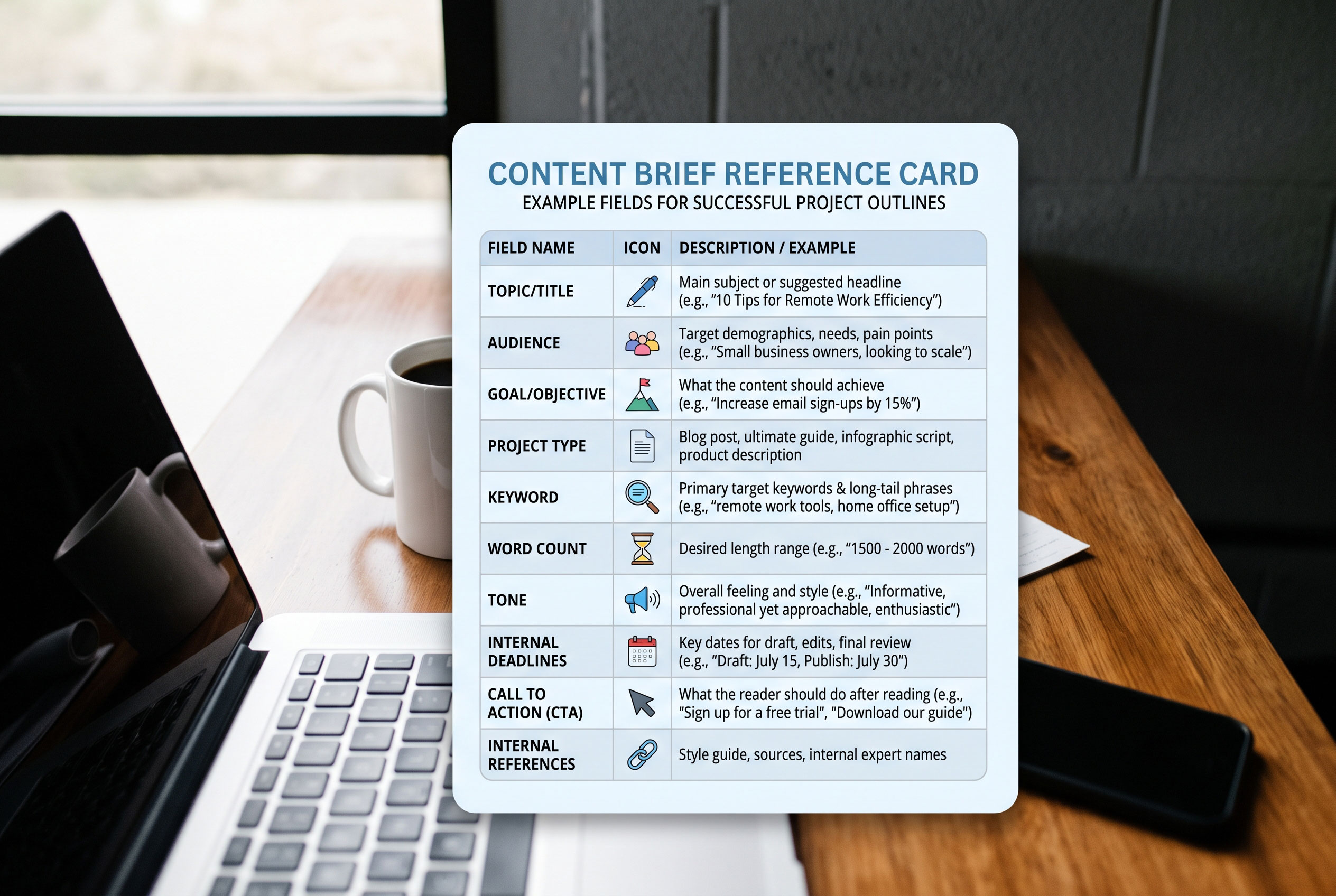
While formats differ across industries, most content briefs
address a similar set of core questions. The table below summarizes elements
commonly found in content briefs used for digital and marketing content.
|
Component |
Typical Purpose |
|
Topic and title |
Defines the subject matter and, sometimes, a working
headline |
|
Target audience |
Describes who the content is written for |
|
Purpose or goal |
States what the content should achieve (inform, convert,
rank, etc.) |
|
Target keyword(s) |
Specifies search terms the content should target, in SEO
contexts |
|
Word count |
Sets an expected or minimum length |
|
Tone and style |
Describes voice, formality, and brand guidelines |
|
Structure or outline |
Suggests headings, sections, or required subtopics |
|
Sources or references |
Provides research material, statistics, or links to cite |
|
Call to action |
Indicates a desired reader action, if applicable |
|
Competitor examples |
Shows similar content already published, especially in SEO
briefs |
|
Formatting requirements |
Notes image needs, metadata, or platform-specific
formatting |
Not every brief includes all of these elements; a brief for
an internal memo, for example, is unlikely to include SEO-related fields, while
a brief for a blog post intended to rank in search engines commonly does.
Types of Content Briefs
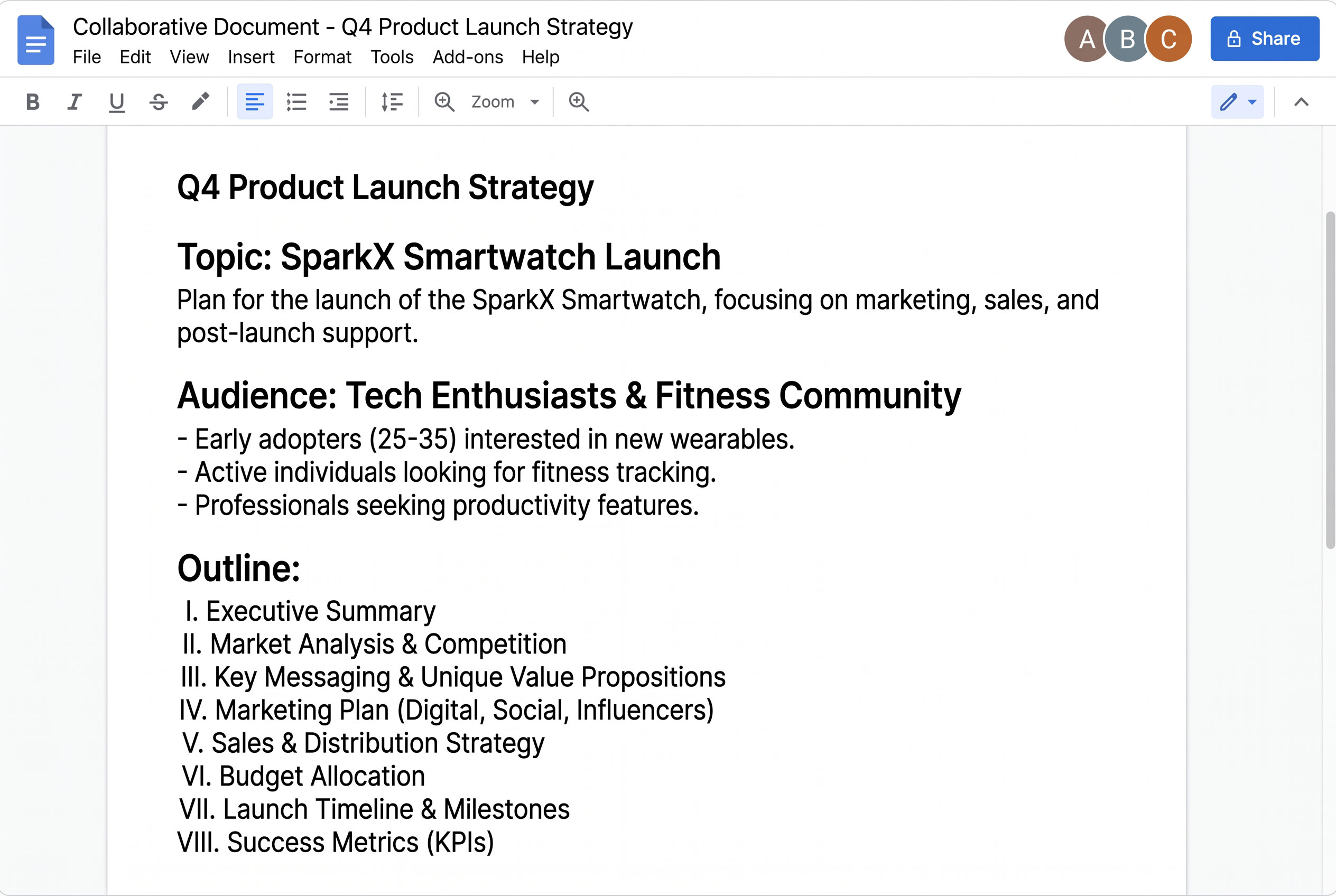
Content briefs are typically adapted to the medium and
purpose of the content being produced.
SEO Content Briefs
These are among the most detailed brief types, often
including target keywords, estimated search volume, competitor analysis, and
questions the content should answer, drawn from tools that analyze existing
search results. SEO briefs are common in content marketing agencies and
in-house marketing teams focused on organic search traffic.
Editorial or Journalistic Briefs
Newsrooms and publications sometimes use simpler briefs,
often called story assignments, focused on angle, sources, deadline, and
length rather than search-related metrics.
Video and Multimedia Briefs
For video scripts, podcasts, or multimedia projects, briefs
may include additional fields such as run time, visual direction, and platform
specifications (for example, vertical video for social media).
Internal Communications Briefs
Corporate communications teams may use lighter-weight briefs
for internal newsletters, memos, or announcements, emphasizing message clarity
and approval chains over audience research.
Development Process
Producing a content brief typically involves several stages,
though practices vary by organization.
- Research
— identifying audience needs, relevant keywords, or existing coverage of
the topic.
- Drafting
the brief — compiling requirements into the chosen template.
- Internal
review — having a manager, editor, or subject-matter expert confirm
accuracy and completeness.
- Handoff
— delivering the brief to a writer or content team, often through a shared
document or project management tool.
- Revision
during production — briefs are sometimes updated if new information
emerges while the content is being written.
Some organizations use dedicated software for brief
creation, including SEO platforms that generate briefs semi-automatically based
on analysis of top-ranking pages for a given keyword. The extent to which such
tools are used, and their reliability, varies and is a subject of ongoing
discussion among content marketing practitioners.
Relationship to Content Strategy
A content brief operationalizes decisions made at the
content strategy level. Content strategy typically addresses broader questions,
such as which topics an organization should cover and how often it should
publish, while a brief applies those decisions to a single piece of content.
Organizations without a documented content strategy may still use briefs,
though practitioners commonly note that briefs are most effective when they
derive from a clear underlying strategy rather than being created ad hoc for
each request.
Criticism and Limitations
Some practitioners argue that overly rigid or lengthy
content briefs can constrain a writer's creativity or lead to formulaic content,
particularly when briefs are generated primarily to match patterns found in
existing top-ranking search results rather than to serve reader needs. Others
contend that briefs, when reasonably concise, are a necessary safeguard against
inconsistent quality and wasted revision time, especially at scale. There is no
universal consensus on the ideal level of detail a brief should contain, and
practice differs widely between individual writers, agencies, and large
publishers.
Current Status
Content briefs remain a standard part of content production
workflows in digital marketing as of the mid-2020s, with continued adoption of
software tools intended to partially automate their creation. Their format and
emphasis continue to evolve alongside changes in search engine algorithms and
publishing practices.