

Web development is the process of building,
programming, and maintaining websites and web applications so they function
correctly and can be accessed over the internet. It encompasses a range of
tasks, including writing code for the visual and interactive parts of a site,
managing the servers and databases that store and process data, and ensuring
that the finished product works reliably across different devices and browsers.
Web development is typically divided into three broad areas: front-end
development, back-end development, and full-stack development,
which combines both.
The field emerged alongside the growth of the World Wide Web
in the early 1990s and has since expanded into a major segment of the
technology industry, supporting everything from personal blogs to large-scale
e-commerce platforms and enterprise software systems. Web development is
closely related to, but distinct from, web design, which focuses on
visual layout and user experience rather than the underlying code.
Quick answer: Web development is the technical work
of creating websites and web applications, including writing code, managing
servers and databases, and testing functionality, so that a site operates
correctly and is accessible to users online.
Infobox
|
Field |
Details |
|
Field of study |
Computer science / Information technology |
|
Also known as |
Website development, web programming |
|
Main disciplines |
Front-end, back-end, full-stack |
|
Common languages |
HTML, CSS, JavaScript, Python, PHP, Java, Ruby |
|
Related fields |
Web design, software engineering, UX/UI design |
|
Emerged |
Early 1990s, alongside the World Wide Web |
Overview
Web development involves translating a design or functional
requirement into a working website or application. This process typically
requires knowledge of markup and programming languages, an understanding of how
web browsers and servers communicate, and familiarity with tools used to test
and deploy code.
Note: The term "web development" is
sometimes used loosely to include web design, but the two are generally treated
as separate disciplines within the industry, with designers focusing on
appearance and usability and developers focusing on implementation and
functionality.
History and Development
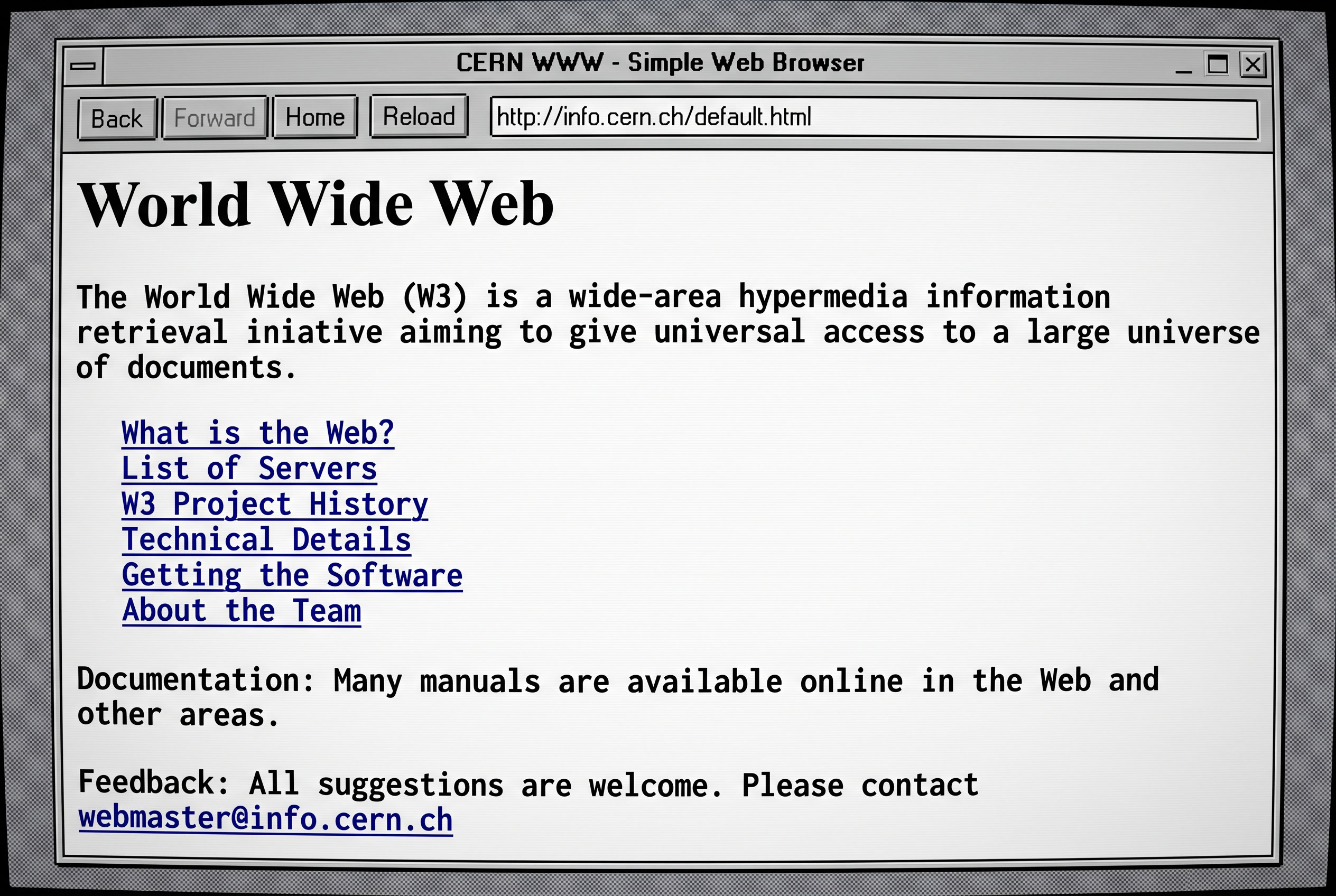
The origins of web development trace back to 1989–1991,
when Tim Berners-Lee, a researcher at CERN, proposed and later implemented the
foundational technologies of the World Wide Web, including HTML
(HyperText Markup Language) and the first web browser and server software.
Early websites consisted almost entirely of static text and simple hyperlinks,
with little to no interactivity.
Through the mid-to-late 1990s, the introduction of CSS
(Cascading Style Sheets) allowed developers to separate visual styling from
content structure, while JavaScript, introduced by Netscape in 1995,
enabled basic interactivity within the browser. The following decade saw the
rise of server-side scripting languages such as PHP and frameworks that
made it easier to build dynamic, database-driven websites.
By the 2010s, the distinction between front-end and back-end
development had become more formalized, and JavaScript frameworks such as React,
Angular, and Vue.js emerged to help developers build complex, interactive web
applications. Mobile-responsive design also became a standard expectation as
smartphone browsing grew.
Timeline of Key Milestones
|
Period |
Development |
|
1989–1991 |
Proposal and early implementation of the World Wide Web,
HTML, and HTTP |
|
1995 |
Introduction of JavaScript for browser-based interactivity |
|
Late 1990s |
Growth of CSS for visual styling separate from content |
|
2000s |
Rise of server-side languages and content management
systems |
|
2010s |
Emergence of major JavaScript frameworks and
mobile-responsive design |
|
2020s |
Continued growth of full-stack frameworks and
component-based development |
Sources disagree on the precise dates for some early
milestones, as the web's development involved overlapping contributions from
multiple individuals and organizations rather than a single defined release.
Main Disciplines
Web development is commonly divided into the following
categories, though the boundaries between them can overlap depending on the
project and the developer's role.
Front-End Development
Front-end development, also called client-side
development, involves building the parts of a website that users see and
interact with directly in their browser. This includes layout, visual styling,
and interactive elements such as buttons, forms, and menus.
Common front-end technologies include:
- HTML
– structures the content of a page
- CSS
– controls visual presentation
- JavaScript
– enables interactivity and dynamic behavior
Back-End Development

Back-end development, or server-side development,
involves the parts of a website that operate behind the scenes, such as
servers, databases, and application logic. Back-end code handles tasks like
processing form submissions, managing user accounts, and retrieving or storing
data.
Commonly used back-end languages and technologies include
Python, PHP, Java, Ruby, and Node.js, often paired with database systems such
as MySQL, PostgreSQL, or MongoDB.
Full-Stack Development
Full-stack development refers to work that spans both
front-end and back-end responsibilities. A full-stack developer typically has
working knowledge of client-side technologies, server-side programming, and
database management, allowing them to build a complete web application
independently or as part of a smaller team.
How Web Development Works
Building a website generally follows a sequence of stages,
though specific workflows vary by team, project size, and methodology.
- Planning
and requirements gathering – Defining the site's purpose, features,
and target audience.
- Design
handoff – Translating visual designs, often created separately by a
web designer, into a technical structure.
- Front-end
implementation – Coding the visual and interactive layer using HTML,
CSS, and JavaScript.
- Back-end
implementation – Building server logic, databases, and application
programming interfaces (APIs) that the front end communicates with.
- Testing
– Checking functionality, performance, and compatibility across browsers
and devices.
- Deployment
– Publishing the site to a live server so it becomes accessible on the
internet.
- Maintenance
– Ongoing updates, bug fixes, and security patches after launch.
Comparison with Related Fields
|
Field |
Primary Focus |
Typical Output |
|
Web development |
Building functional websites/apps |
Working code, servers, databases |
|
Web design |
Visual layout and user experience |
Mockups, style guides, interface designs |
|
Software engineering |
Broader application and systems development |
Software for web, desktop, or embedded systems |
|
UX/UI design |
User research and interface usability |
Wireframes, prototypes, usability testing results |
While these fields are distinct, professionals in practice
often work across more than one, particularly in smaller organizations where
roles are less specialized.
Tools and Technologies
Web developers commonly rely on a range of supporting tools,
including:
- Code
editors and integrated development environments (IDEs), such as Visual
Studio Code
- Version
control systems, most notably Git, for tracking changes to code
- Frameworks
and libraries, such as React, Django, or Laravel, which provide
reusable structures for common tasks
- Content
management systems (CMS), such as WordPress, which allow website
creation with less custom coding
- Browser
developer tools, used to inspect and debug front-end code directly in
the browser
Significance and Impact
Web development underpins much of the modern internet,
supporting online communication, commerce, education, and entertainment.
Businesses and organizations across virtually every sector rely on websites and
web applications to reach users, and the discipline has grown into a distinct
and widely recognized career path within the technology industry.
The field continues to evolve alongside changes in browser capabilities, internet infrastructure, and user expectations, with ongoing shifts toward more component-based, application-like websites rather than simple static pages.