
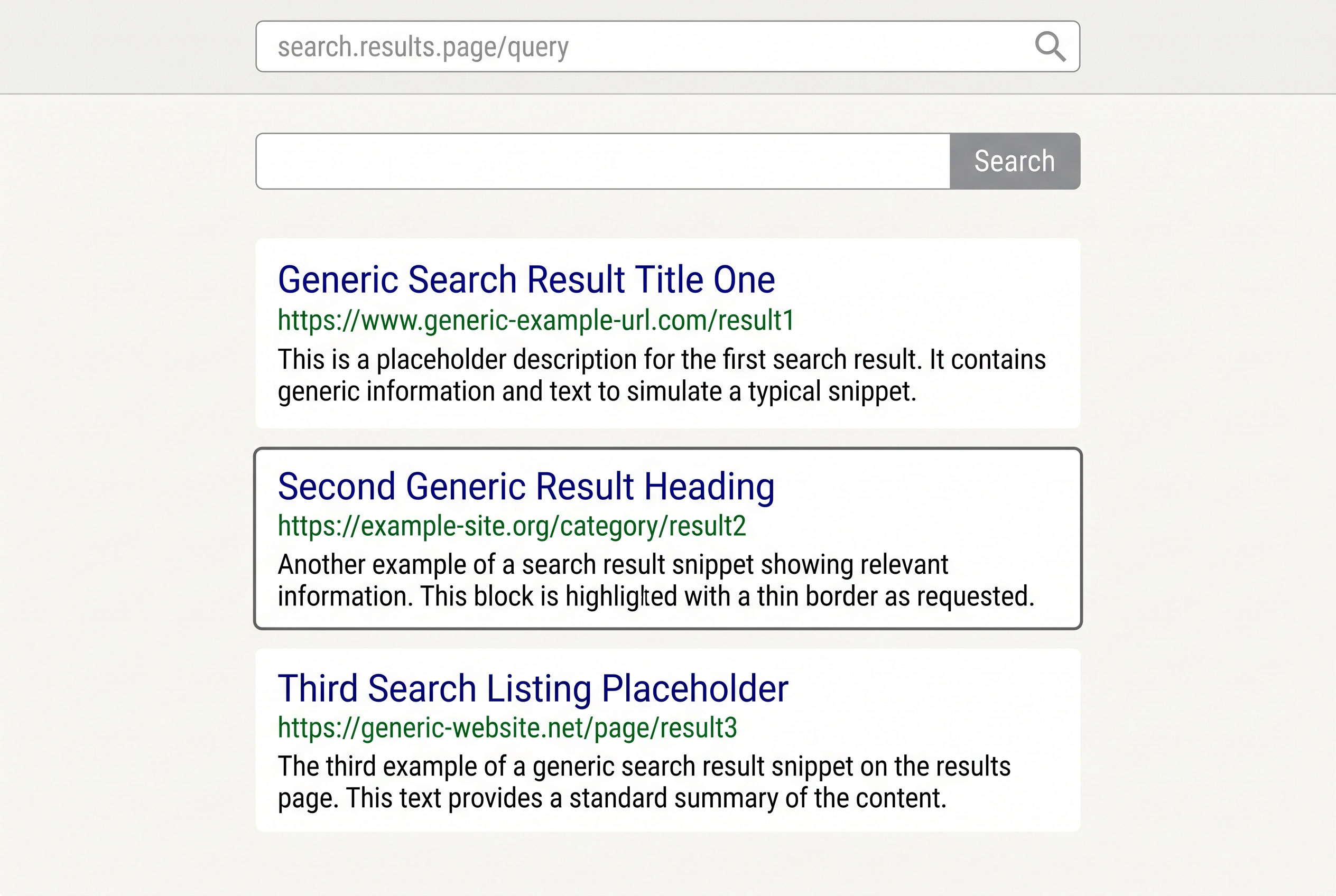
A meta description is an HTML element that provides a
short summary of a web page's content. It is written as a <meta> tag with
the attribute name="description" and is placed in the page's <head>
section. Search engines may display its text as the snippet beneath a
page's title in search results, though they are not required to.
The meta description is not shown on the page itself. Major
search engines, including Google, have stated that it is not a direct ranking
factor, but a well-matched snippet can influence whether a reader chooses to
open a result. The element is one of several metadata fields, alongside the
title element, used to describe a page to machines and people.
Note: The meta description is distinct from the meta
keywords tag, an older element listing search terms. Google has stated
since 2009 that it does not use the keywords tag in web ranking.
|
Meta description |
|
|
Type |
HTML metadata element |
|
Syntax |
<meta name="description"
content="..."> |
|
Location |
<head> section of an HTML document |
|
Defined in |
HTML specification (WHATWG HTML Living Standard) |
|
Visible on page |
No |
|
Direct ranking factor |
No, according to Google |
|
Typical display length |
Roughly 150–160 characters (varies) |
|
Related elements |
Title element, Open Graph tags, Twitter Card tags |
Overview
Web pages contain content visible to visitors and metadata
visible mainly to software. The <meta> element carries the latter, with
different name values serving different purposes: viewport for mobile
rendering, robots for crawler instructions, and description for a summary.
The HTML specification describes the description value as a
short, human-readable summary of the page. It does not set a length limit,
mandate a format, or oblige software to display it. Search engines therefore
treat it as a suggestion rather than a command.
History
The <meta> element has existed since the early years
of HTML and was included in the HTML 2.0 specification published as RFC 1866
in 1995. Early web search engines relied heavily on page-supplied metadata
because they had limited ability to analyze full text. The description and keywords
values became common conventions rather than formal standards.
Widespread abuse of the keywords tag through repetition of
irrelevant terms led search engines to discount it. Google's public statement
in September 2009 that it ignored the keywords tag is often cited as a turning
point. The description tag was retained for snippet generation, and Google has
said that it does not use the description for ranking.
Social platforms later introduced parallel fields. The Open
Graph protocol, introduced by Facebook in 2010, added og:description.
Twitter's card markup added twitter:description. These are separate from the
standard description tag.
How it works
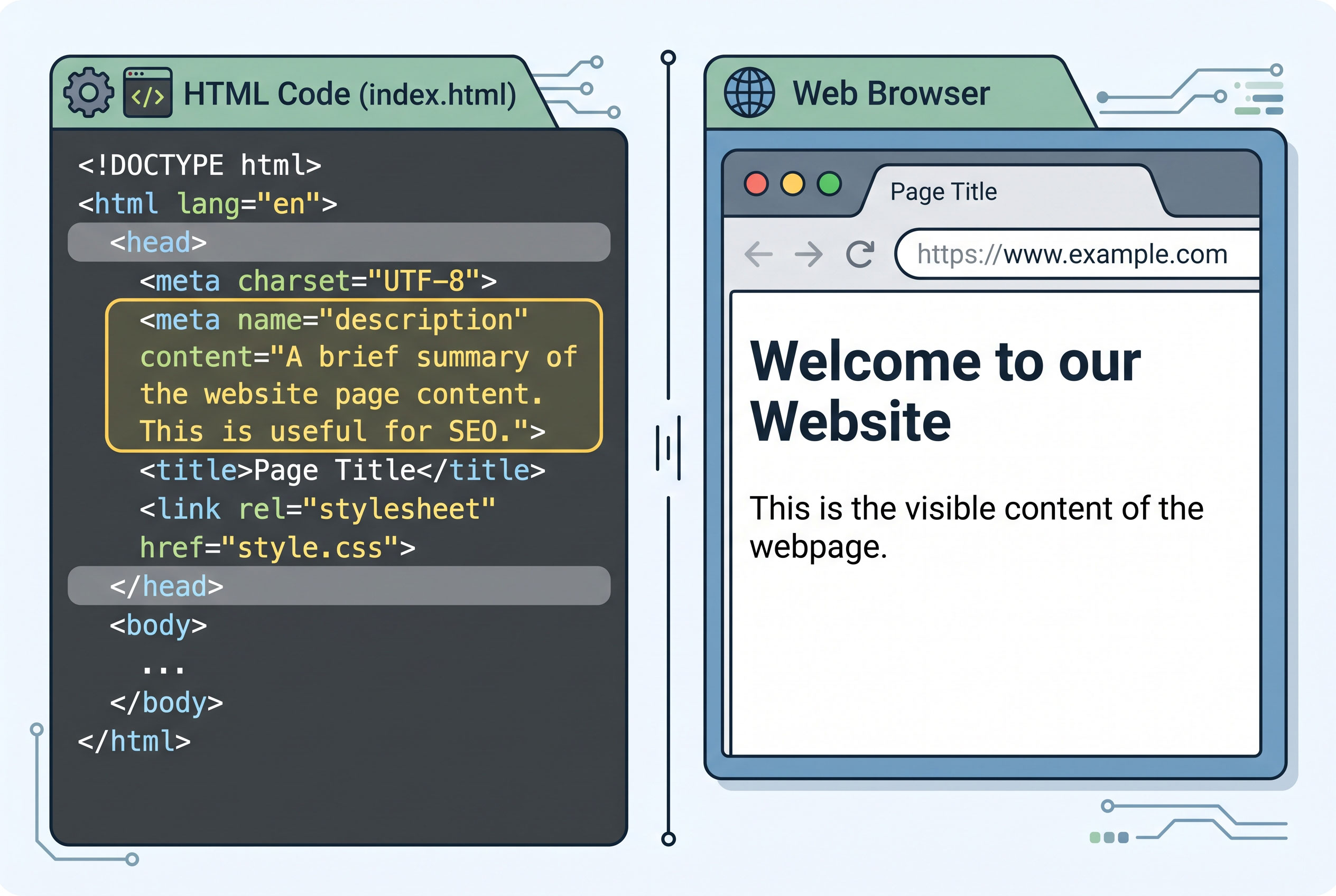
Syntax and placement
A typical declaration looks like this:
<meta name="description" content="A short
summary of the page.">
The element belongs in the <head>. Each page should
carry one description tag. Quotation marks inside the content value should be
escaped or avoided, since they can break the attribute.
Snippet generation
When a search engine indexes a page, it can build a snippet
from the meta description, from text on the page, or from a combination.
Google's documentation states that it uses the meta description when it is
judged to describe the page better than text extracted from the content. Its
systems may also generate different snippets for different queries on the same
page.
Third-party analyses have reported that search engines often
replace the supplied description, with published estimates varying by study and
dataset. Because these figures depend on methodology, no single number is
settled.
Length
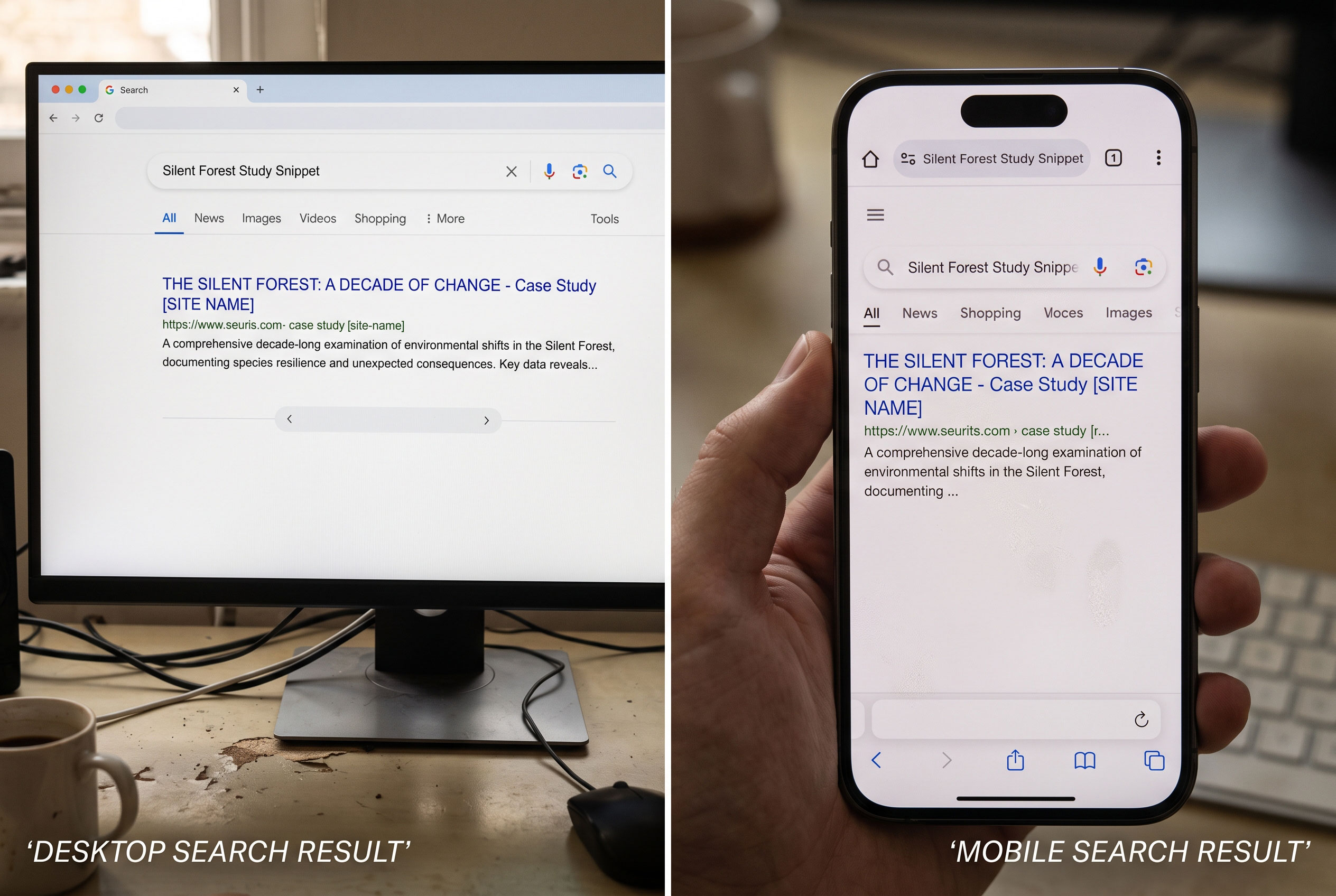
Neither the HTML specification nor Google's documentation
sets a fixed character limit. Truncation depends on the pixel width of the
displayed text and on the device. Commonly cited working ranges are:
|
Context |
Commonly cited range |
Notes |
|
Desktop results |
About 150–160 characters |
Width-based truncation, often with an ellipsis |
|
Mobile results |
About 120 characters |
Varies by device and layout |
|
Social sharing previews |
Varies by platform |
Determined by each platform's card format |
These ranges are conventions from practitioners, not
official requirements, and search interfaces change over time.
Uses and Practices
Guidance from search engines and web standards documentation
generally recommends the following:
- Unique
descriptions per page. Google advises against reusing one description
across many pages, since duplicates give little information to distinguish
results.
- Accurate
summaries. The text should reflect actual page content. Misleading
descriptions may be ignored and can reduce reader trust.
- Plain
language. Full sentences are preferred over lists of keywords.
- Relevant
facts. For some pages, such as products or articles, specific details
(a date, author, or price) can help a reader judge relevance.
Search terms that match a reader's query may appear in bold
in the snippet, one reason writers often include the page's main subject in the
description.
Controlling snippets
Site owners can limit what appears in results. Google
supports the nosnippet robots directive, the max-snippet directive to cap
length, and the data-nosnippet attribute to exclude specific page sections.
These controls apply to snippets in general, whether drawn from the meta
description or from page text.
Comparison with related elements
|
Element |
Purpose |
Displayed where |
|
Title element |
Names the page |
Browser tab; search result headline |
|
Meta description |
Summarizes the page |
Search result snippet (not guaranteed) |
|
Meta keywords |
Listed search terms |
Not used by Google for ranking |
|
og:description |
Summary for social sharing |
Link previews on supporting platforms |
|
Structured data |
Machine-readable facts |
May enable enhanced search features |
Common misconceptions
- It
improves ranking directly. Google states that the description is not a
ranking factor. Indirect effects, such as a higher click rate from a
clearer snippet, are widely discussed, but the extent to which search
engines use click behavior is disputed.
- It
always appears in results. Search engines choose snippets per query
and may substitute page text.
- There
is a strict character limit. Displayed length varies, and text beyond
it is simply truncated.
- It
replaces the keywords tag. The two elements have different histories
and treatment.
Current status
The meta description remains part of standard HTML practice and is supported by all major search engines. Its role is limited to snippet generation and previews, and search engines continue to reserve the right to display other text. Specific display lengths and snippet behavior may change, so current documentation from each search engine is the authoritative reference.