
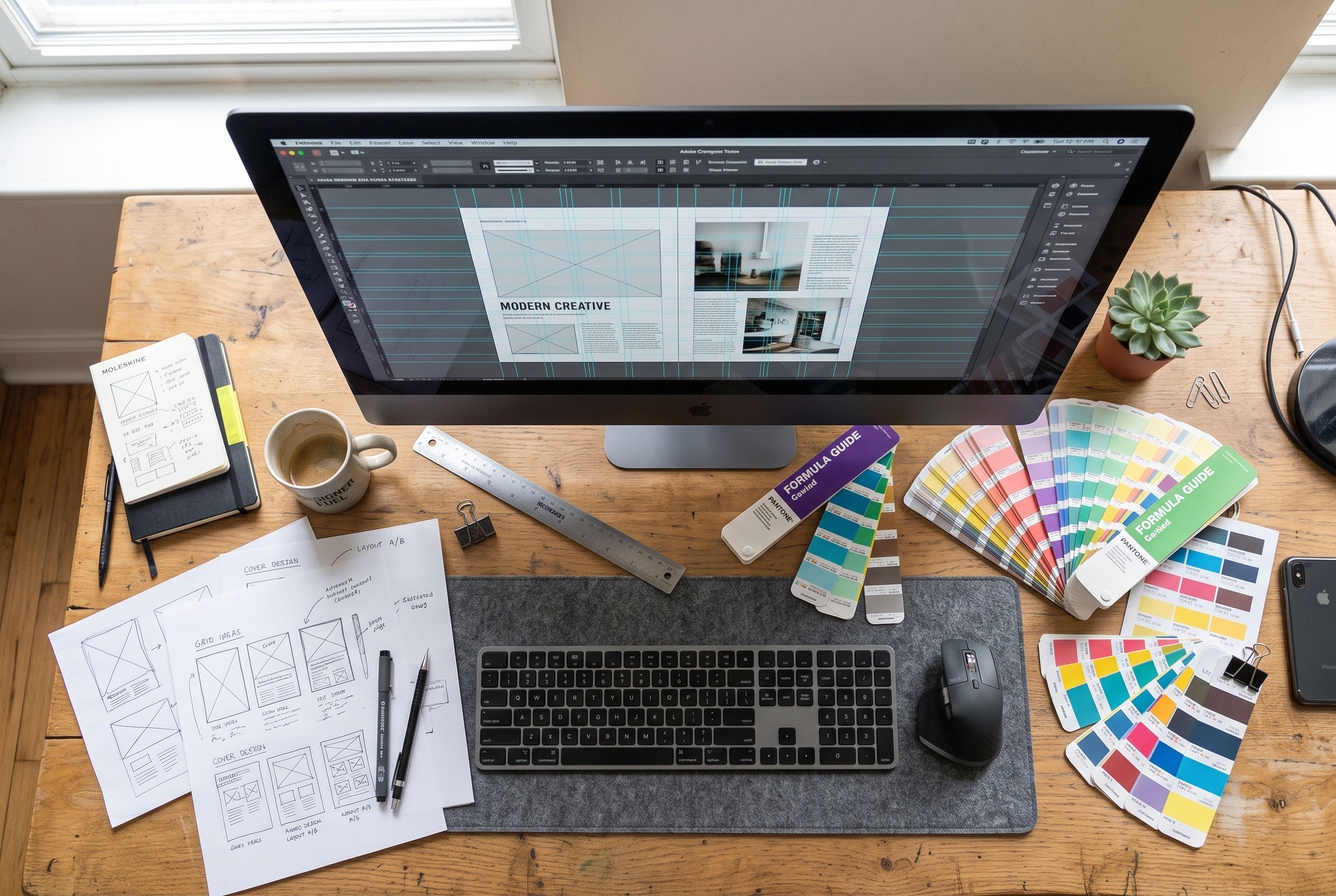
Graphic
design is the
practice of planning and creating visual content to communicate ideas,
information, or messages through the arrangement of images, typography, color,
and layout. It is commonly used across print, digital, and environmental media
to inform, persuade, brand, or instruct audiences. In short: graphic design is
the craft of solving communication problems visually, combining text and
imagery in a way that is both functional and aesthetically considered.
Graphic
design spans a wide range of applications, including advertising, publishing,
corporate branding, packaging, user interfaces, and signage. A person who
practices graphic design professionally is generally called a graphic
designer, and the field draws on principles from fine art, typography,
psychology, and, in recent decades, computer science and human-computer
interaction. Graphic design is distinct from fine art in that it is typically
produced to serve a specific communicative or commercial purpose, though the
two fields frequently overlap in technique and visual vocabulary.
|
Field |
Summary |
|
Also
known as |
Visual
communication design |
|
Practitioner |
Graphic
designer |
|
Core
elements |
Typography,
color, imagery, layout, hierarchy |
|
Common
tools |
Vector and
raster editing software, layout applications |
|
Related
fields |
Advertising,
illustration, UX/UI design, industrial design |
|
Typical
outputs |
Logos,
posters, packaging, websites, publications, signage |
Overview
At its core,
graphic design involves selecting and arranging visual elements — text, images,
shapes, and space — to convey a message clearly to an intended audience.
Designers typically work within constraints such as a client's goals, budget,
technical medium, and brand guidelines. The discipline requires both technical
skill, such as proficiency with design software, and conceptual skill, such as
understanding how visual choices affect perception and meaning.
Graphic
design differs from related fields in scope. Illustration focuses on
creating original imagery, while graphic design focuses more broadly on the
composition and communication strategy that imagery is placed within. User
experience (UX) design and user interface (UI) design overlap with
graphic design in digital contexts but place greater emphasis on interactivity
and usability rather than static visual communication alone.
History
and Development

Visual
communication predates the formal profession of graphic design by centuries,
with roots in early writing systems, manuscript illumination, and printed
materials following the invention of the movable-type printing press in the
15th century, commonly attributed to Johannes Gutenberg. However, the
term "graphic design" as a distinct profession is generally traced to
the early 20th century.
The phrase
is often credited to American designer William Addison Dwiggins, who
used it in 1922 to describe his work organizing text and image for book design.
Through the 20th century, several movements shaped the visual language of
modern graphic design:
- The Bauhaus school in
Germany (1919–1933) emphasized functional, geometric design and integrated
art with industrial production.
- The International Typographic
Style, also called Swiss Style, emerged in the 1950s and emphasized
grid-based layouts, sans-serif typography, and objective clarity.
- The rise of advertising
agencies in the mid-20th century, particularly in the United States,
expanded commercial applications of graphic design.
- The introduction of desktop
publishing in the 1980s, enabled by software such as PageMaker and
later Adobe products alongside the Apple Macintosh, shifted much of the
profession from manual paste-up methods to digital workflows.
Since the
1990s, the growth of the internet and mobile devices has expanded graphic
design into digital and interactive contexts, giving rise to specializations
such as web design and interface design.
Note: Graphic design is sometimes
conflated with "graphic art," an older and broader term referring to
visual art reproduced in multiples, such as prints and engravings. While
related historically, graphic art is not synonymous with the modern
professional practice of graphic design.
Core
Principles
Graphic designers
typically apply a set of foundational principles when constructing visual
compositions. While terminology varies by source, commonly cited principles
include:
Typography
Typography refers to the selection and
arrangement of typefaces to make written language legible, readable, and
visually appropriate to its context. Typographic choices include typeface
style, size, spacing, and alignment.
Layout
and Grid Systems
Layout
concerns how elements are positioned within a given space. Many designers use grid
systems — underlying structural frameworks — to align content consistently,
a practice popularized by the Swiss Style movement.
Color
Theory
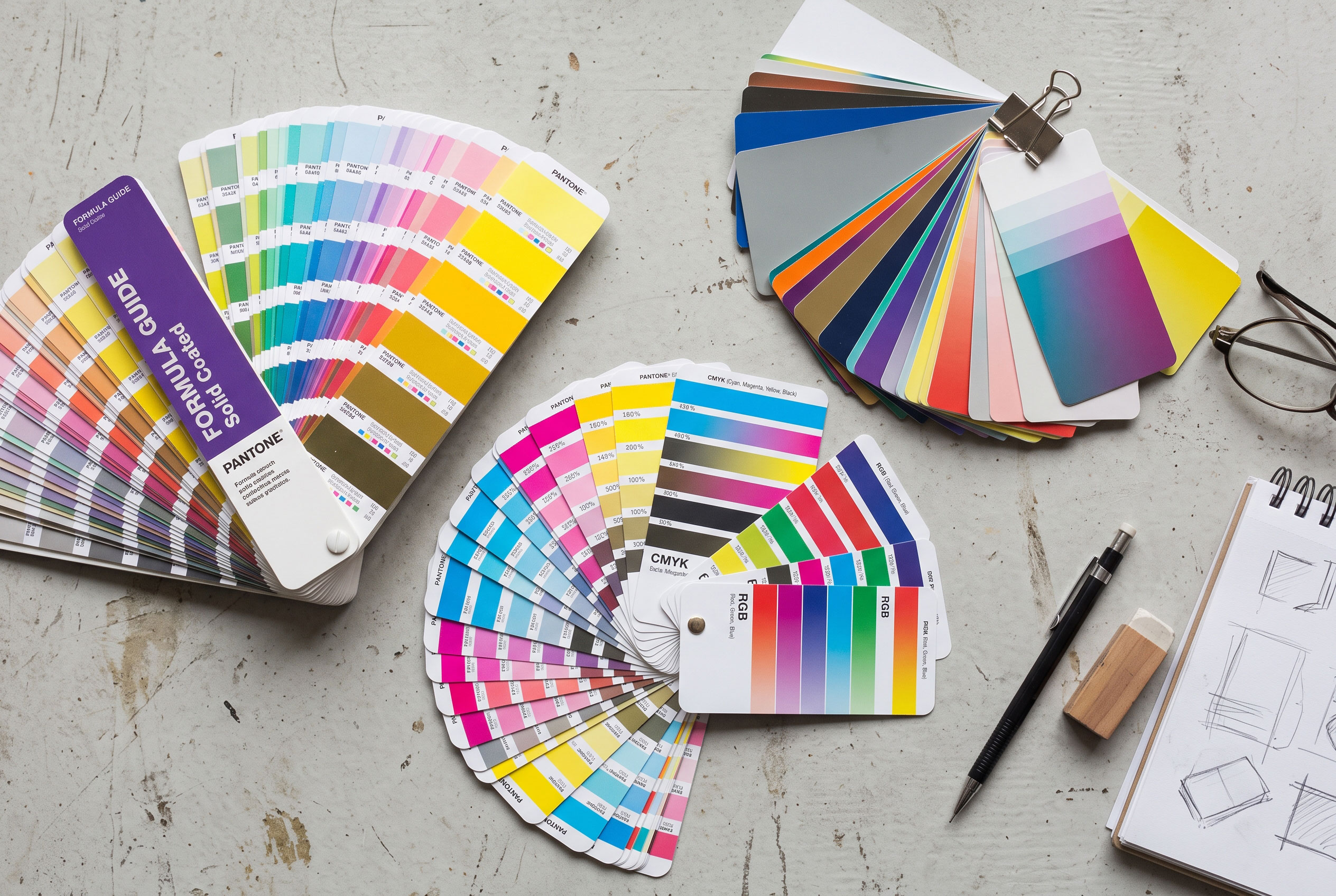
Color is
used to establish mood, hierarchy, and brand recognition. Designers often
reference color theory concepts such as complementary and analogous color
relationships, as well as the psychological associations commonly attributed to
specific colors, which can vary across cultures.
Visual
Hierarchy
Visual
hierarchy refers to the arrangement of elements to guide a viewer's attention
in a deliberate order, typically achieved through variations in size, contrast,
color, and placement.
Balance
and Alignment
Compositional
balance — whether symmetrical or asymmetrical — and consistent alignment
contribute to a design's sense of order and professionalism.
Types of
Graphic Design
Graphic
design is commonly divided into subfields based on application:
|
Type |
Typical
Output |
|
Brand
identity design |
Logos,
brand guidelines, business cards |
|
Publication
design |
Books,
magazines, newspapers |
|
Packaging
design |
Product
boxes, labels, containers |
|
Advertising
design |
Posters,
billboards, digital ads |
|
Web and
UI design |
Websites,
applications, digital interfaces |
|
Motion
graphics |
Animated
title sequences, video graphics |
|
Environmental
design |
Signage,
wayfinding, exhibition design |
These
categories are not mutually exclusive, and many designers work across multiple
types depending on project needs.
Tools and
Technology
Historically,
graphic design was executed through manual techniques such as hand lettering,
paste-up, and photomechanical reproduction. Since the late 20th century, the
field has largely transitioned to digital tools. Commonly used categories of
software include:
- Vector graphics editors, used for creating scalable
illustrations, logos, and layouts.
- Raster (bitmap) editors, used for photo editing and
pixel-based image manipulation.
- Page layout applications, used for multi-page documents
such as magazines and books.
- Prototyping and interface design
tools, used
specifically for digital product design.
Despite the
dominance of digital tools, many designers continue to begin projects with
manual sketching or physical mockups as part of the conceptual process.
Education
and Profession
Graphic
design is taught at the undergraduate and graduate levels at many art and
design schools, often as part of a Bachelor of Fine Arts (BFA) or
equivalent program. Professional organizations, such as the American
Institute of Graphic Arts (AIGA) in the United States, provide industry
standards, ethical guidelines, and professional development resources, though
requirements and licensing (or the absence thereof) vary by country.
Graphic
designers may work as in-house employees at companies, within design or
advertising agencies, or as independent freelancers. Common employment sectors
include publishing, marketing, technology, and entertainment.
Criticism
and Debates
Several
ongoing debates exist within the field. One concerns the balance between form
and function — the tension between creating visually striking work and
ensuring designs remain clear and usable for their intended audience. Another
concerns the environmental and ethical implications of design choices, such as
excessive packaging or the use of persuasive visual techniques in advertising,
which some critics argue can contribute to overconsumption or misleading
communication. These criticisms are generally directed at specific applications
of design rather than the discipline as a whole, and views on them vary among
practitioners, scholars, and the public.
Relevance
and Current Status
Graphic
design remains a widely practiced profession, with continued growth in digital
and interactive applications alongside traditional print work. The field
continues to evolve alongside new technologies, including software for
automated layout generation and design assistance, though the extent to which
these tools will reshape professional practice remains a subject of ongoing
discussion within the industry.