
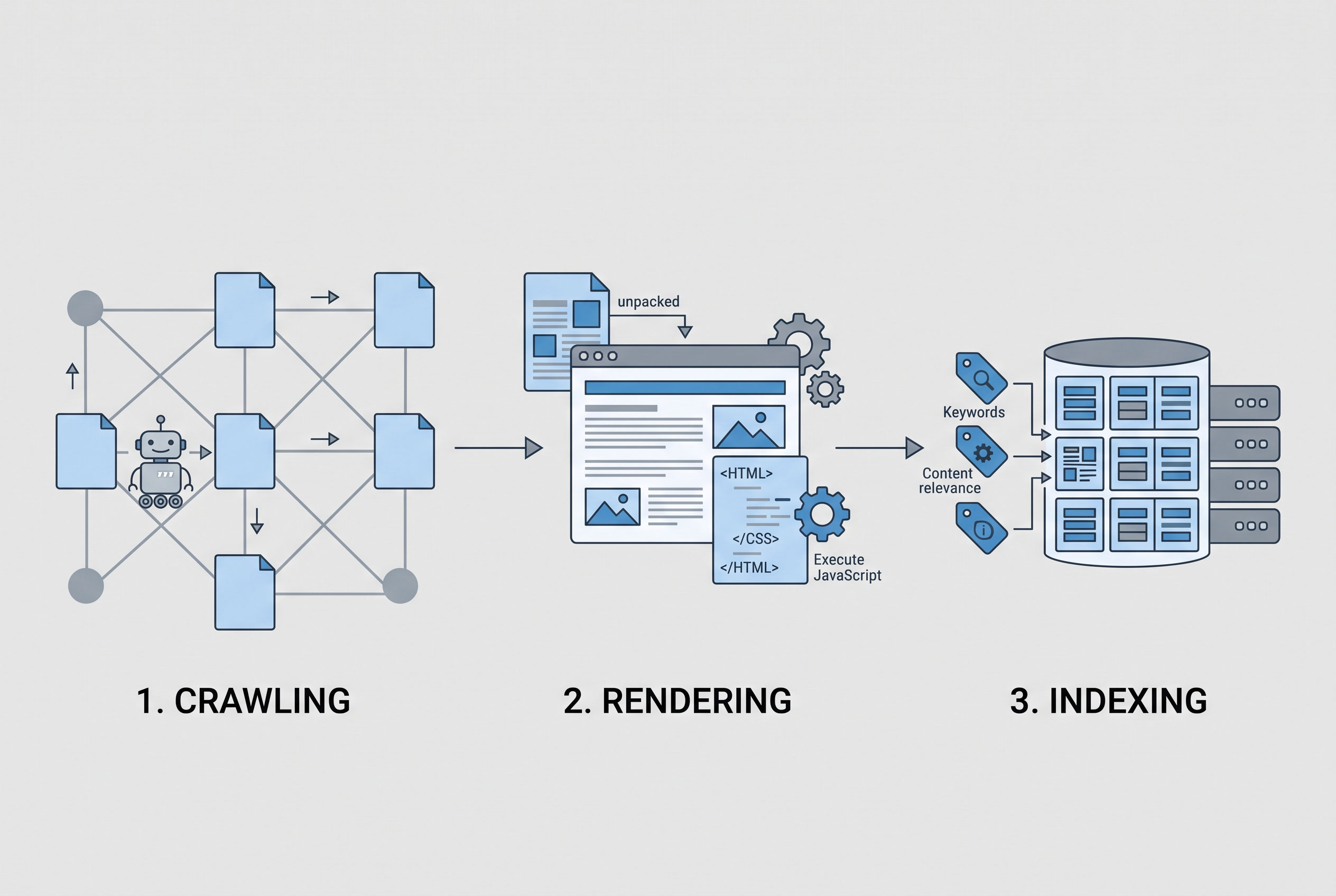
Technical SEO is the practice of optimizing a
website's underlying infrastructure so that search engines can efficiently
crawl, render, index, and interpret its pages. It is one of the main branches
of search engine optimization (SEO), alongside on-page SEO, which concerns page
content, and off-page SEO, which concerns external signals such as links.
Technical SEO addresses factors such as site architecture, page speed, mobile
usability, secure connections, and structured data. Its goal is to remove
technical barriers that prevent otherwise valuable content from appearing in
search results.
Note: Technical SEO is distinct from technical
writing and from general web development, although it overlaps with the latter.
Its focus is specifically how search engines access and process a site.
|
Field |
Details |
|
Field |
Search engine optimization |
|
Focus |
Crawling, rendering, indexing, site performance |
|
Common tools |
Server logs, search engine webmaster consoles, site
crawlers |
|
Related disciplines |
Web development, information architecture, web performance |
|
Typical practitioners |
SEO specialists, web developers, site reliability
engineers |
Overview
Search engines such as Google and Bing use automated
programs, commonly called crawlers or bots, to discover web pages
by following links. The discovered pages are then processed and stored in an index,
a large database from which results are drawn when users submit queries. If a
page cannot be crawled or indexed, it generally cannot appear in results
regardless of its content quality.
Technical SEO concerns this access and processing layer. Its
tasks typically include confirming that important pages are reachable, that
duplicate or low-value pages do not consume crawler attention, and that pages
load and display correctly on a range of devices.
Background and Development
Early search engines of the 1990s relied heavily on simple
text signals and on webmasters submitting their sites. The robots exclusion
protocol (robots.txt) was proposed in 1994 as an informal standard to let
site owners indicate which areas crawlers should avoid. It was formalized by
the Internet Engineering Task Force (IETF) as RFC 9309 in 2022.
In 2005, Google, Yahoo, and Microsoft jointly announced
support for the sitemaps protocol, which allows sites to list their URLs
in an XML file. In 2009, the three engines also supported the canonical tag
(rel="canonical") as a way to indicate a preferred version among
duplicate pages. In 2011, Google, Bing, and Yahoo launched Schema.org, a
shared vocabulary for structured data.
More recent developments have centered on mobile and
performance. Google announced mobile-first indexing in 2016 and reported that
it became the default for new sites in 2019; sources describe a gradual rollout
to existing sites over several years. Google also confirmed HTTPS as a
lightweight ranking signal in 2014, and introduced Core Web Vitals as
part of its page experience signals in 2021.
Core Components
Crawlability
Crawlability refers to a search engine's ability to reach a
page. Factors include the robots.txt file, internal linking, server responses,
and the use of links that crawlers can follow. Pages that are not linked from
anywhere, known as orphan pages, may be discovered late or not at all
unless listed in a sitemap.
Crawl budget is a term used for the number of URLs a
search engine will crawl on a site within a given period. Google has stated
that crawl budget is mainly a concern for very large sites, generally those
with many thousands or millions of URLs, or sites that update very frequently.
Rendering
Many modern sites build page content using JavaScript.
Search engines may need to execute that code, a step called rendering,
before the full content is visible. Rendering can occur later than the initial
crawl, which may delay indexing of JavaScript-dependent content. Approaches
such as server-side rendering and pre-rendering exist partly to address this.
Indexability
Indexability concerns whether a crawled page is eligible to
be stored in the index. Site owners can influence this with the meta robots
tag and the X-Robots-Tag HTTP header, which can instruct engines not to
index a page. Canonical tags and redirects help consolidate duplicate versions
of content. Search engines retain discretion, and a page that is crawlable and
indexable is not guaranteed to be indexed.
Site Architecture and URLs
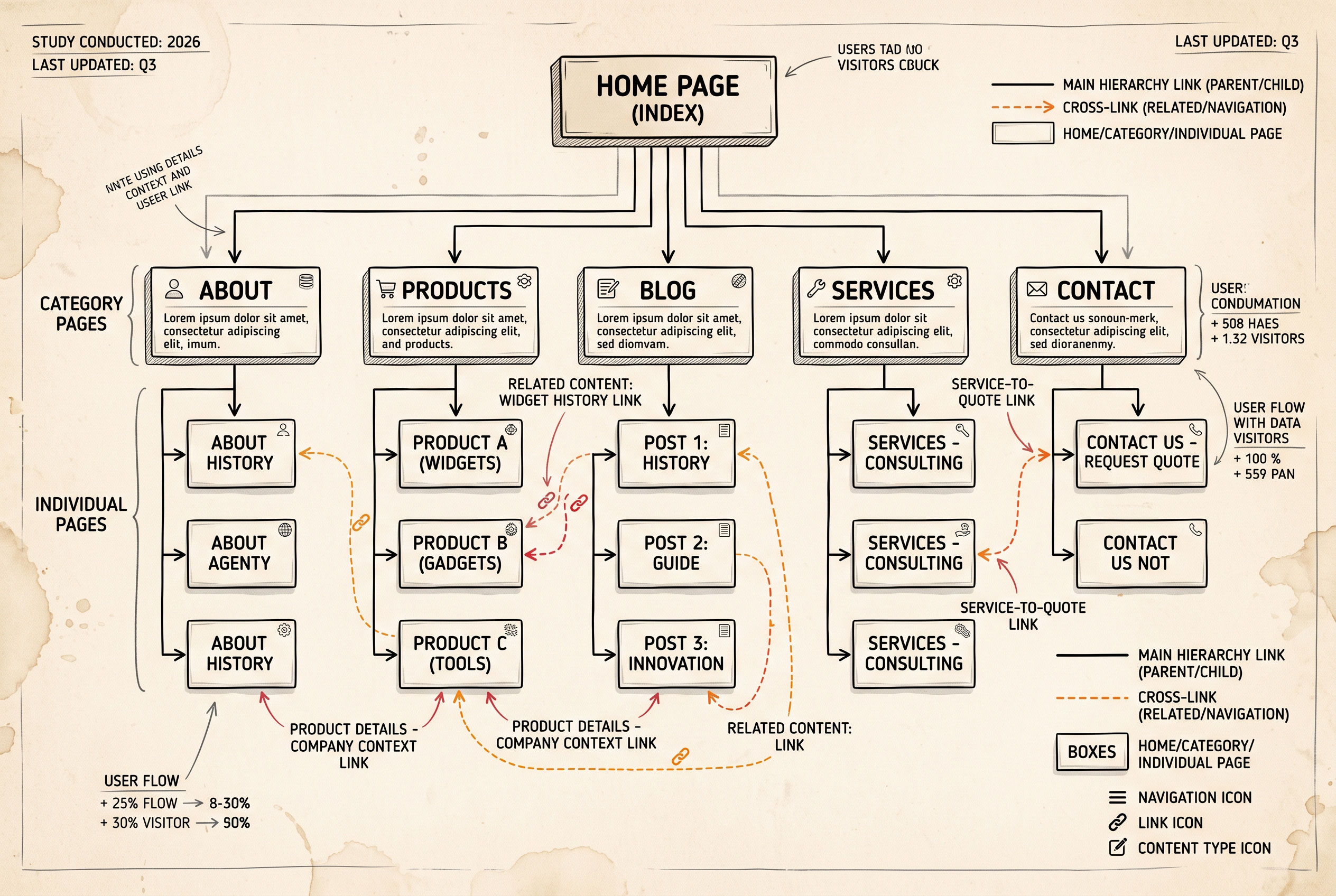
Site architecture describes how pages are organized and
linked. A logical structure helps crawlers find pages and helps users navigate.
Common recommendations include descriptive, consistent URLs and avoiding
excessive layers of navigation between the home page and important content.
Performance and Page Experience
Page speed and responsiveness affect both user experience
and, to a limited degree, search visibility. Core Web Vitals measure three
aspects of loading and interaction:
- Largest
Contentful Paint (LCP): time taken to display the main content
- Interaction
to Next Paint (INP): responsiveness to user input, which replaced
First Input Delay in March 2024
- Cumulative
Layout Shift (CLS): visual stability during loading
Google has described page experience as one of many signals,
and has stated that strong content relevance can outweigh it.
Security and Mobile Usability
Serving pages over HTTPS encrypts data in transit and
is widely treated as a baseline. Mobile usability matters because, under mobile-first
indexing, the mobile version of a page is generally the one used for indexing
and ranking.
Structured Data
Structured data is markup, commonly in the JSON-LD
format using the Schema.org vocabulary, that labels page content such as
products, articles, events, or recipes. It can make a page eligible for
enhanced search displays called rich results, though eligibility does not
guarantee display.
Comparison With Related Practices
|
Aspect |
Technical SEO |
On-page SEO |
Off-page SEO |
|
Primary concern |
Site infrastructure and access |
Content and page elements |
External signals, such as links |
|
Examples |
Sitemaps, robots.txt, speed |
Headings, titles, copy |
Backlinks, mentions |
|
Main audience |
Crawlers and indexing systems |
Readers and search engines |
Search engines' authority signals |
The boundaries are not fixed. Some practitioners classify
internal linking or structured data under on-page SEO, and sources differ on
where individual tasks belong.
Common Misconceptions
- Technical
SEO guarantees rankings. Technical improvements remove obstacles but
do not by themselves ensure higher positions; ranking depends on many
factors, including relevance and competition.
- Submitting
a sitemap forces indexing. A sitemap helps discovery but does not
require a search engine to index a URL.
- Blocking
a page in robots.txt prevents it from appearing in results. Robots.txt
controls crawling, not indexing; a blocked URL can still appear if other
pages link to it. A noindex directive is the mechanism intended for
exclusion, and it must be crawlable to be read.
Tools and Auditing
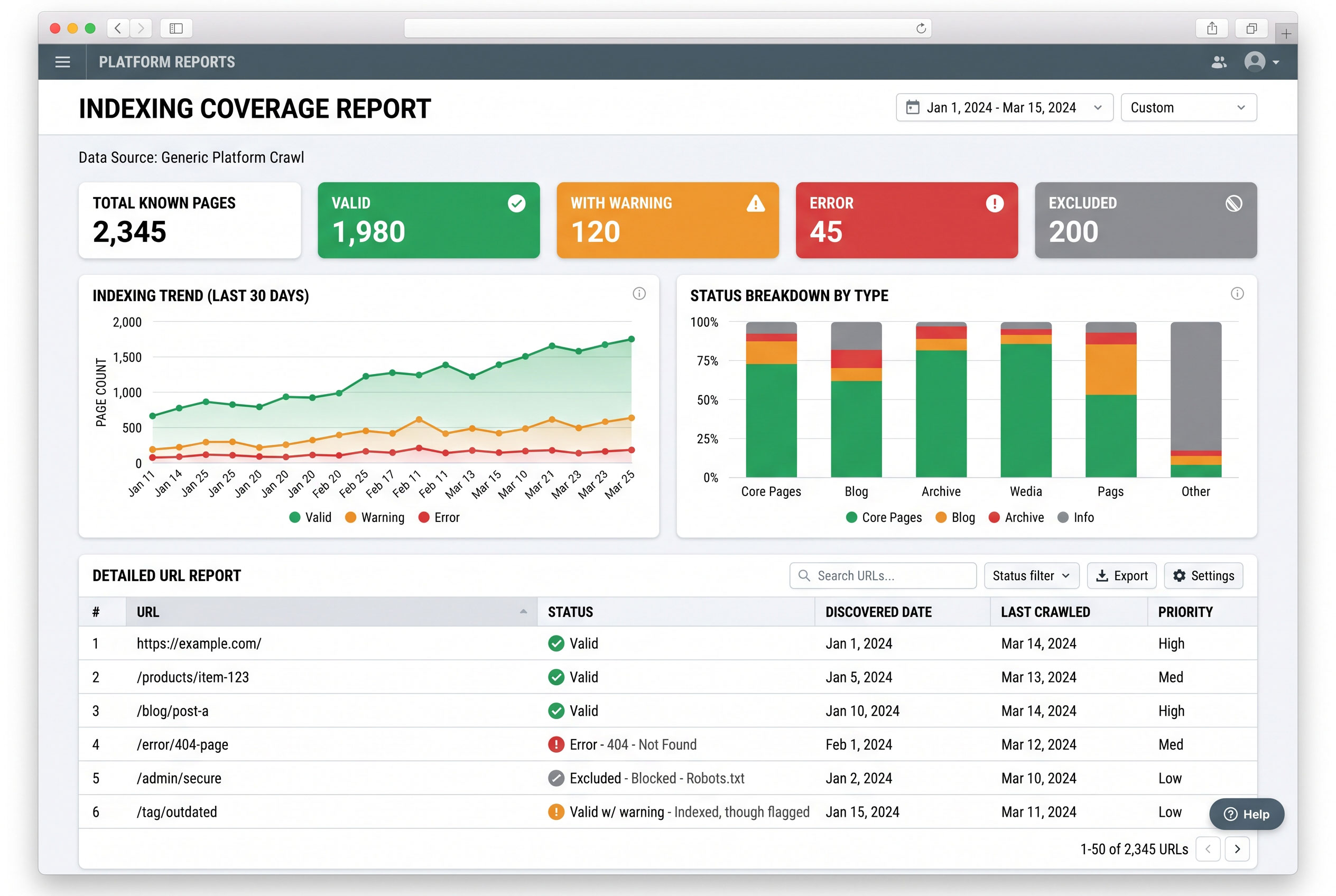
Technical SEO work commonly relies on search engine
consoles, such as Google Search Console and Bing Webmaster Tools, which report
indexing status, crawl errors, and performance data. Third-party site crawlers
simulate how a bot traverses a site and flag issues such as broken links,
redirect chains, and missing tags. Server log analysis shows how crawlers
actually behave on a site. Audits generally check for status code errors,
duplicate content, and mobile and performance problems.
Current Status