
Click-through rate (CTR) is a metric in
digital marketing and web analytics that measures the proportion of people who
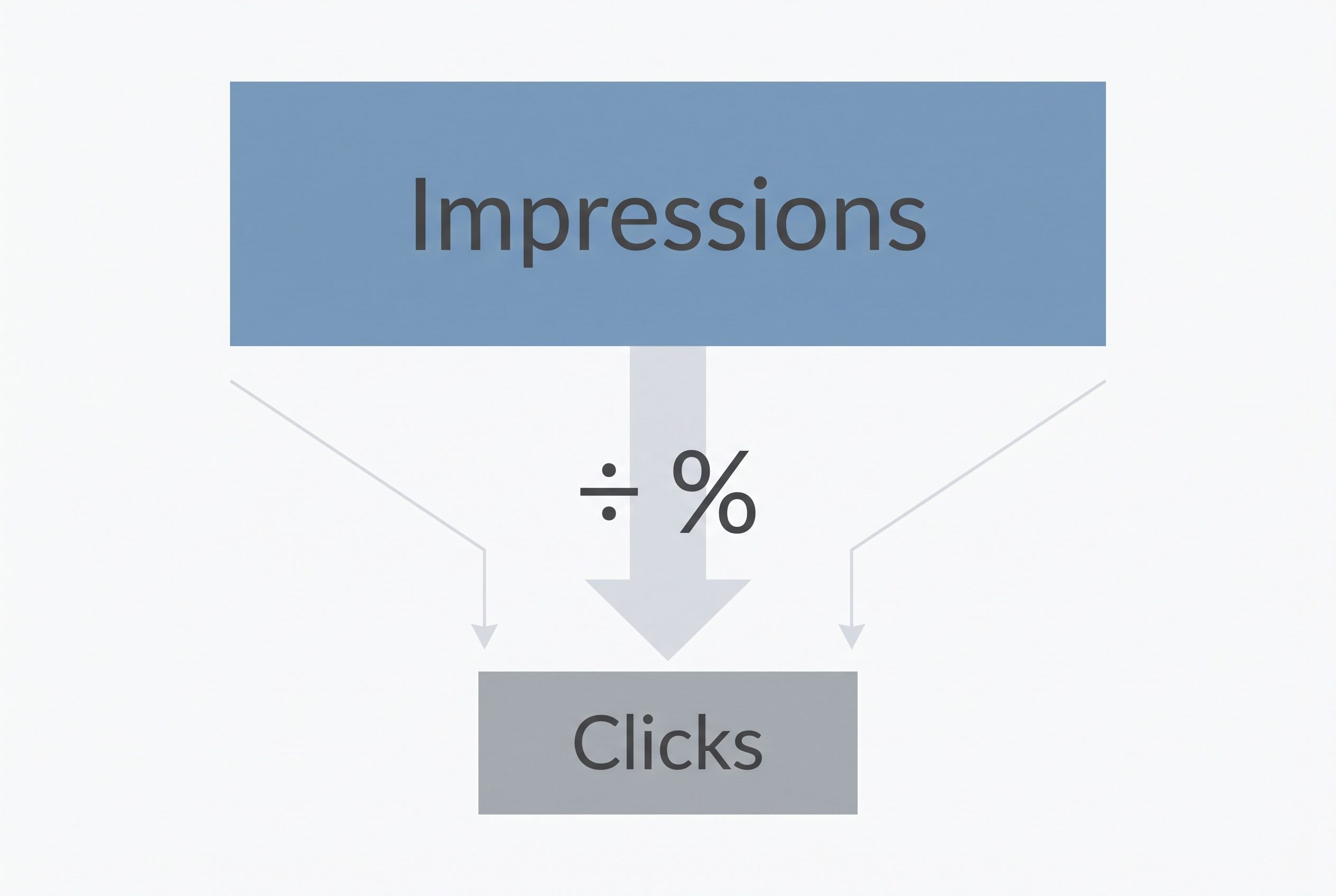
click on a specific link, advertisement, or search result after seeing it. It
is calculated by dividing the number of clicks by the number of impressions and
is usually expressed as a percentage. CTR is used to evaluate how well search
listings, online advertisements, emails, and calls to action attract user
interaction.
The metric appears in search engine reporting tools,
advertising platforms, and email marketing software. A higher CTR indicates
that a larger share of viewers clicked, though what counts as a
"good" rate varies widely by industry, channel, placement, and
audience. CTR measures interest at the moment of exposure and does not, on its
own, show whether a click led to a purchase, sign-up, or other outcome.
|
Field |
Details |
|
Type |
Performance metric |
|
Field |
Digital marketing, web analytics, search engine
optimization |
|
Formula |
(Clicks ÷ Impressions) × 100 |
|
Unit |
Percentage |
|
Common contexts |
Search results, display ads, paid search, email campaigns,
social media |
|
Related metrics |
Impressions, conversion rate, cost per click, bounce rate |
Definition and calculation
CTR compares two counts: the number of times a link or
advertisement was clicked, and the number of times it was displayed. The
displayed count is called an impression. Dividing clicks by impressions
and multiplying by 100 produces the percentage.
For example, an advertisement shown 5,000 times that
receives 150 clicks has a CTR of 3% (150 ÷ 5,000 × 100). The same
formula applies to a search listing, a banner, or a link in a newsletter,
although the definition of an impression differs between platforms.
Note: In email marketing, a distinction is made
between click-through rate, which divides clicks by the number of emails
delivered, and click-to-open rate, which divides clicks by the number of emails
opened. Platforms may define these differently, so figures are not always
comparable across tools.
What counts as an impression
Platforms apply their own rules. In search reporting, an
impression is generally recorded when a listing appears on a results page that
a user loads, and in some tools it counts even if the user does not scroll to
it. In display and video advertising, viewability standards may determine
whether an ad counts as having been seen. Because of these differences,
identical-looking CTR values from different systems may rest on different
counting methods.
Background
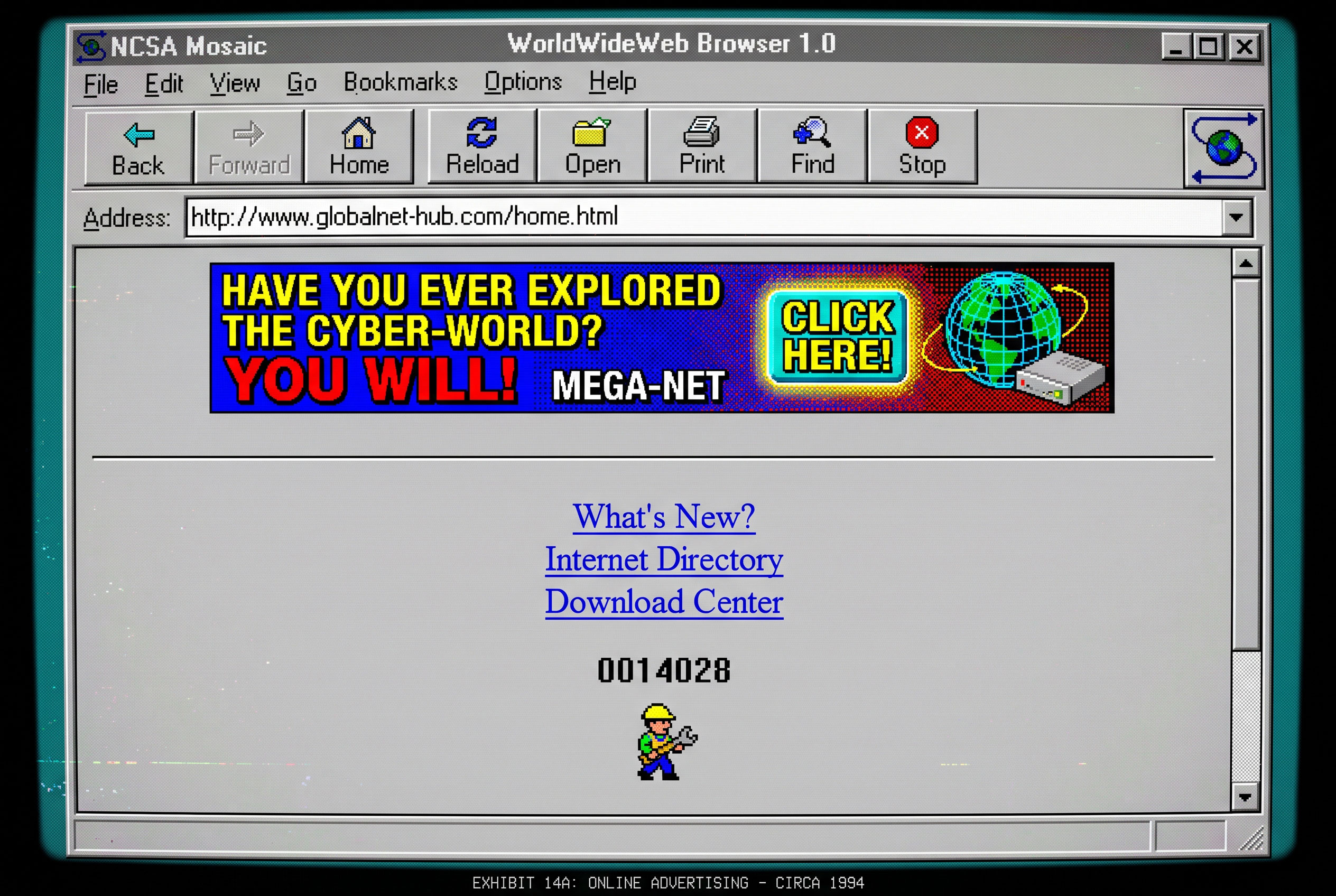
Click-through rate emerged alongside online display
advertising in the mid-1990s. The first widely cited banner advertisement
appeared on the HotWired website in 1994, and it is commonly reported to
have achieved a very high click rate by later standards, with figures around
44% frequently cited. Exact numbers are reported inconsistently, and early data
are difficult to verify independently.
As banner advertising spread, average click rates fell
substantially. Commentators have often attributed this to growing user
familiarity with banner formats, sometimes described as "banner
blindness," a term associated with a 1998 study by Benway and Lane. The
decline in display CTR contributed to the adoption of other pricing and measurement
models, including cost per click (CPC) and later cost per acquisition.
The rise of paid search in the early 2000s gave CTR a
further role. Search advertising platforms began using expected click-through
rate as one input in ranking advertisements, since a relevant ad that attracts
clicks benefits both the user and the platform.
Uses in different channels
Search engine results
In organic search, CTR describes how often users click a
listing relative to how often it is shown. Tools such as Google Search Console
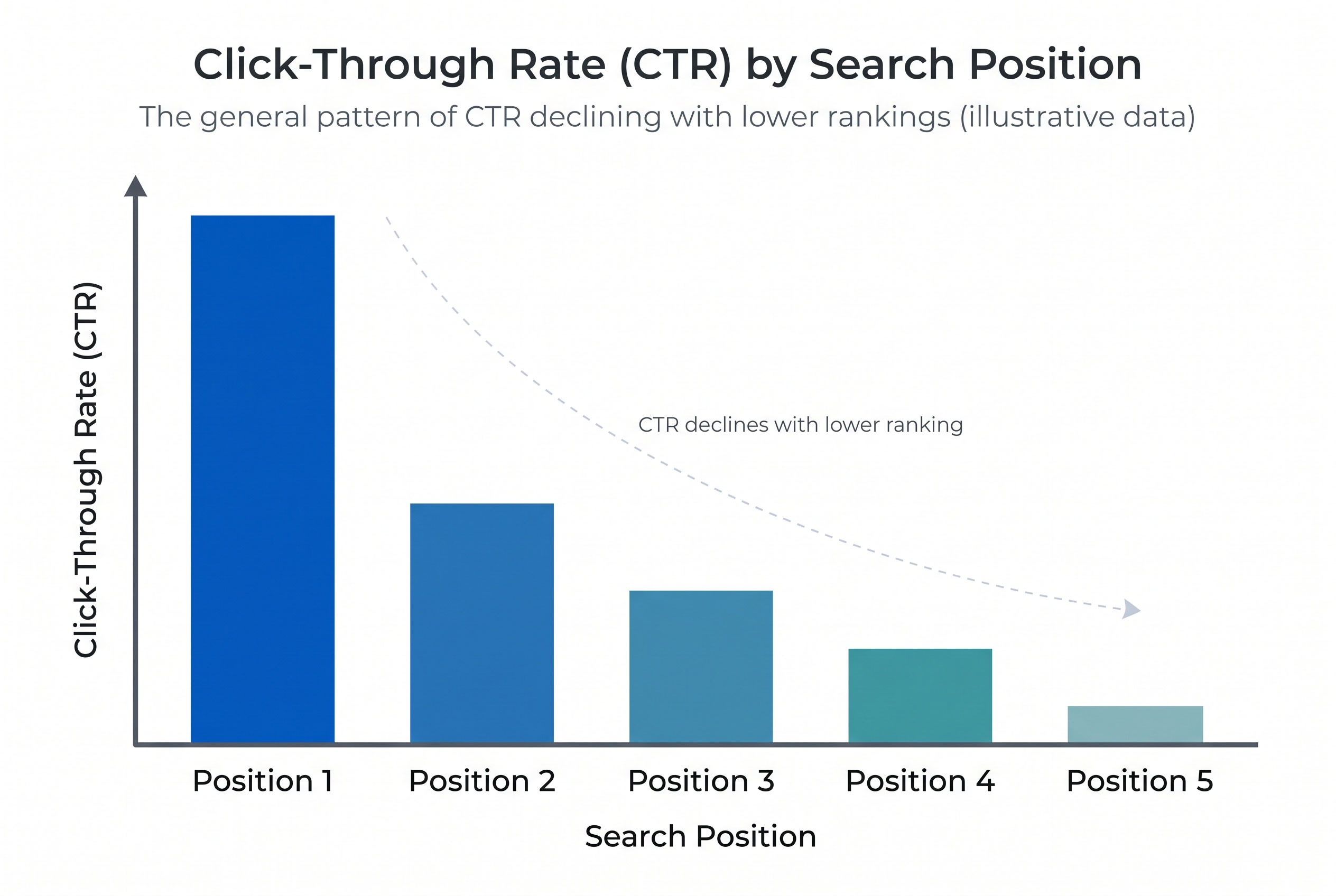
report clicks, impressions, and CTR for pages and queries. Position on the
results page strongly influences CTR, with listings near the top generally
receiving a larger share of clicks than those lower down.
Multiple industry studies have attempted to estimate average
CTR by ranking position. Their results differ by dataset, time period, and
method, and the presence of features such as featured snippets, maps, shopping
results, and AI-generated summaries changes click distribution. No single
position-by-position benchmark is universally accepted.
Paid advertising
In pay-per-click advertising, CTR is a primary indicator of
ad relevance to a query or audience. Platforms such as Google Ads and Microsoft
Advertising incorporate expected CTR into quality assessments, which can affect
ad position and the cost per click. Typical CTRs differ markedly between search
ads, which target users actively looking for something, and display ads, which
appear in front of users engaged in other activities.
Email and social media
Email platforms report CTR for links within messages. Social
media platforms report similar measures for posts and promoted content, though
names vary ("link click-through rate," "outbound CTR").
Rates in these channels depend heavily on list quality, audience familiarity,
and the nature of the content.
Factors that influence CTR
Researchers and practitioners commonly identify several
variables associated with click behavior:
- Position
and prominence: Items placed higher or more visibly on a page tend to
attract more clicks.
- Relevance
to intent: Listings matching the user's query or interest are more
likely to be clicked.
- Wording:
Titles, headlines, and descriptions shape expectations about what a click
will deliver.
- Format
and design: Images, ad extensions, rich results, and button styling
can change visibility.
- Audience
and context: Device type, time of day, and prior brand familiarity
affect rates.
- Competing
elements: Other results, ads, and page features compete for attention.
Because these factors interact, isolating the effect of any
one of them usually requires controlled testing.
Comparison with related metrics
|
Metric |
What it measures |
Relationship to CTR |
|
Impressions |
Number of times content is displayed |
Denominator of CTR |
|
Conversion rate |
Share of visitors who complete a defined action |
Measures outcomes after the click |
|
Cost per click (CPC) |
Average price paid for each click |
Influenced by CTR in auction-based advertising |
|
Bounce rate |
Share of sessions with no further interaction |
Describes behavior after the click |
|
Engagement rate |
Share of sessions with defined interactions |
Broader than clicks alone |
CTR is sometimes confused with conversion rate. CTR counts
clicks relative to views, while conversion rate counts completed goals relative
to visits or clicks.
Measurement challenges and limitations
CTR has several recognized limitations. A high rate does not
guarantee valuable traffic, since a misleading headline can attract clicks that
do not lead to meaningful engagement. A low rate does not always signal
failure, as a narrowly targeted advertisement may reach few people but convert
well.
Other issues include:
- Invalid
or automated clicks: Bot traffic and accidental clicks can inflate
counts. Advertising platforms apply filters, and the scale of the problem
is estimated differently by different sources.
- Small
samples: Percentages calculated from few impressions fluctuate widely
and offer limited reliability.
- Zero-click
behavior: Search results that answer a query directly can reduce
clicks without reflecting lower interest.
- Averages
across contexts: Industry benchmarks aggregate varied audiences, so
comparison against a single average can mislead.
Analysts therefore commonly interpret CTR together with
downstream metrics rather than in isolation.
Current status
CTR remains a standard metric in advertising and analytics
platforms. Its interpretation continues to change as search interfaces add
answer features and as privacy changes, such as limits on tracking, affect how
clicks and impressions are recorded. Platform definitions and reported
benchmarks may be revised over time.