
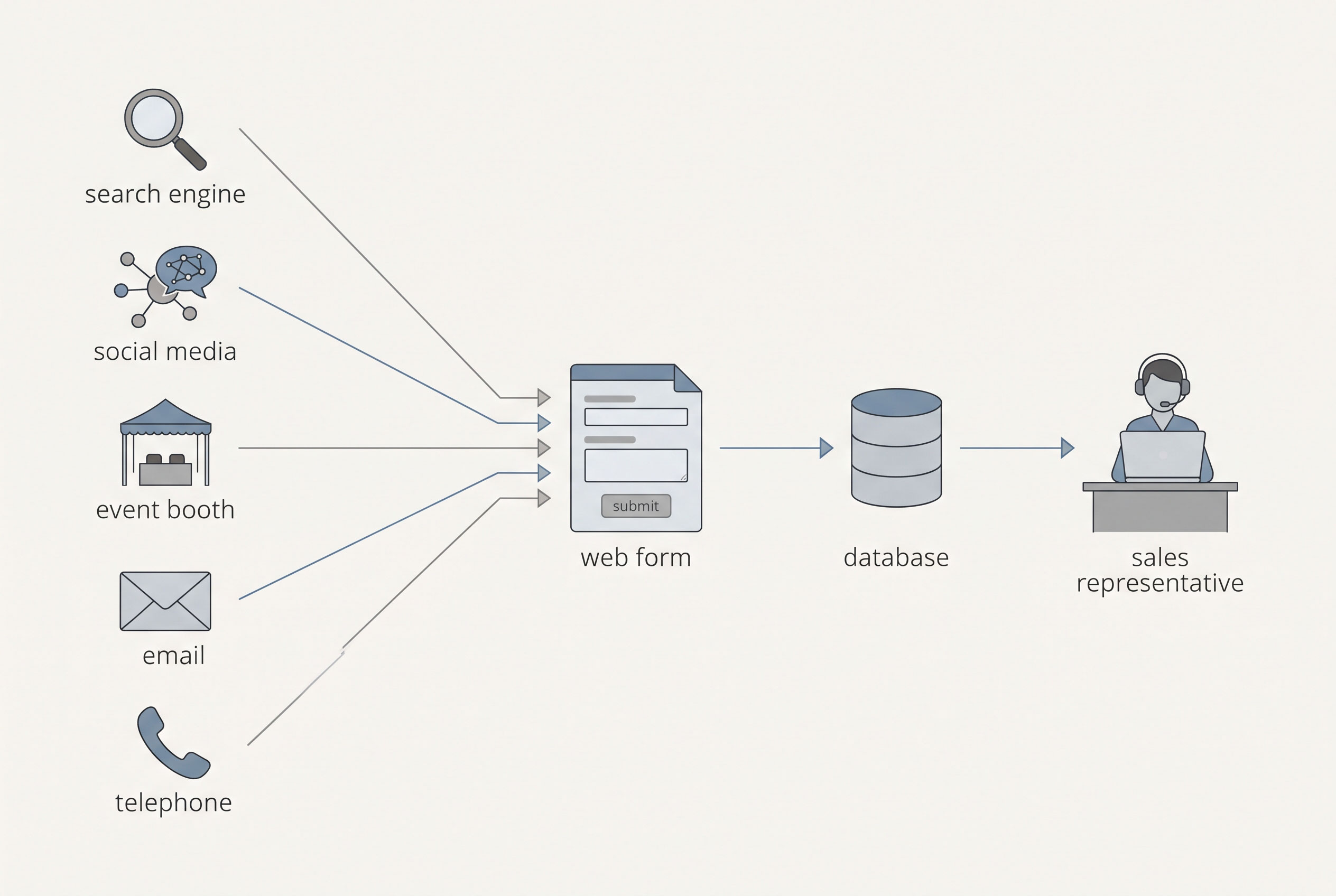
Lead generation is the process of attracting
individuals or organizations that may be interested in a product or service and
collecting their contact details or expressions of interest. The resulting
record, called a lead, is passed to a sales or marketing team for
follow-up. The practice is used mainly in business-to-business (B2B) and
high-consideration consumer sectors such as insurance, education, real estate
and software.
Quick answer: Lead generation is the set of
activities used to identify potential customers and capture their contact
information, usually in exchange for content, a quote, a trial or a
consultation. Captured leads are then assessed and nurtured until they are
ready to be contacted by sales staff or to make a purchase.
|
Infobox |
|
|
Field |
Marketing and sales |
|
Related disciplines |
Digital marketing, sales development, customer
relationship management |
|
Typical output |
Qualified leads (contact records with context) |
|
Common metrics |
Cost per lead, conversion rate, lead-to-customer rate |
|
Common regulation |
Privacy and anti-spam laws (e.g., GDPR, CAN-SPAM, CASL) |
Overview
A lead is generally distinguished from an anonymous website
visitor by the fact that the person has shared identifying information, such as
an email address or telephone number, and has indicated some degree of
interest. Lead generation is usually treated as the stage that precedes sales
conversion. It is often described as part of a broader marketing funnel, though
terminology varies between organizations.
Organizations pursue lead generation when a purchase is not
completed instantly. Products with long evaluation periods, high prices or
multiple decision-makers typically require repeated contact, so collecting
contact details allows that contact to continue.
History

Lead generation predates the internet. Coupons printed in
newspapers and magazines, reply cards in direct mail, trade shows, referral
programs and telemarketing all served to identify interested prospects.
Direct-response advertising, in which a reader returns a form or calls a
number, is an early example of the same logic.
The spread of commercial websites in the 1990s moved much of
this activity online, where web forms replaced reply cards. Email marketing and
search engine advertising expanded in the following decade. Marketing
automation software, which tracks contact behavior and schedules communication,
developed through the late 1990s and 2000s. The term inbound marketing
gained wide currency around the mid-2000s and is commonly credited to the founders
of HubSpot, though the underlying practices of content-led attraction existed
earlier.
Approaches
Inbound methods
Inbound methods attract people who are already searching for
information or solutions. Common techniques include:
- Search
engine optimization and published articles, guides or tools
- Gated
content, such as reports or webinars requiring a form submission
- Free
trials, product demonstrations and calculators
- Social
media and community participation
- Referral
and review programs
Outbound methods
Outbound methods begin with the organization contacting a
prospect. Examples include cold email, cold calling, direct mail, sponsored
placements and attendance at industry events. Outbound activity often relies on
purchased or compiled contact lists, which raises data-quality and legal
considerations.
Paid and partner channels
Paid search, paid social advertising, affiliate networks and
lead-marketplace services can generate leads quickly. Some businesses buy leads
from third parties rather than producing them directly. Leads purchased this
way are sometimes shared with multiple buyers, which can affect conversion
rates.
Comparison
|
Aspect |
Inbound |
Outbound |
|
Who initiates contact |
The prospect |
The organization |
|
Typical speed |
Gradual, builds over time |
Can be immediate |
|
Common cost pattern |
Content and platform investment |
Labor, list and advertising cost |
|
Primary legal concern |
Consent for stored data |
Consent for unsolicited contact |
Lead Capture
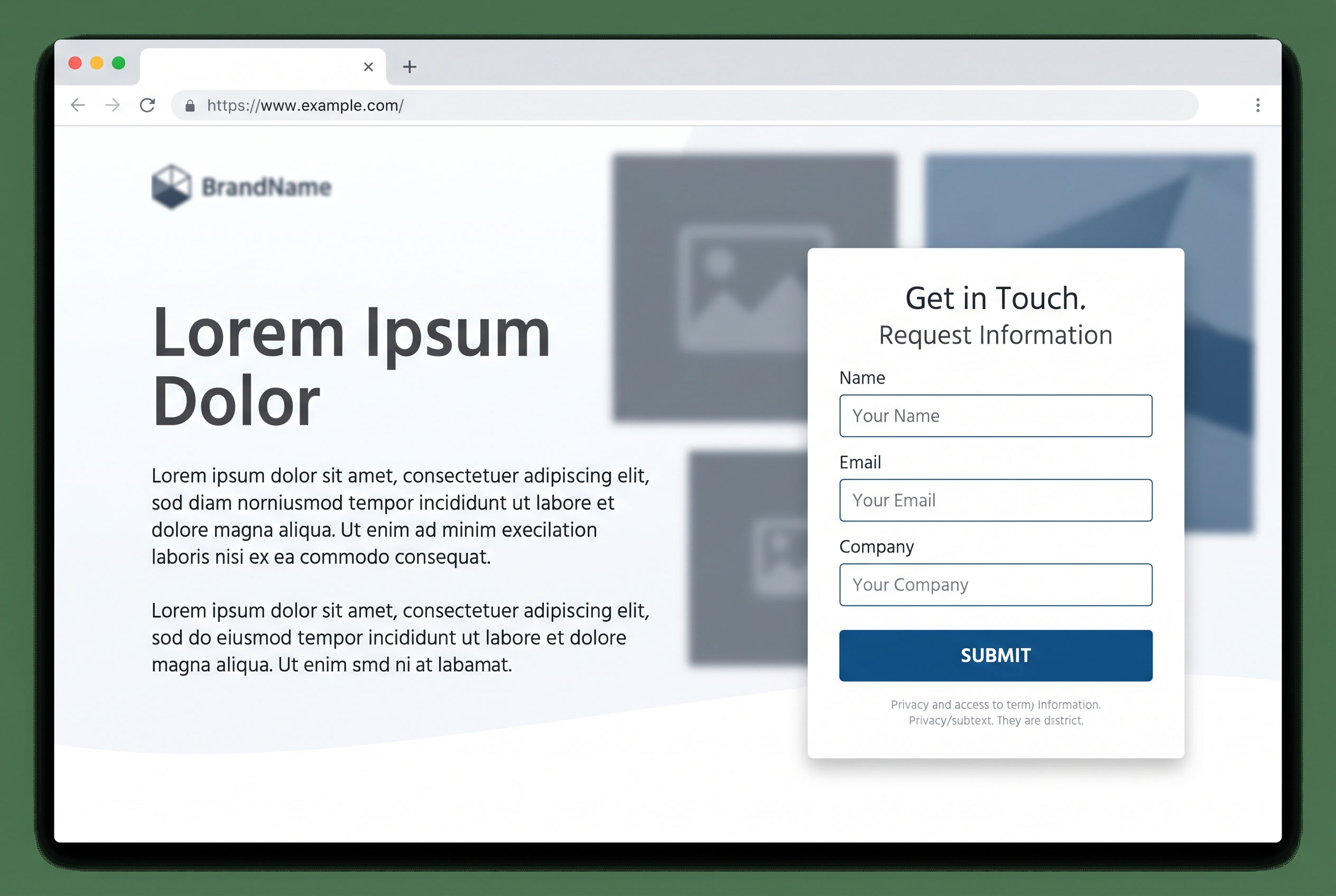
Capture usually occurs through a web form, a landing page, a
chat or messaging tool, a telephone call, or an in-person badge scan. Each
captures a different amount of data. Longer forms tend to supply more
information but are commonly reported to reduce completion rates, so
organizations often balance the two. Many systems also use progressive
profiling, which collects additional details across repeated interactions.
Qualification and Scoring
Not every lead is equally likely to become a customer.
Organizations therefore classify leads by readiness and fit.
- Marketing
qualified lead (MQL): a lead whose behavior or profile meets criteria
set by marketing, for instance downloading several resources.
- Sales
qualified lead (SQL): a lead that sales staff have accepted as worth
direct pursuit.
- Product
qualified lead (PQL): a lead identified through usage of a free or
trial product.
Lead scoring assigns numerical values to attributes
(such as job role or company size) and actions (such as visiting a pricing
page). Thresholds determine when a lead is handed to sales. Definitions of MQL
and SQL are not standardized, and organizations apply them differently.
Lead Nurturing
Leads not yet ready to buy are typically placed in nurturing
sequences. These involve scheduled emails, retargeted advertisements or
periodic outreach intended to keep the organization visible and provide
relevant information. Nurturing is often automated through a customer
relationship management (CRM) or marketing automation system.
Measurement
Common metrics include:
- Cost
per lead (CPL): total spend divided by leads generated.
- Conversion
rate: the share of visitors or leads who complete a defined step.
- Lead-to-customer
rate: the share of leads that become paying customers.
- Customer
acquisition cost (CAC): total acquisition spend divided by new
customers.
- Lead
response time: the interval between lead capture and first contact.
Benchmark figures vary widely by industry, channel and
region. Published benchmarks from vendors and surveys should be treated cautiously,
since methods and sample populations differ.
Regulation and Ethics
Lead generation involves collecting and using personal data
and is subject to law in many jurisdictions.
- The
European Union’s General Data Protection Regulation (GDPR),
applicable since 2018, requires a lawful basis for processing personal
data, and consent must meet defined standards when it is the basis relied
upon.
- In the
United States, the CAN-SPAM Act (2003) sets rules for commercial
email, and the Telephone Consumer Protection Act (1991) restricts
certain calls and text messages.
- Canada’s
anti-spam legislation (CASL) generally requires consent for commercial
electronic messages.
- State-level
privacy laws, such as California’s, add disclosure and opt-out
requirements.
Requirements differ by country and change over time, so
current local law governs any specific practice. Debate also surrounds the
buying and reselling of contact data, and the use of tracking technologies to
profile prospects. Critics raise privacy concerns, while practitioners argue
that targeted contact can be relevant to recipients. Common practices intended
to address consent include double opt-in confirmation and clear
unsubscribe mechanisms.
Common Misconceptions
Lead generation is sometimes treated as identical to sales,
but it concerns identifying and capturing interest, while sales concerns
closing transactions. It is also sometimes confused with demand generation,
a broader term for building awareness and interest, which may not involve
capturing individual contact details. A high lead count does not by itself
indicate success, since lead quality and conversion to revenue are the more
commonly cited measures.
Current Status
Digital channels account for much of contemporary lead generation,
and increased privacy regulation and changes to browser and platform tracking
have prompted greater reliance on data collected directly from audiences, often
called first-party data. Practices and legal requirements continue to evolve.