
WordPress is a free and open-source content
management system (CMS) for creating and managing websites. It is written
mainly in PHP, stores content in a MySQL or MariaDB database, and is released
under the GNU General Public License. Originally a blogging tool, it now
supports business sites, online stores, news outlets, and web applications.
According to the survey firm W3Techs, WordPress is used by
roughly two in five websites worldwide and by about 59% of sites whose CMS can
be identified (August 2026 figures). Reported percentages vary by survey date
and methodology. Development is led by a global community of volunteer and
company-sponsored contributors, and the project’s name and trademarks are held
by the WordPress Foundation.
Note: “WordPress” most often refers to the
downloadable software distributed at WordPress.org. WordPress.com is a
separate commercial hosting service operated by Automattic that runs the
same software.
|
WordPress |
|
|
Original authors |
Matt Mullenweg, Mike Little |
|
Initial release |
27 May 2003 (version 0.7) |
|
Written in |
PHP, JavaScript, SQL |
|
Type |
Content management system |
|
License |
GPL version 2 or later |
|
Stewardship |
WordPress Foundation; open-source contributor community |
|
Latest major version |
7.0 (reported release May 2026), followed by 7.x point
releases |
|
Website |
wordpress.org |
History
Origins
WordPress began as a fork of b2/cafelog, a blogging
platform created by Michel Valdrighi. After b2’s development slowed, Matt
Mullenweg announced in January 2003 that he intended to build on its code,
and developer Mike Little joined him. The first release, version 0.7,
appeared on 27 May 2003.
Early growth
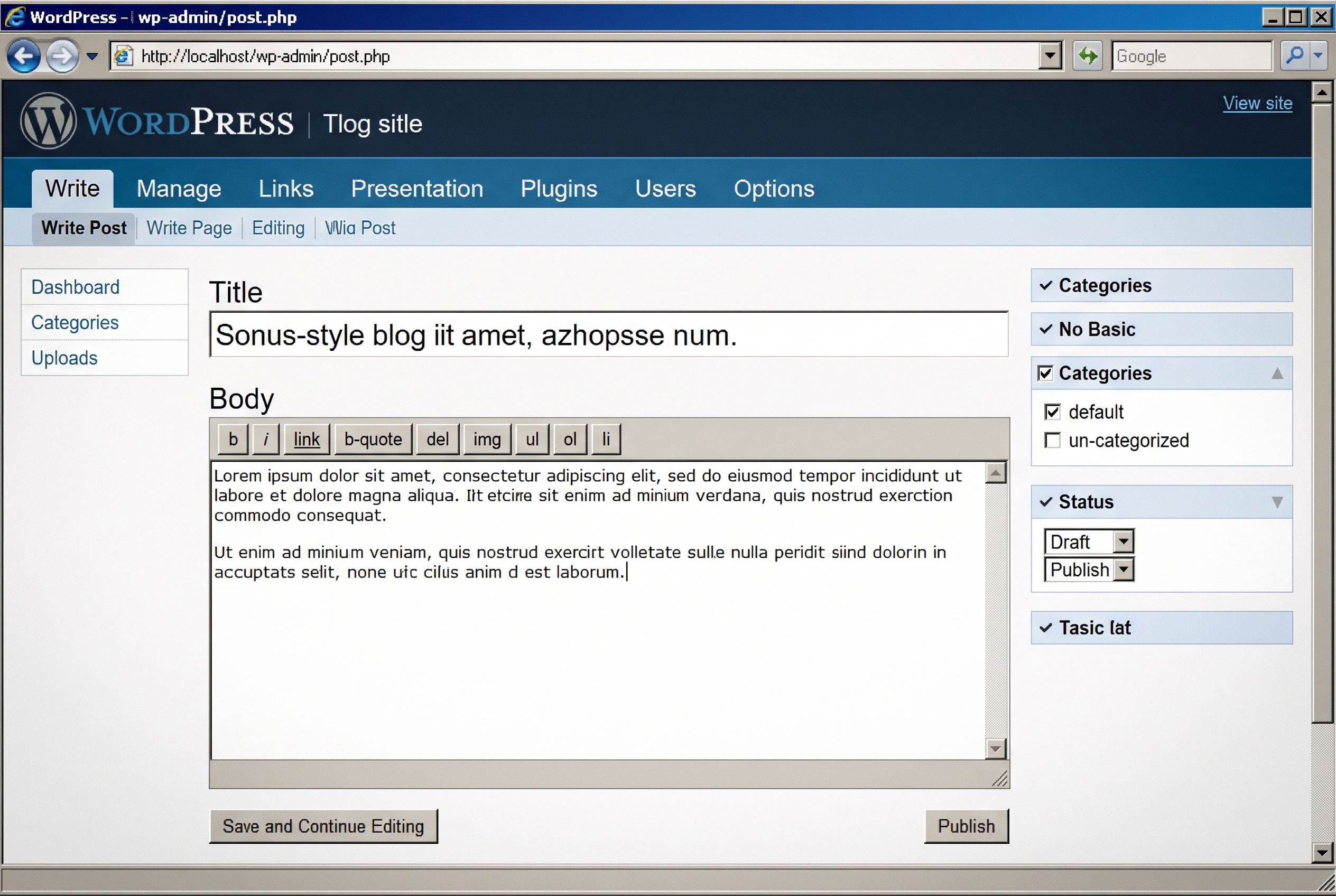
Version 1.0 arrived in January 2004. Plugin support followed
in version 1.2, and a theme system was introduced in version 1.5 in early 2005.
Mullenweg founded Automattic in 2005 and launched WordPress.com as a
hosted service the same year. The WordPress Foundation was established in 2010
as a non-profit to protect the project’s open-source nature.
From blogging tool to general CMS
Version 3.0 (2010) added custom post types and merged the
previously separate WordPress MU, which enabled multisite networks, into
the main codebase. Those changes made it practical to manage structured content
beyond blog posts. The REST API was integrated into core in version 4.7
(2016), allowing external applications to read and write site content.
The block editor and site editing
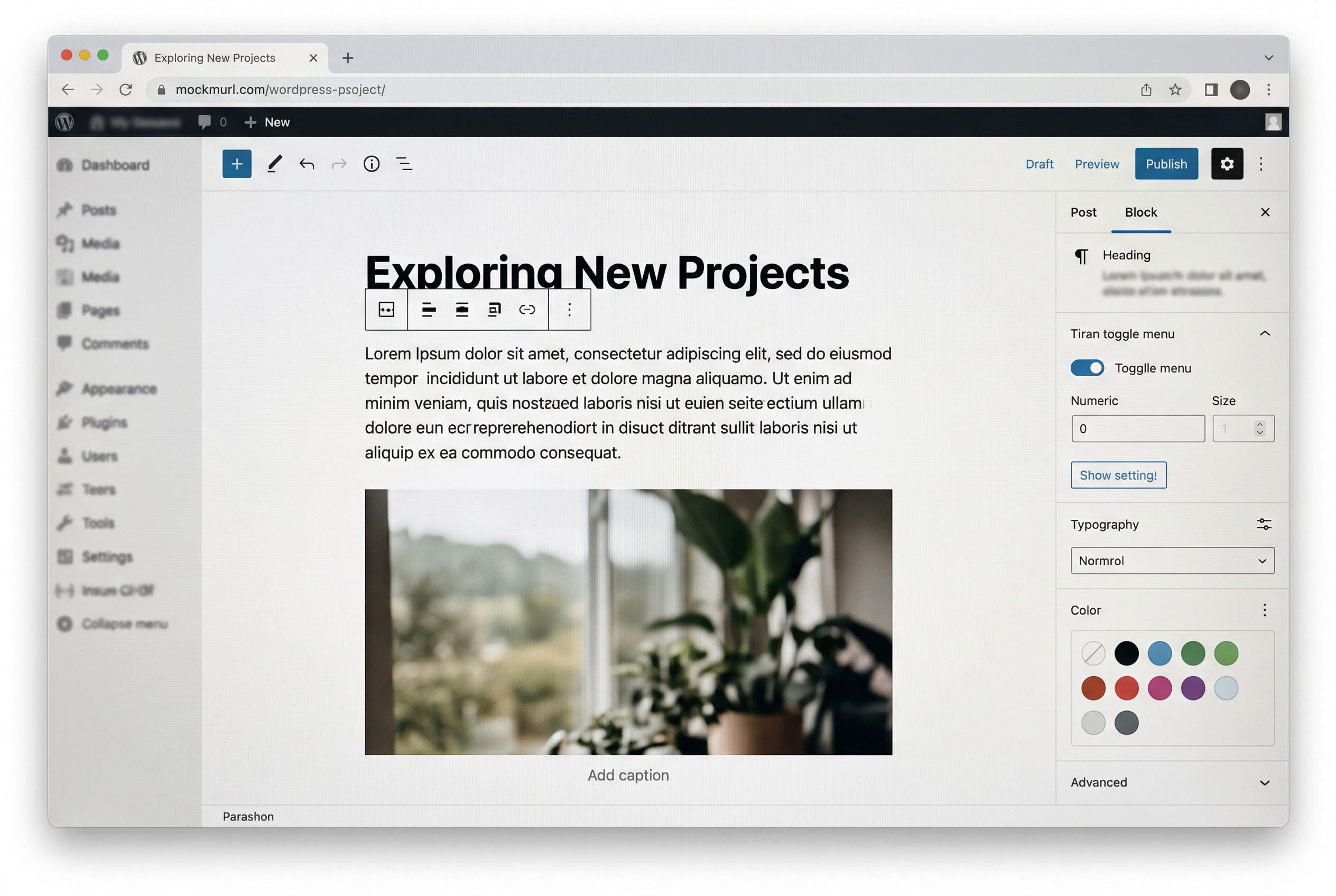
The Gutenberg block editor became the default editing
interface in version 5.0 (December 2018). It replaced the older single-field
editor with discrete content blocks. Version 5.9 (January 2022) introduced full
site editing, which extends block-based editing to headers, footers, and
templates in compatible themes.
Recent releases
Version 6.9 was released in December 2025. WordPress 7.0 was
originally scheduled for April 2026, and sources report that it shipped in May
2026. Project contributors have stated an intention to return to roughly three
major releases per year, though schedules have changed before.
How It Works
Architecture
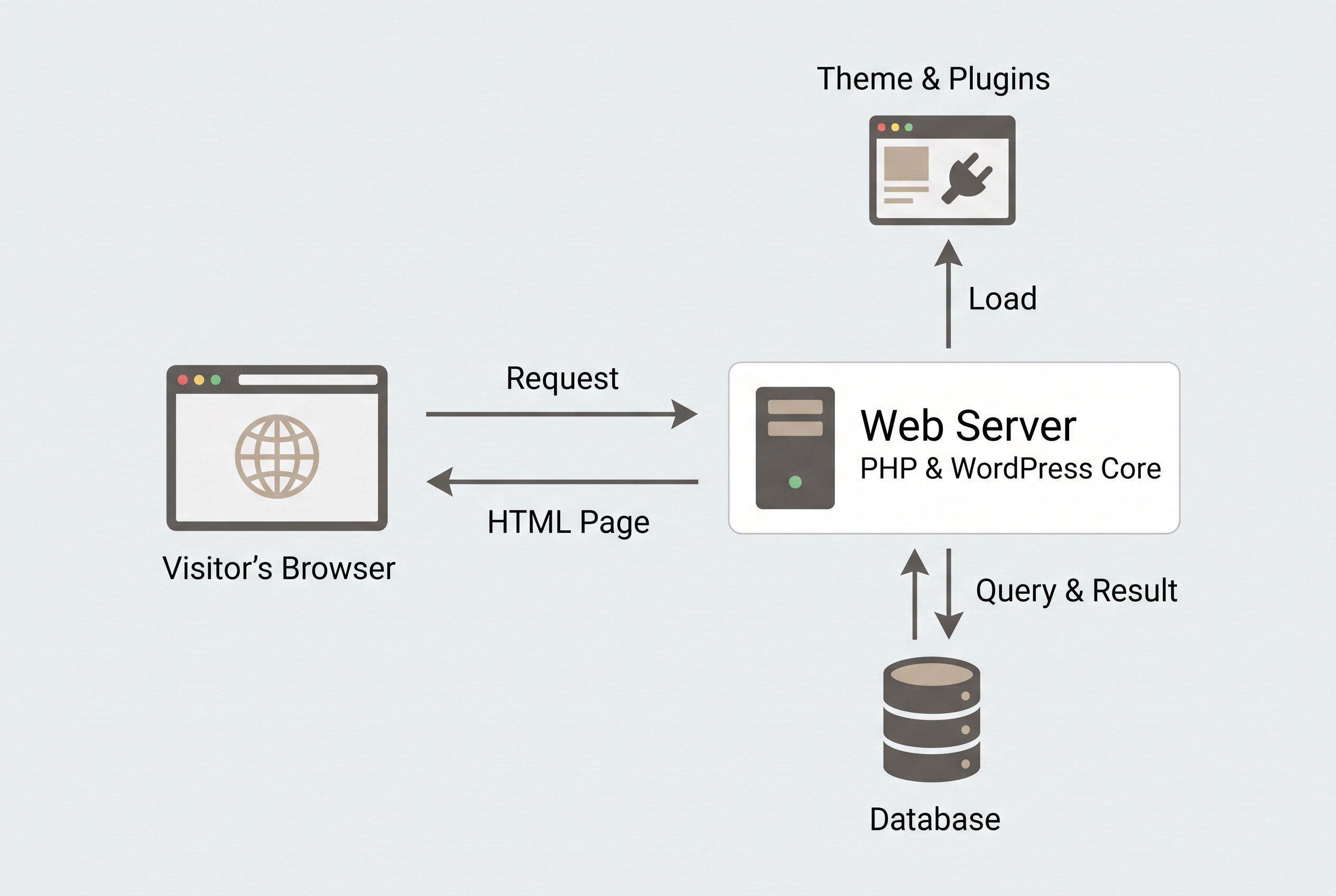
A WordPress installation runs on a web server with PHP and a
database. Posts, pages, comments, users, and settings are stored in database
tables. When a visitor requests a page, WordPress retrieves the relevant
content and combines it with a template to generate HTML.
Themes
A theme controls a site’s appearance and layout.
Classic themes use PHP template files, while block themes define layouts
using blocks and a central style configuration. Themes can be swapped without
altering the underlying content, although some features tied to a particular
theme may not carry over.
Plugins
Plugins extend core functionality using hooks, which
are defined points where custom code can modify behavior. Plugins add features
such as search engine optimization tools, contact forms, caching, security hardening,
and e-commerce. The official directory at WordPress.org hosts tens of thousands
of free plugins, and many commercial plugins are distributed elsewhere.
Content model
|
Content type |
Purpose |
|
Posts |
Date-ordered entries, typically shown in a feed |
|
Pages |
Standalone, hierarchical content such as “About” |
|
Custom post types |
Developer-defined types, such as products or events |
|
Taxonomies |
Categories and tags for grouping content |
|
Media library |
Uploaded images, audio, video, and documents |
WordPress.org and WordPress.com
The two names are frequently confused. WordPress.org
distributes the free software, hosts the plugin and theme directories, and
coordinates community development. Site owners who use it install the software
on a web host of their choice and manage updates, backups, and security
themselves.
WordPress.com is a commercial service that hosts
sites on Automattic’s infrastructure, handling maintenance for subscribers. Its
feature set depends on the subscription plan. Many third-party hosting
companies also offer managed WordPress hosting.
Adoption and Ecosystem
W3Techs figures indicate WordPress share grew steadily from
about 13% of all websites in 2011 to a peak near 43–44% in the early-to-mid
2020s. Some 2026 reports describe a slight decline, and estimates for 2026
range from about 40% to 43% depending on date and source. W3Techs counts
subdomains of hosted platforms as a single website, which affects comparisons
with other services.
The surrounding ecosystem includes web agencies, theme and
plugin developers, hosting providers, and community events called WordCamps.
WooCommerce, an e-commerce plugin acquired by Automattic in 2015, is
among the most widely used online-store platforms built on WordPress. Other CMS
platforms, including Joomla and Drupal, hold smaller shares, while hosted
builders such as Shopify, Wix, and Squarespace compete mainly on convenience.
Security and Maintenance
Because of its wide use, WordPress is a frequent target for
automated attacks. Security researchers generally report that most
vulnerabilities involve third-party plugins and themes rather than core
software. Core releases include automatic background updates for minor and
security versions by default. Common practices include timely updates, limiting
plugins to those needed, using strong credentials, and maintaining backups.
Criticism and Controversy
Critics have raised several concerns over the years, and the
project’s responses differ by topic.
- Performance:
Poorly optimized themes or plugin-heavy sites can load slowly. Defenders
note that performance depends largely on hosting and configuration.
- Complexity
of the editor transition: The introduction of Gutenberg in 2018 drew
mixed reactions, with some developers and users preferring the older
editor. A Classic Editor plugin remained available for those wishing to
retain it.
- Governance
and commercial relationships: In September 2024, Mullenweg publicly
criticized the hosting company WP Engine over its contributions to
the project and use of the WordPress trademark. Access to certain
WordPress.org resources was restricted, and legal action followed between
the parties. Court rulings in late 2024 addressed access to project
resources. Observers disagreed about the dispute, with some viewing it as
a defense of the open-source project and others as a concerning use of
control over shared infrastructure. Later developments should be checked
against current reporting.
Current Status
WordPress remains the most widely used CMS by site count.
Its recent development has focused on block-based design tools, performance
work, and more frequent major releases.